
Intelligence Library
South Asia
India, Pakistan, Afghanistan and the Kashmir flashpoint.
Regions
Topics
 Article
The Anwar Pivot: Why Malaysia is Neutralising the Indo-Pacific
Kuala Lumpur’s formal integration into BRICS represents a calculated structural shift. By diversifying its strategic dependencies, Malaysia is dismantling the Western assumption that Southeast Asia must choose between security and prosperit
 Article
The New Delhi Pendulum: Navigating the Bipolar Trap
As Washington and Beijing harden their spheres of influence, India is refining a strategy of 'strategic autonomy'. By refusing to choose sides, New Delhi is leveraging its geography to become the world’s indispensable swing state.
 Article
The Caracas-Delhi Bridge: India Ends the US Sanctions Paradigm
New Delhi’s massive crude deals with Caracas signal more than just energy procurement. They mark the definitive collapse of the US oil embargo as a functional tool of Western statecraft in a multipolar energy market.
 Article
The Durand Fracture: Why Islamabad and Kabul Have Reached a Dead End
Pakistan’s decades-long pursuit of ‘strategic depth’ in Afghanistan has collapsed into a structural rivalry. Internal economic decay and shifting militant loyalties are now forcing a permanent divorce between former patrons and their proxie
 Article
The Anatolia-Indus Axis: A New Security Core Outside the West
The formalisation of the Riyadh-Ankara-Islamabad defence triangle marks the collapse of post-1945 security norms. It is a strategic pivot driven by sovereign survival, technological parity, and the death of Western reliability.
 Article
The Dhaka Disconnect: New Delhi’s Neighbourhood Policy Collapse
India’s strategic reliance on a single political dynasty in Bangladesh has backfired. As Dhaka pivots toward Beijing and Islamabad, New Delhi faces a structural security dilemma that threatens its entire eastern flank.
 Article
The Tarapur Squeeze: India’s Strategic Pivot to American Atoms
As Washington intensifies sanctions on Iranian hydrocarbons, New Delhi is trading its traditional stance of strategic autonomy for long-term energy immunity. This shift marks a fundamental realignment of Indian power around American nuclear
ArticleThe India Exception: Why Washington Subsidises New Delhi’s Neutrality
Despite intensifying Western sanctions on global energy markets, Washington continues to grant New Delhi quiet exemptions. This calculated leniency reveals a structural necessity: the White House cannot counter Beijing without an Indian eco
 Article
The Petrol Rouble: How India’s Refineries Became Russia’s Life Support
India’s strategic refusal to join Western price caps has evolved from opportunistic trade into a structural necessity for the Kremlin. Without New Delhi’s refining capacity, the Russian state budget faces immediate fiscal collapse.
 Article
The Kilo-Class Pivot: Russia’s Naval Return to the Indian Ocean
Moscow is deepening naval integration with India and the Horn of Africa, altering the maritime balance. This shift moves beyond arms sales to structural dependency, challenging Western primacy and reshaping South Asian deterrence.
 Article
The Pashtun Pincer: Why the Taliban Must Destabilise the Durand Line
The Taliban’s survival depends on maintaining domestic legitimacy through a radical Pashtun identity. By challenging the Durand Line, Kabul forces Islamabad into a strategic trap, turning a colonial border into a lever for regime survival a
 Article
The Rupee-Riyal Axis: Energy Debt as Geopolitical Leverage
As Islamabad swaps sovereign equity for Saudi oil credits, a new security architecture is emerging. Riyadh is no longer just a donor; it is the silent arbiter of the Indo-Pakistani strategic balance.
 Article
The Pashtun Fracture: The Durand Line’s Structural Collapse
As conflict destabilises Tehran, the artificial border between Afghanistan and Pakistan is dissolving. KJ examines why the 2026 regional upheaval has finally broken the 133-year-old territorial status quo, threatening Pakistan’s western int
 Article
The Himalayan Bypass: New Delhi’s Pivot to Bilateral Coercion
As Bangladesh's internal stability fractures, India is abandoning decades of regional multilateralism. New Delhi is shifting toward a strategy of bilateral force and infrastructure bypass to secure its restive Northeast against a deepening
 Article
The Indus Prerogative: India’s Turn Toward Hydrological Hegemony
New Delhi is abandoning decades of water diplomacy. Faced with a cooling economy and warming climate, India is leveraging its upstream geography to redefine power dynamics with Pakistan, risking the collapse of a sixty-year-old peace treaty
 Article
The Bismarckian Pivot: India’s German Deep-Tech Realignment
As New Delhi systematically decouples from its legacy Russian military dependency, a new strategic architecture is emerging. Berlin is no longer just a trading partner; it is becoming India’s primary engine for industrial sovereignty.
 Article
The Islamabad Pivot: Trading Strategic Depth for Economic Survival
Pakistan is discarding decades of military doctrine to position itself as the vital gateway for Central Asian trade. As domestic pressures mount, Islamabad is prioritising economic rent and connectivity over traditional territorial security
 Article
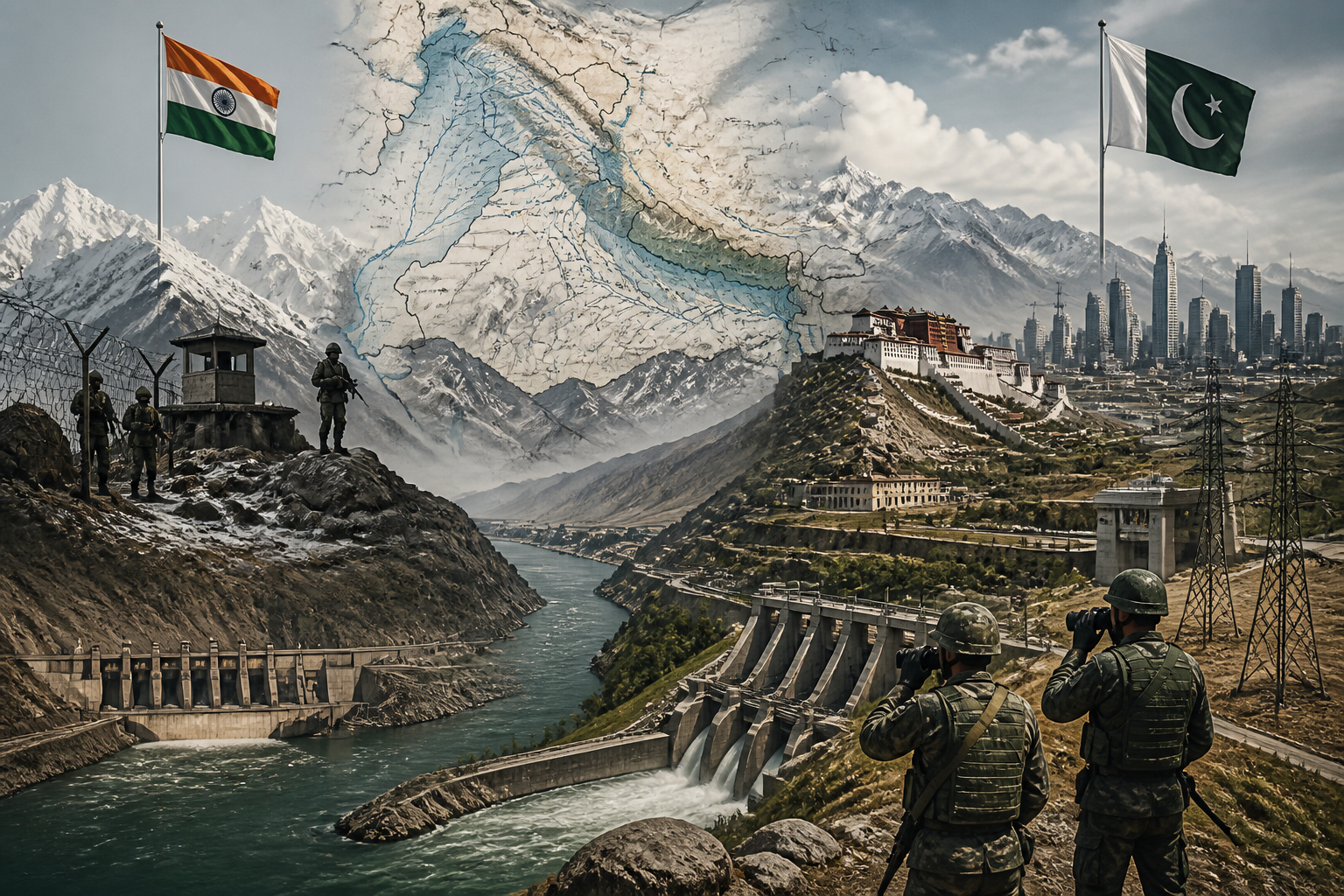
The Liquid Front: Why South Asian Security Rests on Melting Ice
As domestic pressures and climate shifts accelerate, the Indus and Brahmaputra river basins are no longer mere sources of life, but strategic assets being weaponised in a zero-sum game between nuclear powers.
Premium intelligence
Unlock the full intelligence library
Public reports are free to browse. Premium reports, saved intelligence and the research workspace come with KJ Plus and Pro.
Premium intelligence reports
Premium intelligence reports go beyond the public summary with deeper structural analysis.
Save intelligence
IncludedSave reports, forecasts and answers to build your permanent intelligence workspace.
Research workspace
Organise intelligence into a research workspace with collections, folders and exports.