The Precision of Instability
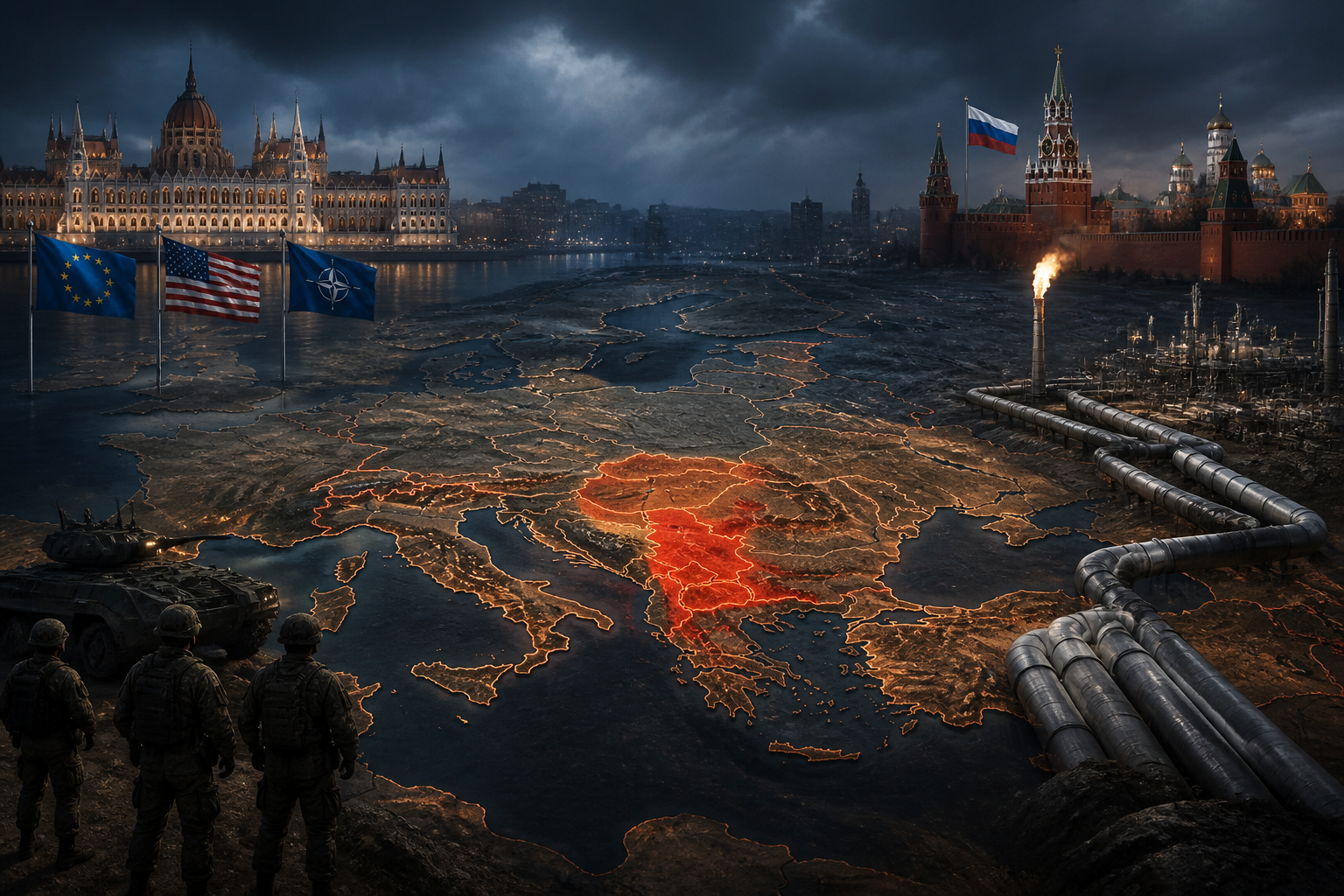
The next major kinetic conflict will likely emerge not from a direct confrontation between superpowers, but from a calculated collapse of the security architecture in the Western Balkans. Specifically, the line of friction runs through the Republic of Srpska in Bosnia and Herzegovina and the North of Kosovo. While the world monitors the South China Sea, the incentives for a localized, high-intensity conflict in south-eastern Europe have reached a critical mass. This is not about ancient ethnic hatreds. It is about the cold mechanics of geopolitical distraction, energy transit dominance, and the structural failure of European Union integration as a pacifying force.
The Incentive for Ignition
To understand why a conflict is imminent, one must look at who benefits from a breach of the Dayton Accords. For Moscow, a second front in Europe is a strategic necessity. As the war in Ukraine enters a period of static attrition, Russia requires a mechanism to overstretch NATO's logistical and political bandwidth. By encouraging secessionist movements in Banja Luka, Russia forces the West to divert surveillance assets, rapid-reaction forces, and diplomatic capital away from the Dnieper. The cost to Russia is negligible; the cost to European stability is existential.
Simultaneously, the internal incentives for local actors have shifted. In Belgrade, the government faces a narrowing path between Western alignment and domestic nationalist pressure. A controlled escalation serves as a pressure valve, allowing leadership to consolidate power under the guise of protecting ethnic kin. In Sarajevo and Pristina, the frustration with stalled EU accession has eroded the credibility of the 'European path,' making defensive militarisation more politically palatable than diplomatic concessions that never bear fruit.
Historical Parallel: The 1912 Precedent
We are currently witnessing a contemporary version of the lead-up to the First Balkan War. In 1912, as the Ottoman Empire’s influence receded, regional powers moved to bridge the vacuum before a new European order could be finalised. Today, the Ottoman role is played by a distracted and divided West. The 'Pax Europaea' that held the region since 1995 was predicated on two things: the credible threat of US military intervention and the promise of economic prosperity through EU membership. Both have evaporated. When the overarching empire or security guarantor loses interest, regional rivals naturally revert to physical geography to secure their future.
What Most People Miss: The Energy Wedge
The common analysis focuses on flags and religion. These are secondary. The primary driver is the realignment of energy infrastructure. The Western Balkans is the final frontier for the transit of non-Russian gas into Central Europe. Pipeline projects linking the Adriatic to the heart of the continent must pass through contested territory. Control over these transit corridors provides a permanent veto over European energy security. The push for secession in Bosnia is timed specifically to disrupt these projects, ensuring that Central Europe remains dependent on ageing infrastructure that remains vulnerable to external manipulation. This is a war over the plumbing of Europe, fought through the proxy of sovereignty.
Strategic Consequences
A conflict in the Balkans in 2025 would trigger a cascade of second-order effects. First, it would terminate the current phase of EU enlargement permanently, creating a 'black hole' of instability on the borders of Hungary, Croatia, and Greece. Second, it would test the reality of NATO’s KFOR and EUFOR missions. If these missions fail to prevent a rapid land-grab, the alliance's credibility collapses globally, signaling to China and Iran that Western security guarantees are purely rhetorical.
Furthermore, the migration impact would be immediate. Unlike the 2015 crisis, a Balkan conflict would send millions of displaced Europeans directly into the heart of the EU, empowering populist movements and potentially fracturing the bloc from within. This is not just a regional skirmish; it is a precision-guided strike against the institutional integrity of the West.
What to Watch
- The Drina Drills: Pay attention to unannounced joint military exercises between Serbian and Russian 'private' security firms near the Bosnian border.
- The Constitutional Court: Watch for a formal legislative move by the Republic of Srpska to withdraw from state-level institutions, particularly the judiciary and the army.
- The Digital Terrain: A sharp increase in coordinated disinformation campaigns targeting the Macedonian and Montenegrin electorates, designed to polarise the NATO members from within.
- Energy Interconnectors: Sudden 'technical' delays or sabotage on the Southern Gas Corridor extensions through the region.
KJ Verdict
War in 2025 is not a certainty, but the equilibrium that prevented it for thirty years has been dismantled. The Western Balkans represent the path of least resistance for those seeking to break the current international order. It is the only theatre where a small amount of kinetic activity can produce a disproportionate amount of geopolitical chaos. For the first time since the 1990s, the incentive to fight has outweighed the incentive to wait. Expect the first tremors in the spring, as the ground hardens and the political patience of the region finally snaps.