The Structural Fatigue of Empire
For eighty years, the primary characteristic of the international order has been the physical presence of the United States military in every major theatre. This forward presence was not merely a reaction to threats; it was the infrastructure of global trade and the ultimate guarantor of the dollar’s status. However, a structural shift is now occurring. The friction between the White House and the U.S. Congress over war powers is no longer a matter of bureaucratic process. It is a signal of physiological exhaustion. The United States is transitioning from a proactive global hegemon to a reactive regional power, driven not by a lack of external capability, but by a breakdown in domestic consensus.
We are witnessing the death of the 'Imperial Presidency' as it relates to overseas military ventures. The incentive for American politicians has flipped. Where once a 'tough on foreign policy' stance was the path to electoral safety, the political risk of sustaining indefinite global presence now outweighs the perceived benefits. This is the domestic root of the American retreat.
The Incentive of Paralysis
To understand why this is happening now, one must follow the money and the votes. Since 1945, the U.S. executive branch enjoyed a broad mandate to deploy force to maintain stability. The logic was simple: American prosperity required global stability, which required a global policeman. That logic has fractured. The average American voter now sees global stability as an expensive abstraction and domestic infrastructure as a pressing reality. This shift has altered the incentives for members of Congress.
Legislators are increasingly using war powers resolutions and budgetary 'power of the purse' mechanisms to restrict the President's ability to maintain forward bases in the Middle East and Eastern Europe. They are not doing this out of a sudden devotion to the Constitution, but as a form of political self-preservation. By constraining the President, they avoid the political fallout of new 'forever wars.' The result is a legislative tightening of the net that makes the logistical maintenance of a global empire impossible to sustain.
The Logistics of Retreat
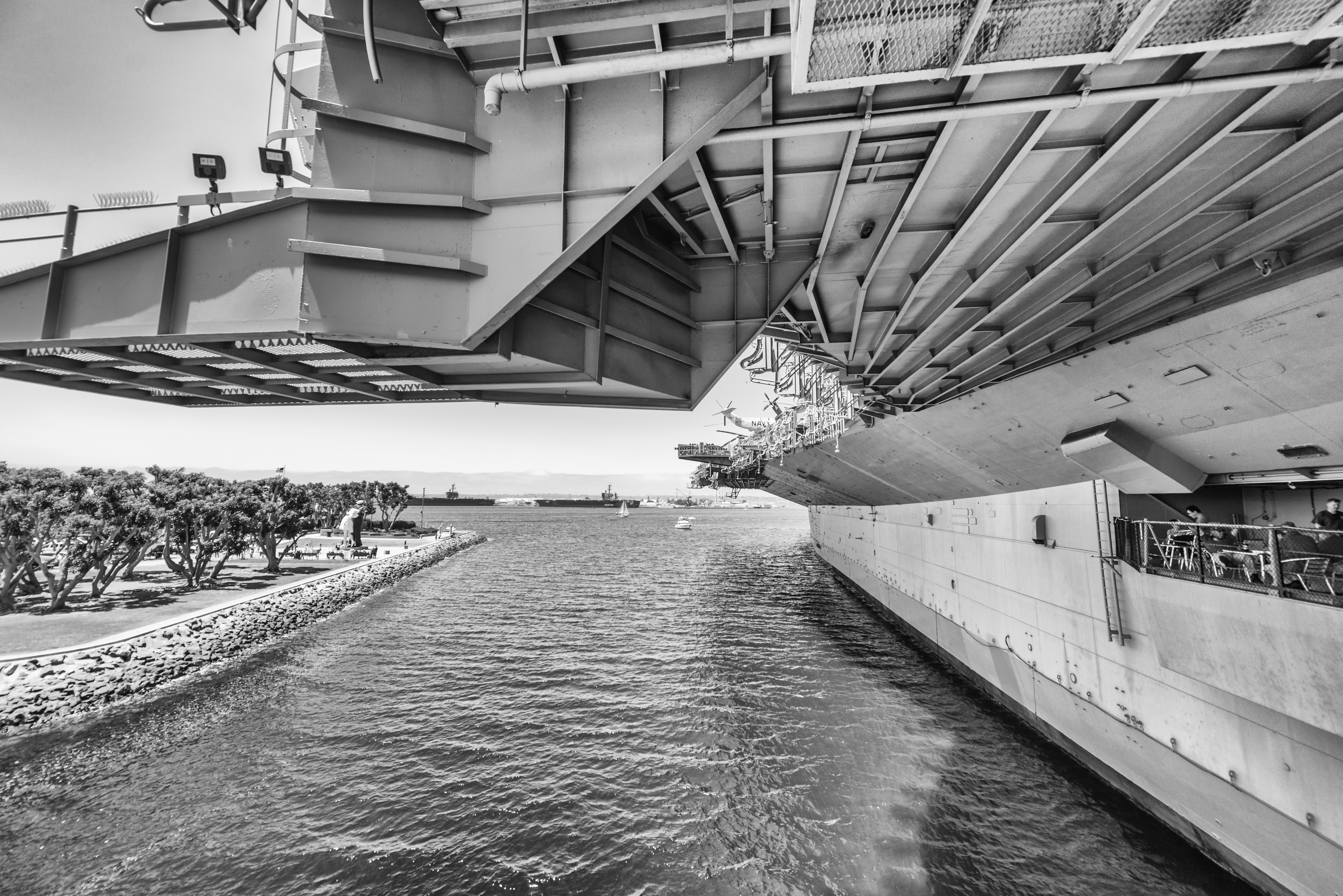
Geography remains the most honest indicator of power. The U.S. Navy’s struggle to maintain 24/7 presence in the Red Sea and the South China Sea simultaneously is not just an issue of hull numbers; it is an issue of political will to fund the necessary maintenance and recruitment. When the domestic political environment becomes hostile to long-term commitments, the first casualty is the logistics tail. We are seeing a gradual 'thinning out' of the line—smaller deployments, more reliance on regional proxies, and an increased focus on 'over-the-horizon' capabilities. This is a polite term for a retreat from permanent presence. When a power moves its assets over the horizon, it cedes the ground to those who live there.
The great trap for a declining power is the belief that technological superiority can compensate for a lack of physical presence and political resolve. It cannot.
The Roman Precedent
History provides a clear parallel in the late Roman Empire. The crisis of the third century was not caused by a single defeat, but by the relentless friction between the centre and the periphery. As the Roman Senate and the military leadership clashed over resources and the authority to wage war, the cost of maintaining the Limes—the fortified frontiers—became politically unbearable. Rome did not fall in a day; it simply stopped being everywhere at once. It withdrew its legions to core territories to save the centre, leaving the peripheries to local warlords and rising rivals. Washington’s current legislative friction over war powers is a modern version of the Senate refusing to fund the legions, forcing a consolidation that rivals will inevitably exploit.
What Most People Miss: The Bureaucratic Veto
Most analysts focus on the rhetoric of presidents or the results of specific elections. They miss the 'bureaucratic veto' that has emerged within the American state. For decades, the Pentagon, State Department, and Intelligence Community operated on a consensus of global engagement. That consensus is being disrupted by a new generation of staffers and mid-level officials who are more sceptical of American interventionism. This internal friction acts as a drag on the machinery of state. Even when a President wants to project power, the friction within the system—from budget delays to legal challenges over war powers—slows the response time. In geopolitics, a slow response is often equivalent to no response at all. The U.S. is becoming a 'slow-motion' superpower.
The Strategic Consequences
The second-order effect of this domestic friction is the rapid multipolarisation of regional security. As the U.S. forward presence thins, regional middle powers—Turkey, Iran, Japan, and Saudi Arabia—are forced to pursue independent security policies. They can no longer rely on the U.S. security umbrella because they see that the umbrella is tied to a domestic political process that is increasingly erratic. The loss of the U.S. forward presence is the single greatest catalyst for global nuclear proliferation. When the hegemon goes home, the protection it offered must be replaced, and for many, the only credible replacement is a sovereign nuclear deterrent.
Furthermore, the global trade system, which relies on safe maritime passages guaranteed by the U.S. Navy, will become more expensive. We are moving toward a 'convoys and customs' world where trade is secured by regional blocs rather than a global hegemon. This will heighten inflation and solidify the shift toward deglobalisation.
What to watch:
- The 2027 NDAA Negotiations: Look for specific language that limits 'enduring presence' deployments in the Middle East. If the budget restricts housing and infrastructure funds for overseas bases, the retreat is formalised.
- Bilateral Security Treaties with Japan and Australia: Any shift from 'US-led' to 'co-equal' command structures indicates Washington is preparing to hand over the keys to regional partners.
- The US Navy Carrier Cycle: If the U.S. consistently fails to maintain a carrier strike group in both the Mediterranean and the Pacific, the era of global dominance is over in all but name.
KJ Verdict
The U.S. is not collapsing, but it is contracting. The domestic friction over war powers is the external symptom of a deep internal reallocation of resources and attention. Washington’s incentives have shifted from maintaining a global status quo to managing a domestic crisis of confidence. For the rest of the world, this means the 'American Peace' is ending. Power will not disappear; it will simply become more local, more volatile, and more expensive. For the first time in nearly a century, the world must learn to operate without a sheriff who has a permanent stake in every town. The retreat is not a policy; it is a structural necessity.