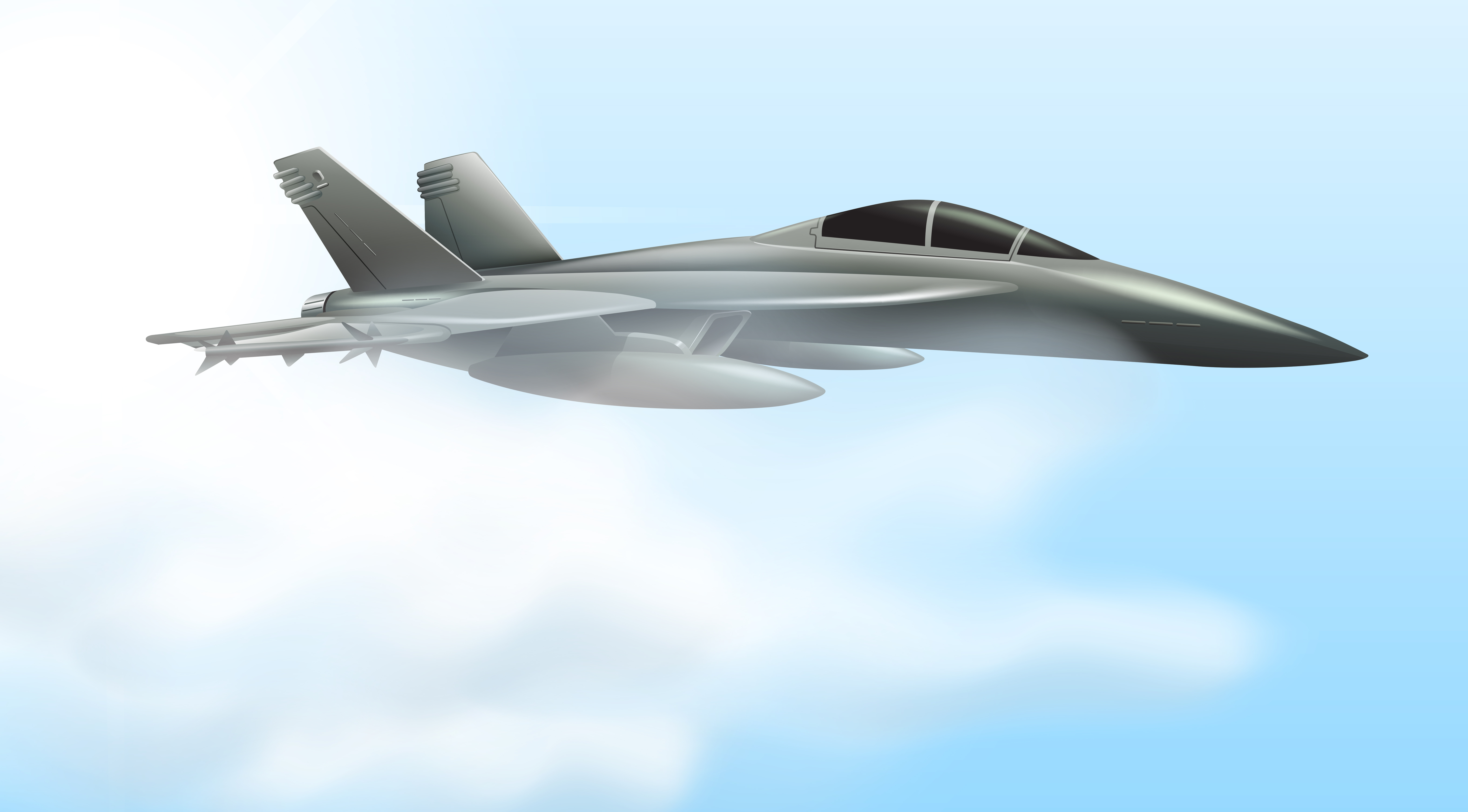
Geography is a cruel master, and for the Hashemite Kingdom of Jordan, it has finally dictated a definitive end to a decades-long strategic ambiguity. In recent months, Amman has moved from being a quiet facilitator of regional stability to an active, kinetic participant in a Western-aligned defensive shield. By intercepting Iranian drones and missiles traversing its airspace, Jordan did more than defend its sovereignty; it formally interred the remains of the pan-Arabist strategic fiction.
The Survival Logic of the Hashemites
To understand why King Abdullah II authorised the use of the Royal Jordanian Air Force to down Iranian projectiles, one must look past the emotive rhetoric of the Arab street and towards the cold balance sheet of the Jordanian state. Jordan is a nation defined by scarcity. It lacks the hydrocarbon wealth of its Gulf neighbours and the industrial base of Turkey. Its primary export is stability; its primary import is security assistance.
For Amman, the calculation is existential. The Kingdom serves as a critical buffer between the Iranian-influenced 'Resistance Axis' to its north and east—Iraq and Syria—and the Israeli-Saudi axis to its south and west. If Jordan fails to police its skies, it ceases to be a sovereign buffer and becomes a multi-directional thoroughfare. By choosing to intercept, Amman signals that its survival is now inextricably linked to the military-technological architecture of the United States and, by extension, the integrated regional air defence (MEAD) network that includes Israel.
The End of the Double Game
For decades, Jordan maintained a delicate double game: official peace with Israel and deep security cooperation with Washington, balanced against a public posture of solidarity with Palestinian and wider Arab causes. This ambiguity was a pressure valve for a population that is over 50 percent Palestinian by origin. However, the rise of Iran’s drone and missile capabilities has made this middle ground uninhabitable.
Technology has forced Jordan’s hand. Cheap, long-range loitering munitions have removed the luxury of time. Amman must now decide within seconds whether to allow its airspace to be used as a launchpad for someone else’s war. Choosing inaction would be a de facto submission to Tehran; choosing action is a formal declaration of alignment with the Status Quo powers.
Historical Parallel: The 1970 Turning Point
This is not the first time the Hashemite monarchy has had to choose survival over sentiment. The current shift mirrors 'Black September' in 1970. Then, King Hussein faced an internal challenge from the PLO that threatened to topple his throne and drag Jordan into a catastrophic war with Israel. Despite the immense pressure to stand in 'Arab solidarity' with the guerrillas, the King prioritised the integrity of the state and the throne, violently expelling the armed factions.
Today, the threat is external and technological, but the incentive remains the same. Just as 1970 settled the question of who ruled inside Jordan, 2024-2026 has settled the question of which regional bloc Jordan belongs to. The era of Jordan acting as a 'neutral mediator' is over; it is now the front line of the Western defensive perimeter in the Levant.
What Most People Miss: The Economic Leash
Observers often focus on the military hardware—the F-16s and Patriot batteries—but the real driver is the Treasury. Jordan is one of the world’s largest per-capita recipients of US foreign aid. More importantly, its water and energy security are now fundamentally tied to a regional grid that includes Israel and the UAE. Under the 'Prosperity Blue and Green' exchange, Jordan provides solar energy to Israel in exchange for desalinated water.
In a region increasingly defined by climate stress, water flows are more powerful than ideologies. An Iranian-dominated Levant offers Jordan nothing but instability and a loss of sovereignty. The Western-Israeli-Gulf alignment offers a literal lifeline of water and capital. The 'Amman Alignment' is therefore not a choice of passion, but a choice of plumbing.
The Second-Order Effects: A New Northern Border
The strategic consequence of this alignment is the hardening of the Jordanian-Syrian and Jordanian-Iraqi borders. We are witnessing the emergence of a 'Security Trench.' Jordan is increasingly treating its northern and eastern frontiers not as gateways to the Arab world, but as a containment wall against Iranian-backed militias and Captagon smuggling rings.
- Intelligence Integration: Expect deeper, though unacknowledged, data-sharing between Amman and the IDF to track low-altitude drone threats.
- Gulf Reassurance: Saudi Arabia sees Jordan’s stance as a litmus test for the feasibility of a broader Middle East defensive pact. If Jordan holds, Riyadh feels safer pursuing its own regional ambitions.
- Internal Friction: The gap between the Kingdom’s strategic necessity and the public’s ideological sentiment will widen, necessitating a more securitised domestic environment.
What to Watch
- The Expansion of Muwaffaq Salti Air Base: Increased US presence here will indicate a permanent shift toward Jordan as a regional hub for air dominance.
- Captagon Skirmishes: Watch for an uptick in Jordanian kinetic strikes against militias in Southern Syria; this is Amman’s way of asserting its 'New Red Lines.'
- The Water-Energy Nexus: Any progress on regional desalination pipelines will be a leading indicator of how irreversible this alignment has become.
"Jordan has realised that in the modern Middle East, you are either a participant in the shield or the victim of the sword. The luxury of the fence has vanished."
The KJ Verdict
Jordan’s decision to intercept Iranian ordnance is the most significant realignment in the Levant since the 1994 peace treaty. It marks the death of the pan-Arabist strategic fiction—the idea that Arab states would or could act as a unified military bloc against a common enemy. Instead, the region has fractured along the lines of state survival and economic pragmatism. Jordan has chosen the path of the 'Integrated State,' tethering its future to Western technology and regional stability, even at the cost of its domestic popularity. This makes the Hashemite Kingdom the most pivotal, yet most vulnerable, link in the new Middle Eastern order. Amman is no longer a bridge; it is a rampart.