1. Pakistan counted on Malaysian support regarding Kashmir
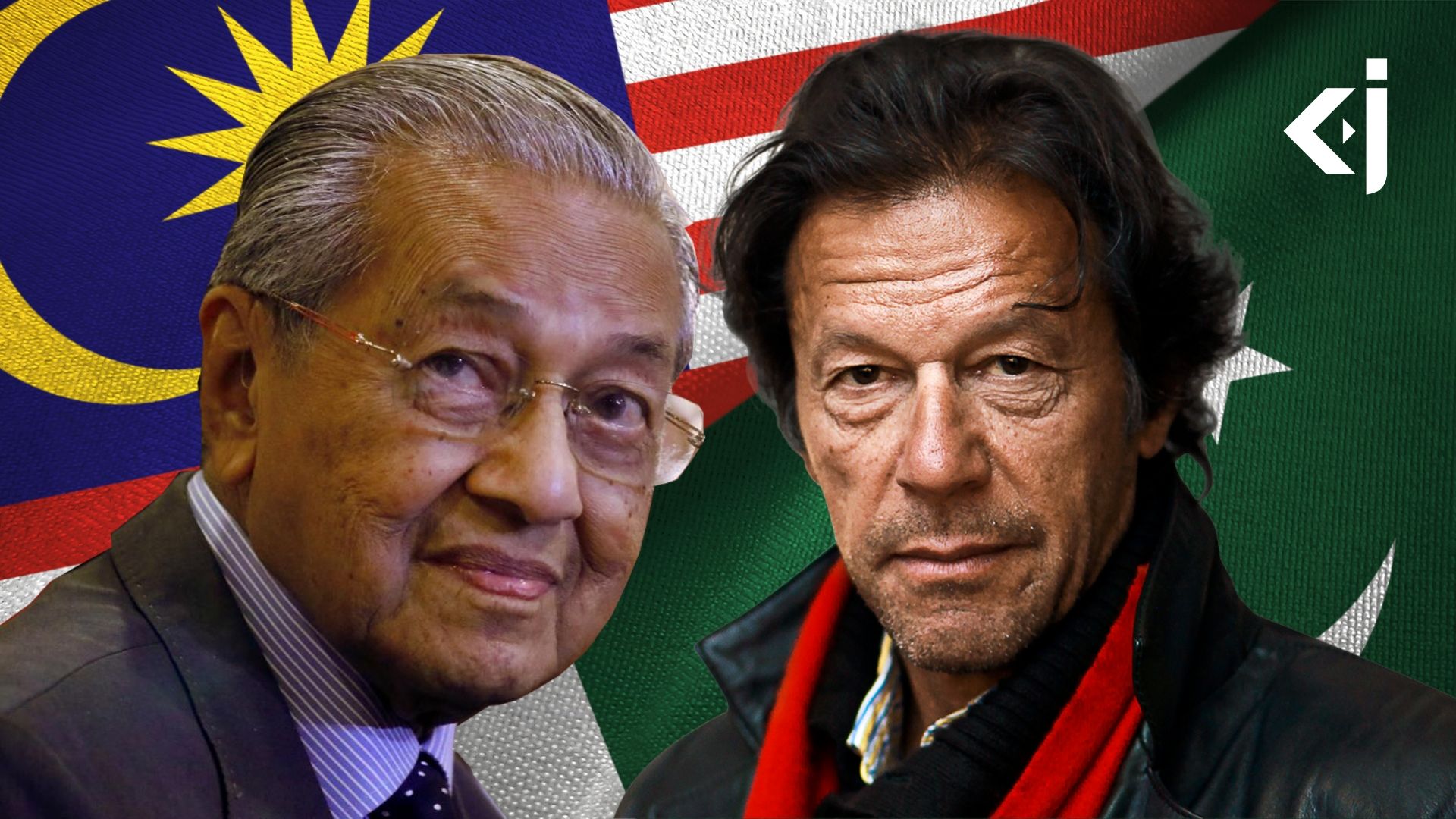
When the Indian government issued a presidential order to scrap the constitutionally mandated special status of Kashmir, Pakistan launched a diplomatic mission to gain support in opposition to the move. Pakistan counted on Malaysia for support due to commonalities between the nations and Pakistan Prime Minister Imran Khan spoke to Malaysian Prime Minister Mahathir Muhammad over the phone to discuss the unfolding situation in Kashmir.
2. Malaysian parliament voices support for Pakistan on Kashmir
Malaysia has appeared to confirm its allegiance to Pakistan, as the Malaysian parliament voiced their support for the region and Pakistan, saying that India’s move is an assault on the rights of the besieged people in Kashmir. The Malaysian government has said it is carefully monitoring the situation and is calling for the dispute to be resolved in favour of the Malaysian people.
3. Pakistan, Malaysia and Turkey to lead Muslim renaissance?
In what appears to be the result of the oppression of Uyghurs and possibly Muslims in Kashmir, Malaysian PM Mahathir Mohamad recently released a statement stating that Turkey, Malaysia and Pakistan can pave the way forward for development in the Muslim world. “The Islamic world needs a renaissance,” said Huseyin Bagci, an expert in International relations at the Middle East Technical University in Ankara. Notably, Turkey, Pakistan and Malaysia are among the founders of the Muslim-majority D-8 group that seeks to establish strategic relations, increased trade, and more cooperation among its members. However, there are calls to increase this into a geopolitical force as well.
4. Pakistan and Malaysia vow to increase trade volume
Furthermore, the two nations intend to increase economic and trade ties, as A meeting was held in Kuala Lumpur of Pak-Malaysia Business Council of Federation of Pakistan Chambers of Commerce & Industry (FPCCI) and Malaysia-Pakistan Business Council of Malaysia on 31st July, 2019, where The Meeting noted with concern that trade between Malaysia and Pakistan has declined in the last few years mainly because of imports of Palm Oil by Pakistan from Indonesia. Therefore, Malaysia-Pakistan Business Council proposed to hold Investment Conference in November, 2019 in Kuala Lumpur to look for opportunities to narrow trade imbalances between two countries, to provide brief on potential opportunities available in Pakistan and Malaysia for investment on trade and to brief the potential investors from Malaysia about viable projects in Pakistan in the field of Plantation of Oil Palm, Energy, Infrastructure etc.
5. Malaysian president wants to exploit close fraternal ties
It appears the latest situation in Kashmir and Xinjiang has reminded Malaysia of its ideological links with Pakistan, as President Dr Arif Alvi on Friday said Pakistan and Malaysia can explore the scope of their close and fraternal ties, particularly in the fields of investment and tourism. The President said the relations between the two countries were based on a solid foundation of shared faith, culture, and cooperation, as well as highlighting the importance of relations with Pakistan, urging the improvement of bilateral relations. Overall, it seems Pakistan’s worries in Kashmir, and the suffering of Muslim Uyghurs in China has reminded Malaysia and Pakistan of their strong ties that have a lot left to be realised.