
Intelligence
Malaysia
8 reports in this category.
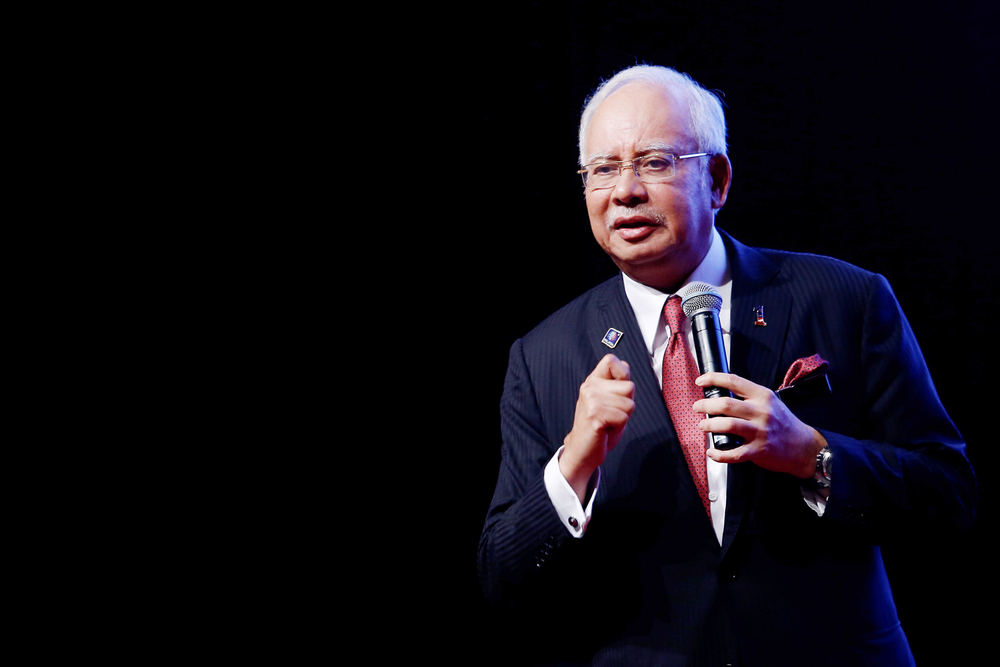
Najib found guilty of all charges: Does this signal the end of corruption in Malaysia?
28 Jul 2020
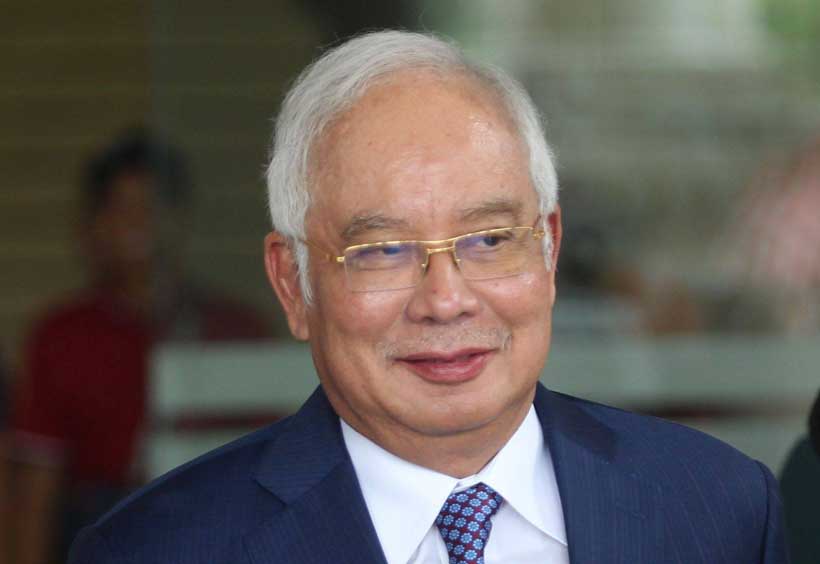
Ripples of 1MDB scandal likely to complicate Malaysian ties to key Gulf states
Ripples of 1MDB scandal Disclosures of taped phone calls between embattled former prime minister Najib Razak and a person believed to be United Arab Emirate crown prince Mohammed bin Zayed go a long way to explain Malaysian efforts to counter UAE and Saudi influence in the Muslim world. The disclosures are the latest incident in what have been complex, if not strained relations with the UAE and Saudi Arabia since prime minister Mahathir Mohamad returned to office 19 months ago on the back of the 1Malaysia Development Berhad (1MDB) scandal. The scandal involves the siphoning off of billions of dollars from the government investment fund for which Mr. Razak is standing trial. Strains in relations between Malaysia and Saudi Arabia and the UAE, the kingdom’s closest ally, were on display last month when Mr. Mahathir convened in cooperation with Turkey, Iran and Qatar – countries with which the two conservative Gulf states are at odds — an Islamic summit that did not involve the Saudi-controlled, Riyadh-based Organization of Islamic Cooperation (OIC). The OIC groups 57 Muslim countries and is the usual convener of Islamic summits. In line with the summit that called for Muslim nations to jointly confront problems Muslims face, Mr. Mahathir earlier this week, in contrast to the Gulf states, condemned the killing in Iraq of Iranian general Qassim Soleimani in a US drone strike as a violation of international law. Saudi Arabia and the UAE called for restraint in the wake of the killing but few in the two states mourned the commander’s death. Subscribe to read the full article We wish we didn't have to do this, but only paid subscribers can read the full article, Unlike other publishers, we are not the beneficiaries of State funds and are entirely dependent on our supporters to keep KJ Vids functioning. Please subscribe to read the rest of the article. The First 1,000 subscribers will receive a 50% lifetime discount to our content. - Access over 500 videos explaining global politics - Full access to all articles - Vote on future video topics - Secure Questions for Video Q&As Sign Up - https://www.kjreports.com/product/lifetimediscount/
15 Jan 2020
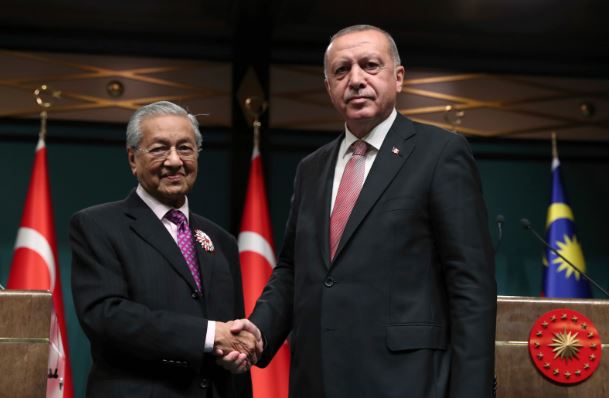
Are Malaysia and Turkey on a challenging quest to unite the Muslim world?
Malaysia leading efforts to unite the Muslim world In recent years, Malaysia has been trying to increase its engagement and cooperation with the Muslim world. We saw many signals of this in 2019, as the nation significantly strengthened relations with Pakistan, as well as Iran and several other Muslim nations in Asia. Furthermore, Malaysia has been vocal on the oppression of Muslim minorities, namely, the Uighurs in China and the Rohingya in Myanmar. After a call for a Muslim summit currently taking place in Malaysia, coming after many calls by Malaysian PM Mahathir Mohammad for the Muslim world to come together, many believe that Malaysia is trying to unite the Muslim world, and consequently increase their say in world politics. Can Malaysian Prime Minister Mahathir Mohamad bring together a divided Muslim world riven by conflict, oppression and under-development? That’s the question observers will ask as Islamic world leaders and representatives convene in Kuala Lumpur for a four-day summit chaired by the outspoken 94-year-old Malaysian leader. “Islam, the Muslims and their countries are in a state of crisis, helpless and unworthy of this great religion which is meant to be good for mankind,” said Mahathir in his opening address to the summit, at which he said Muslim nations had “lost the respect of the world” due to rampant terrorism and disrespect for human rights. In addition to this, Economic Affairs Minister Datuk Seri Azmin Ali said foreign direct investment (FDI) within Muslim economies would stimulate wealth creation of Muslim economies. He said this could be done even as these states continued their current efforts to promote FDIs and trade with other members of the international community. “There is a lot we can benefit from if we increase trade among Muslim countries. This allows us to correct the imbalances in supply and demand among Muslim countries. The demand may be high but we lack the ability to produce the products. We have a huge human capital who are talented and are skilled workers which can be leveraged on.” Malaysia appears to be trying to unite the Muslim world for some sort of economic revival, but as point 3 will illustrate, this will not be easy. Subscribe to read the full article We wish we didn't have to do this, but only paid subscribers can read the full article, Unlike other publishers, we are not the beneficiaries of State funds and are entirely dependent on our supporters to keep KJ Vids functioning. Please subscribe to read the rest of the article. The First 1,000 subscribers will receive a 50% lifetime discount to our content. - Access over 500 videos explaining global politics - Full access to all articles - Vote on future video topics - Secure Questions for Video Q&As Sign Up - https://www.kjreports.com/product/lifetimediscount/
20 Dec 2019
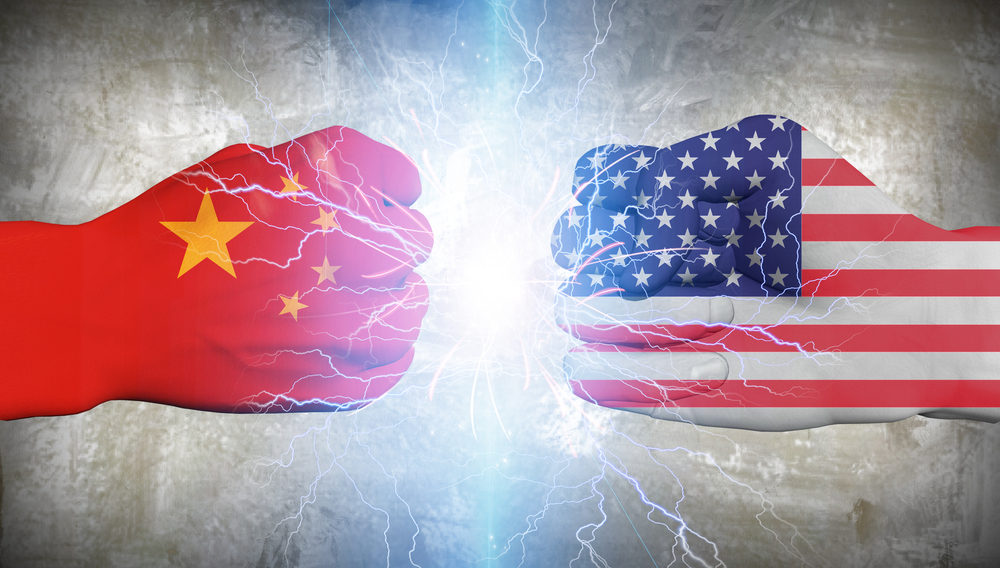
Malaysia and Vietnam take the role of mediators in US-China conflict
Vietnam and Malaysia lead ASEAN into mediating role Vietnam and Malaysia have taken the initiative in leading Asean into playing a mediating role in mediating the US-China conflict. Both have differences between each other and have different reasons for mediation, but have appeared to unite on the basis of their close proximity, both nations being victims of Chinese and less so US influence, and both nations seeing themselves as rising middle powers in the region. Malaysian Deputy Defence Minister Liew Chin Tong in a statement today said both Malaysia and Vietnam are “aspiring middle powers” with important missions in 2020: Malaysia to host the Asia Pacific Economic Cooperation (APEC) and Vietnam taking over the ASEAN chair as well as being elected to United Nations Security Council. Liew said this in his opening speech at the 12th Council for Security Cooperation in the Asia Pacific (CSCAP) themed “Sustaining Peace in Time of Uncertainties: Toward Greater Regional Resilience and Responsiveness” in Hanoi, Vietnam on Thursday. Furthermore, he added that “Asean’s role is to guide the United States and China in taking the middle path and in the process preventing further gaps between the world’s superpowers,” he said. Meanwhile ASEAN has noted that the US had chosen to see China as a strategic competitor, ASEAN would need to actively pursue peace, ensure that both superpowers do not miscalculate, and to help China to understand the region better thus not causing anxieties among smaller nations in the region, he crucially added. Subscribe to read the full article We wish we didn't have to do this, but only paid subscribers can read the full article, Unlike other publishers, we are not the beneficiaries of State funds and are entirely dependent on our supporters to keep KJ Vids functioning. Please subscribe to read the rest of the article. The First 1,000 subscribers will receive a 50% lifetime discount to our content. - Access over 500 videos explaining global politics - Full access to all articles - Vote on future video topics - Secure Questions for Video Q&As Sign Up - https://www.kjreports.com/product/lifetimediscount/
14 Dec 2019
Strained ties with Malaysia should be a worry to India
Kashmir tension sent India-Malaysia ties downhill Two months ago, after India’s lockdown of Kashmir, Malaysia’s PM Mahathir Mohamad objected to the move, which sparked an angered reaction from India and sent Indian-Malaysian relations downhill. India was furious after Mahathir Mohamad said New Delhi had “invaded and occupied” Jammu and Kashmir during his address in New York City at the 74th session of the UN General Assembly on Sept. 27. “We felt that the people of Kashmir had benefited from the UN resolution, and all countries should abide by it, not just India or Pakistan but even the United States. “Otherwise, what’s the use of having the UN?” Mahathir told reporters in Kuala Lumpur on Oct. 22. He also criticized India for revoking the special status of Jammu and Kashmir, which has a Muslim majority population. As a result, numerous posts with the hashtag #BoycottMalaysia from users in India were trending on Twitter. Malaysian users responded with #BoycottIndia tweets. Subscribe to read the full article We wish we didn't have to do this, but only paid subscribers can read the full article, Unlike other publishers, we are not the beneficiaries of State funds and are entirely dependent on our supporters to keep KJ Vids functioning. Please subscribe to read the rest of the article. The First 1,000 subscribers will receive a 50% lifetime discount to our content. - Access over 500 videos explaining global politics - Full access to all articles - Vote on future video topics - Secure Questions for Video Q&As Sign Up - https://www.kjreports.com/product/lifetimediscount/
1 Dec 2019
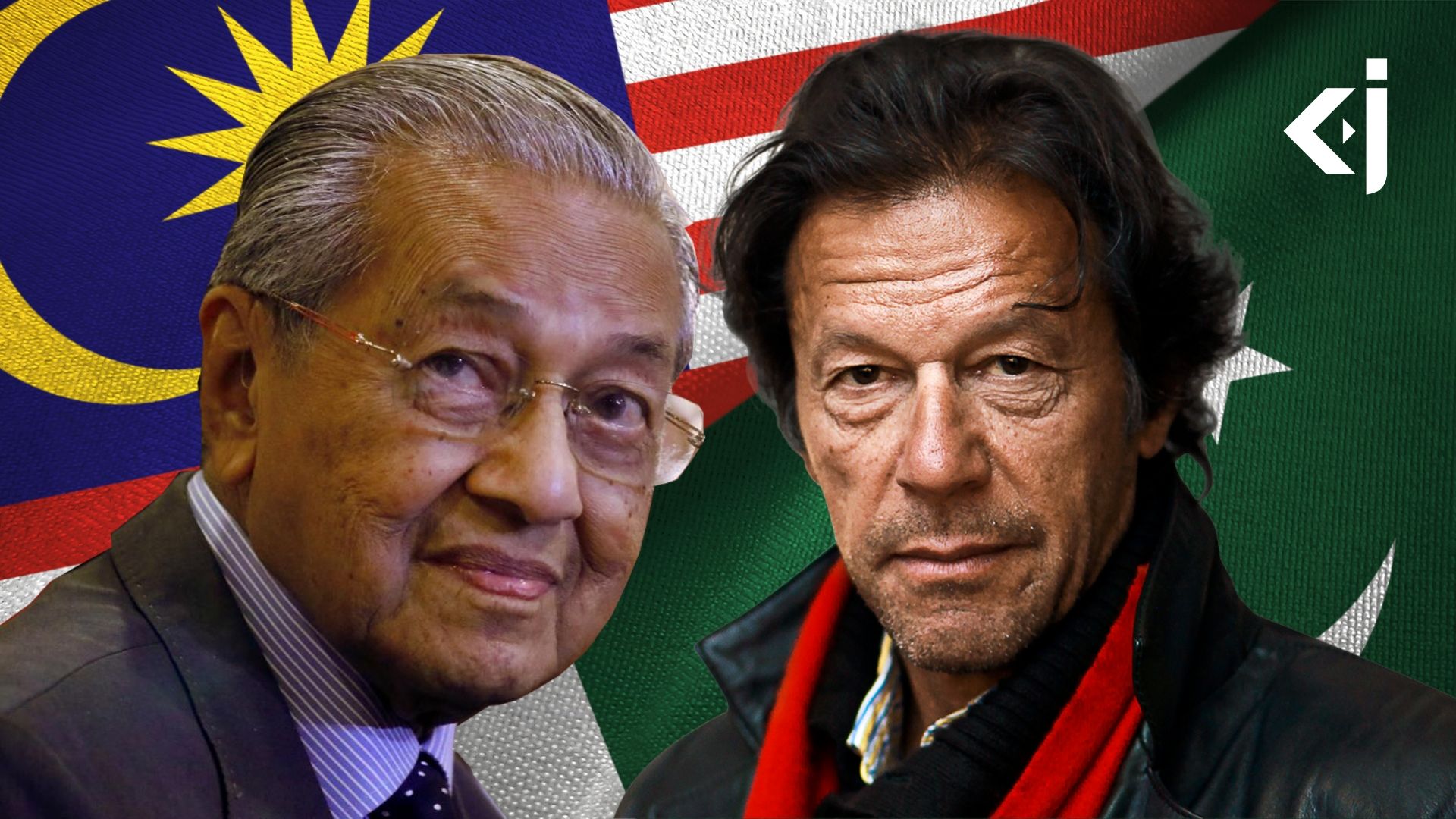
Is Kashmir and Uyghur repression uniting Pakistan and Malaysia? 5 Geopolitical Effects You Need to Know
1. Pakistan counted on Malaysian support regarding Kashmir When the Indian government issued a presidential order to scrap the constitutionally mandated special status of Kashmir, Pakistan launched a diplomatic mission to gain support in opposition to the move. Pakistan counted on Malaysia for support due to commonalities between the nations and Pakistan Prime Minister Imran Khan spoke to Malaysian Prime Minister Mahathir Muhammad over the phone to discuss the unfolding situation in Kashmir. 2. Malaysian parliament voices support for Pakistan on Kashmir Malaysia has appeared to confirm its allegiance to Pakistan, as the Malaysian parliament voiced their support for the region and Pakistan, saying that India’s move is an assault on the rights of the besieged people in Kashmir. The Malaysian government has said it is carefully monitoring the situation and is calling for the dispute to be resolved in favour of the Malaysian people. Subscribe to unlock the other 3 Points We wish we didn't have to do this, but only paid subscribers can read the full article, Unlike other publishers, we are not the beneficiaries of State funds and are entirely dependent on our supporters to keep KJ Vids functioning. Please subscribe to read the rest of the article. The First 1,000 subscribers will receive a 50% lifetime discount to our content. - Access over 500 videos explaining global politics - Full access to all articles - Vote on future video topics - Secure Questions for Video Q&As Sign Up - https://www.kjreports.com/product/lifetimediscount/
19 Aug 2019
China’s Plans in Malaysia: 5 Geopolitical Effects You Need to Know
1. China-Malaysia joint construction of Belt and Road restarts After a year-long suspension, China and Malaysia have finally agreed to resume construction of the massive “Belt and Road” train project in northern Malaysia. The construction restarted after an agreement to cut its cost by nearly a third to about $11 billion. The project was initially cancelled by Malaysian Prime Minister Mahathir Mohamad due to “unfair” Chinese mega-projects approved by his predecessor, Najib Razak. China will fund 85% of production with the lead contractor of the project set to be China Communications Construction Co Ltd. This is a strong signal of China’s intentions of increasing its already large economic influence in Malaysia. 2. China Malaysia’s largest trade partner China remains Malaysia’s largest trade partner and continues to grow. from January to November 2018, Malaysia’s total trade rose 6.2 per cent as compared with the same period in 2017, contributed by 6.9 per cent growth in exports and a 5.3 per cent rise in imports. During the period, MalaysiaChina total trade expanded by 8.5 per cent, with an 11.3 per cent increase in exports and 6.3 per cent growth in imports. We can hence see Malaysia’s reliance on China from an economic standpoint, that makes China’s role in the Belt and Road construction, not very surprising. 3. Malaysia seizes money from China-owned bank According to Malaysian PM Mahathir Mohamad, Malaysia seized more than 1 billion ringgit ($243.5 million) from a bank account of state-owned China Petroleum Pipeline Engineering (CPP) over incomplete pipeline projects. Mohamad said: “I understand that money for 80% of the pipeline was paid, but the work completed was only 13%,” Mahathir told reporters. “So the government is entitled to get back the money since the project was cancelled.” This is a signal that despite China’s huge economic presence in Malaysia, the Malaysian government is not afraid to stand up for its economic rights. More on this will be discussed on point 5.
25 Jul 2019
Abandoned baby in Malaysia is given the name ‘Ramadhan’
30 May 2017