
Intelligence
Southeast Asia
7 reports in this category.
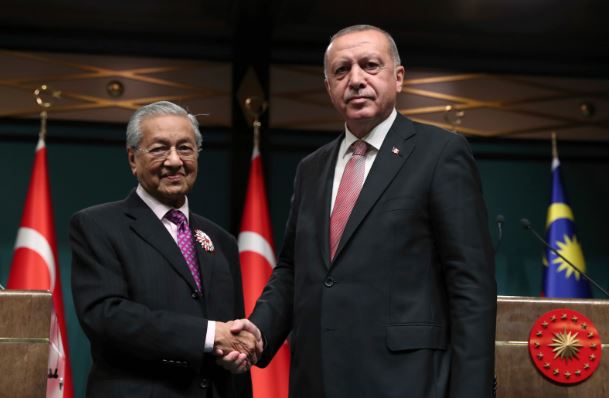
Are Malaysia and Turkey on a challenging quest to unite the Muslim world?
Malaysia leading efforts to unite the Muslim world In recent years, Malaysia has been trying to increase its engagement and cooperation with the Muslim world. We saw many signals of this in 2019, as the nation significantly strengthened relations with Pakistan, as well as Iran and several other Muslim nations in Asia. Furthermore, Malaysia has been vocal on the oppression of Muslim minorities, namely, the Uighurs in China and the Rohingya in Myanmar. After a call for a Muslim summit currently taking place in Malaysia, coming after many calls by Malaysian PM Mahathir Mohammad for the Muslim world to come together, many believe that Malaysia is trying to unite the Muslim world, and consequently increase their say in world politics. Can Malaysian Prime Minister Mahathir Mohamad bring together a divided Muslim world riven by conflict, oppression and under-development? That’s the question observers will ask as Islamic world leaders and representatives convene in Kuala Lumpur for a four-day summit chaired by the outspoken 94-year-old Malaysian leader. “Islam, the Muslims and their countries are in a state of crisis, helpless and unworthy of this great religion which is meant to be good for mankind,” said Mahathir in his opening address to the summit, at which he said Muslim nations had “lost the respect of the world” due to rampant terrorism and disrespect for human rights. In addition to this, Economic Affairs Minister Datuk Seri Azmin Ali said foreign direct investment (FDI) within Muslim economies would stimulate wealth creation of Muslim economies. He said this could be done even as these states continued their current efforts to promote FDIs and trade with other members of the international community. “There is a lot we can benefit from if we increase trade among Muslim countries. This allows us to correct the imbalances in supply and demand among Muslim countries. The demand may be high but we lack the ability to produce the products. We have a huge human capital who are talented and are skilled workers which can be leveraged on.” Malaysia appears to be trying to unite the Muslim world for some sort of economic revival, but as point 3 will illustrate, this will not be easy. Subscribe to read the full article We wish we didn't have to do this, but only paid subscribers can read the full article, Unlike other publishers, we are not the beneficiaries of State funds and are entirely dependent on our supporters to keep KJ Vids functioning. Please subscribe to read the rest of the article. The First 1,000 subscribers will receive a 50% lifetime discount to our content. - Access over 500 videos explaining global politics - Full access to all articles - Vote on future video topics - Secure Questions for Video Q&As Sign Up - https://www.kjreports.com/product/lifetimediscount/
20 Dec 2019
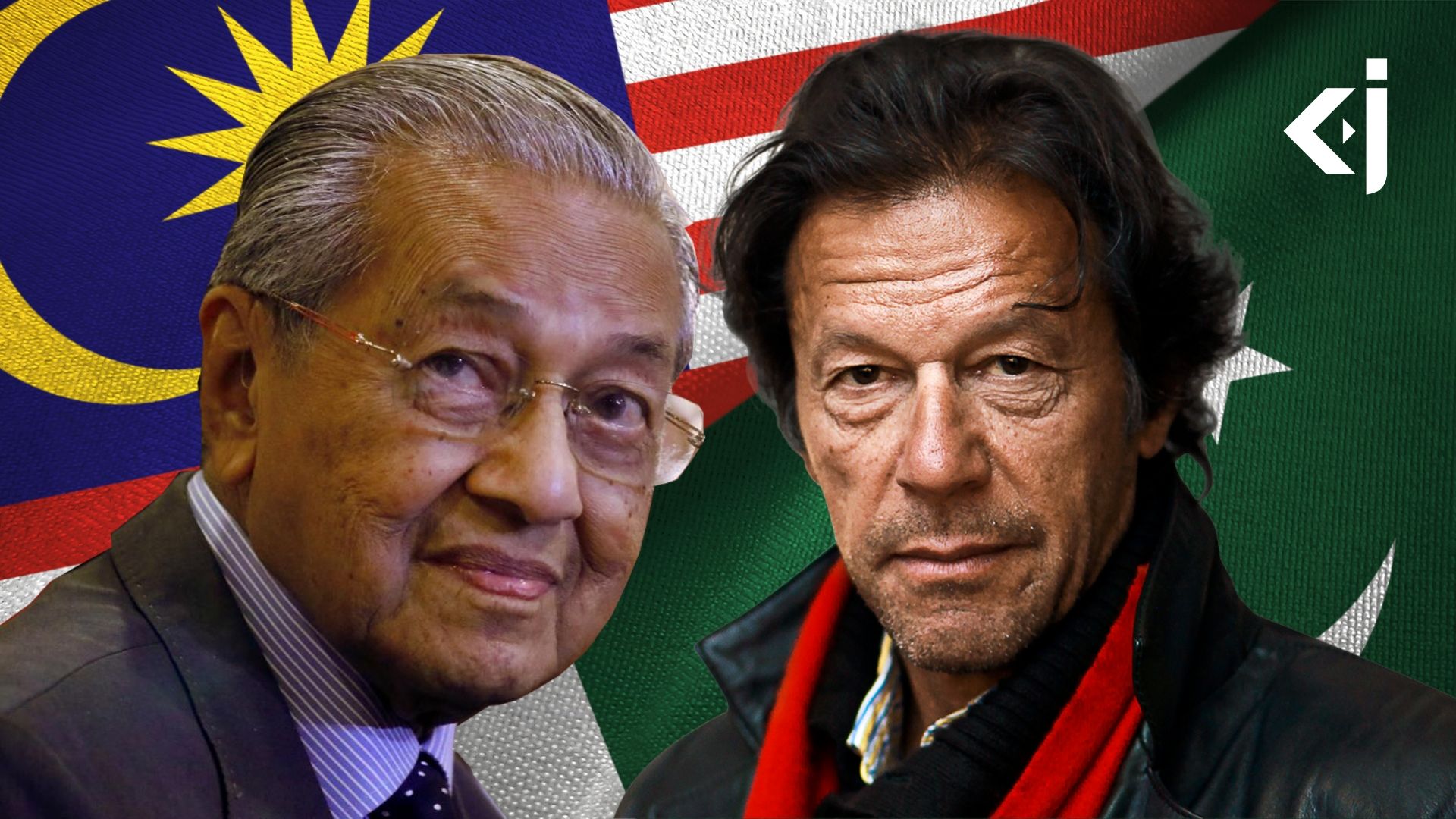
Is Kashmir and Uyghur repression uniting Pakistan and Malaysia? 5 Geopolitical Effects You Need to Know
1. Pakistan counted on Malaysian support regarding Kashmir When the Indian government issued a presidential order to scrap the constitutionally mandated special status of Kashmir, Pakistan launched a diplomatic mission to gain support in opposition to the move. Pakistan counted on Malaysia for support due to commonalities between the nations and Pakistan Prime Minister Imran Khan spoke to Malaysian Prime Minister Mahathir Muhammad over the phone to discuss the unfolding situation in Kashmir. 2. Malaysian parliament voices support for Pakistan on Kashmir Malaysia has appeared to confirm its allegiance to Pakistan, as the Malaysian parliament voiced their support for the region and Pakistan, saying that India’s move is an assault on the rights of the besieged people in Kashmir. The Malaysian government has said it is carefully monitoring the situation and is calling for the dispute to be resolved in favour of the Malaysian people. Subscribe to unlock the other 3 Points We wish we didn't have to do this, but only paid subscribers can read the full article, Unlike other publishers, we are not the beneficiaries of State funds and are entirely dependent on our supporters to keep KJ Vids functioning. Please subscribe to read the rest of the article. The First 1,000 subscribers will receive a 50% lifetime discount to our content. - Access over 500 videos explaining global politics - Full access to all articles - Vote on future video topics - Secure Questions for Video Q&As Sign Up - https://www.kjreports.com/product/lifetimediscount/
19 Aug 2019

China’s Growing Control of Cambodia: 5 Geopolitical Effects You Need to Know
1. China’s secret naval deal with Cambodia At the end of July, Cambodia and China reportedly signed a secret deal that would grant China exclusive access to Cambodia’s naval port for 30 years. The agreement comes amid tensions and suspicions that China has lobbied to build a dual-use naval base in Cambodia, Beijing’s closest ally in Southeast Asia. Cambodia has denied the reports with the Prime Minister saying: “This is the worst-ever made-up news against Cambodia,” adding that it clearly went against the constitution of Cambodia. If the reports are true, such developments would have huge implications on the region, as Thailand is already worried about the increased Chinese military presence in its regional waters. 2. Why is Cambodia following China’s commands? Since the early 1990s, Western countries including the US have focused heavily on the goal of fostering Western-style democracy, a project that has done little but push long-ruling Hun Sen down the well-trodden pariah’s path to Beijing. It appears that the government in Cambodia knows it receives constant criticism on human rights from Western nations and has hence built up a relationship and even dependence on China, to allow itself the ability to continue ruling its way. Subscribe to unlock the other 3 Points We wish we didn't have to do this, but only paid subscribers can read the full article, Unlike other publishers, we are not the beneficiaries of State funds and are entirely dependent on our supporters to keep KJ Vids functioning. Please subscribe to read the rest of the article. 3. Alarms of military build-up 4. Will China invade Cambodia? 5. Cambodia pushes the US away By investing in KJ Vids, you are investing in yourself Our content succinctly contextualises the key geopolitical trends you need to know in order to make sense of world events. We can assure you that a regular dose of our content will be as healthy as fruit and vegetables for your mind. Subscribe for only £10 a month.
12 Aug 2019

Singapore’s Move Towards China: 5 Geopolitical Effects You Need to Know
1. Singapore and China to bolster relations China and Singapore reached an agreement last week, to strengthen their bilateral relations and increase cooperation. Singaporean Foreign Minister Vivian Balakrishnan engaged in talks with Chinese State Councilor and Foreign Minister Wang Yi during on the sidelines of an ASEAN (the Association of Southeast Asian Nations) meeting. One of the major points of increased future cooperation was the Belt and Road project. This is important for both nations, as China is diversifying its economic ties to combat the effects of its trade war with the US, while Singapore’s economy will get further stimulated by the co-operation. 2. Joint military exercise a step forward Among the first signs of the agreed increased cooperation coming into effect, troops from Singapore and China launched an assault on a building in a counter-terrorist urban raid to take out “enemy forces” last week. This year’s exercise, which started on July 27 and ended on the 5th of August, was the biggest one in the series, which was launched in 2009. This is a sign that China is willing to back up its promises made in the agreement made at the start of the month. Subscribe to unlock the other 3 Points We wish we didn't have to do this, but only paid subscribers can read the full article, Unlike other publishers, we are not the beneficiaries of State funds and are entirely dependent on our supporters to keep KJ Vids functioning. Please subscribe to read the rest of the article. 3. China reviving Singapore’s retail market 4. Accusations of China’s hunger for influence 5. Is Singapore moving away from the US? By investing in KJ Vids, you are investing in yourself Our content succinctly contextualises the key geopolitical trends you need to know in order to make sense of world events. We can assure you that a regular dose of our content will be as healthy as fruit and vegetables for your mind. Subscribe for only £10 a month.
9 Aug 2019

Indonesia’s Incoming Trade War: 5 Geopolitical Effects You Need to Know
1. Indonesia’s fight with the EU could create trade war Indonesia announced today that it will immediately recommend to an inter-ministerial team a 20%-25% tariff on EU dairy products as the appropriate response to the EU’s plan to impose anti-subsidy duties of 8%-18% on palm biodiesel from Indonesia. This seems the spark to a trade war between Indonesia and the EU, but there are feelings that Indonesia’s industry would get hurt the most, as the EU duties would be another blow to Indonesian biodiesel producers after the 28-nation block said in March that palm oil should be phased out of renewable transportation fuels due to palm plantations’ contribution to deforestation. “If the parameters are not fair, it’s a step toward protectionism and a trade war, and we will not stay silent for the unfair treatment,” Enggartiasto Lukita told an economic forum in Jakarta. It remains to be seen whether Jakarta will back down or not. 2. Effects of EU sanctions already visible The effects of the Eu’s tariffs on Indonesia can already be seen, as the EU ban on palm oil could keep Norwegian telecommunication giant Telenor Group out of Indonesia. The EU parliament passed on 10 June 2019 a law that will restrict and ban palm oil usage in biofuel by 2030. Since Telenor originates from the EU, the merger should be scrutinised, according to Indonesia’s Minister of Communication and Information Technology, Rudiantara. Nevertheless, the exclusion of an important company from Indonesian operation signifies that Indonesia will suffer economically from the incoming trade war. Subscribe to unlock the other 3 Points We wish we didn't have to do this, but only paid subscribers can read the full article, Unlike other publishers, we are not the beneficiaries of State funds and are entirely dependent on our supporters to keep KJ Vids functioning. Please subscribe to read the rest of the article. 3. Trade co-operation with Malaysia booming 4. Vietnam crucial partner 5. Indonesia facing tax from China as well By investing in KJ Vids, you are investing in yourself Our content succinctly contextualises the key geopolitical trends you need to know in order to make sense of world events. We can assure you that a regular dose of our content will be as healthy as fruit and vegetables for your mind. Subscribe for only £10 a month.
9 Aug 2019
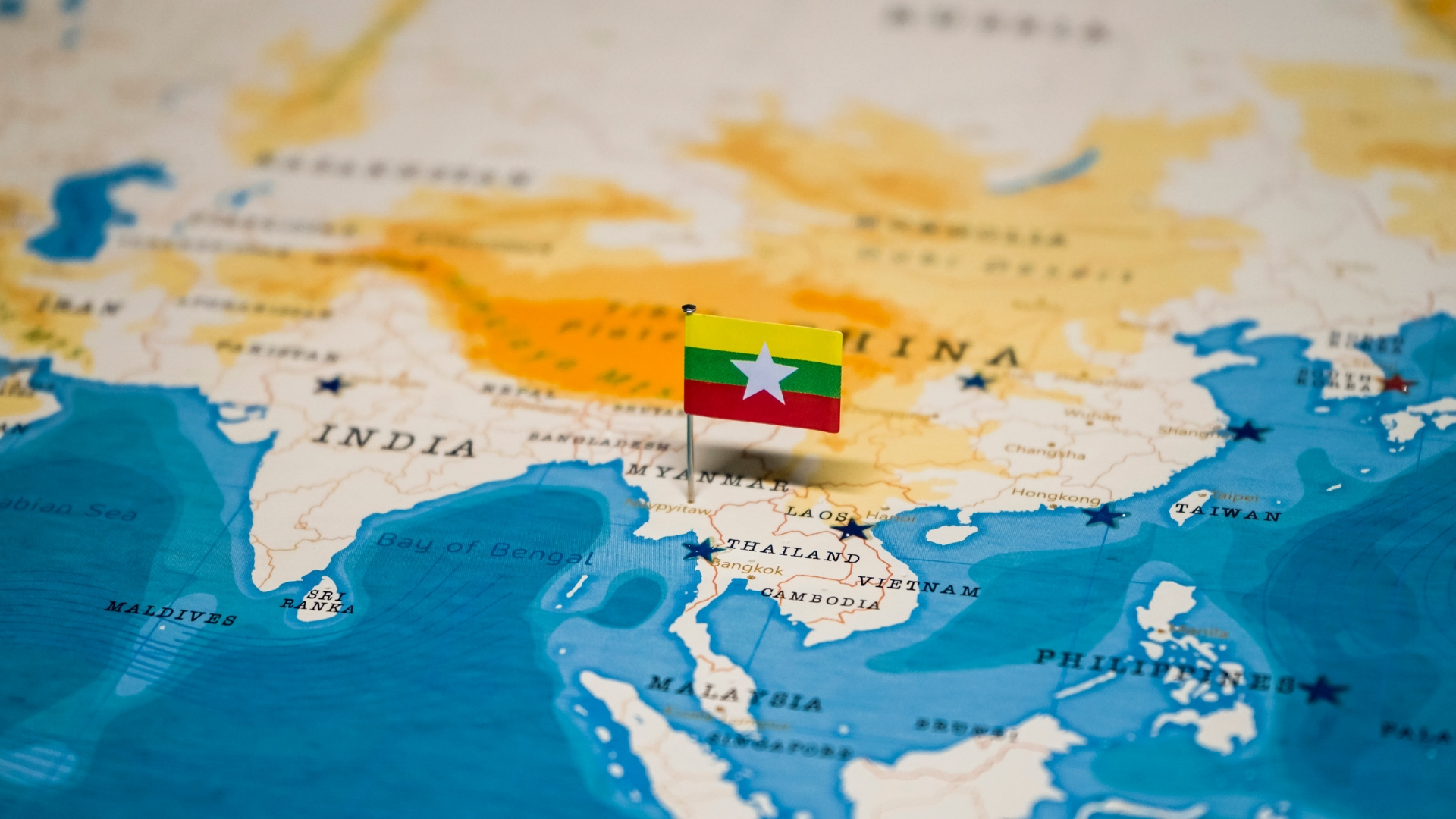
Myanmar-Rohingya Situation: 5 Geopolitical Effects You Need to Know
1. Tug of war for Myanmar China and the US are playing a tug of war for increased influence in Myanmar, due to the abundance of natural resources. With the recent international opposition to Myanmar’s expulsion of the Rohingya population, the two superpowers have taken different sides of the spectrum to try to gaining influence in the area. In spite of the Rohingya issue that has been escalating for a number of years, China has emerged as the largest investor in Myanmar’s commercial centre Yangon, accounting for 65 of 113 approved foreign invested projects in fiscal 2018-19. According to a July 26 report in The Irrawaddy, the surge in new Chinese investment has been concentrated in Yangon but is also growing fast in other parts of the country. At the same time, spurned by the West over its abysmal human rights record, Myanmar is increasingly turning to China to fill its foreign investment shortfall, while China are also aiding the country militarily. On the other hand, the US is taking a different approach, as they recently banned visits by Myanmar’s army chief and three other top officers due to their role in the “ethnic cleansing” of the Rohingya minority, urging accountability for their brutal campaign. The US is trying to use its influence to change the military command in its favour, which would make the return of the Rohingyas more likely, while more importantly making the US have a bigger role in the nation. 2. China’s influence through One Belt One road China’s political influence in China, is clearly displayed through the role of the influence in Myanmar on the Arakan Army’s (AA) and it's endorsement of China’s One Belt One Road (OBOR) or Belt and Road Initiative (BRI). Generally, China employs a government-to-government and party-to-party two-pronged relationship with Myanmar as it usually does with the other countries. But lately, with the ambitious BRI mega project, it seems to have added another channel which is military to military. Myanmar relies heavily on China for military equipment and food supplies, as well as two-way trade which involves exporting natural resources and mineral extraction, among others. the Myanmar government recently agreed to begin work on key projects under the China-Myanmar Economic Corridor (CMEC) agreement which is part of the BRI. An estimated $2 billion will be spent in the initial stages of the project. This is a major sign of China’s increased influence in the nation, and the BRI is set to be the perfect tool for it. Subscribe to unlock the other 3 Points We wish we didn't have to do this, but only paid subscribers can read the full article, Unlike other publishers, we are not the beneficiaries of State funds and are entirely dependent on our supporters to keep KJ Vids functioning. Please subscribe to read the rest of the article. 3. India’s help in Bay of Bengal 4. UN calls for boycott on Myanmar 5. Malaysia speaking out By investing in KJ Vids, you are investing in yourself Our content succinctly contextualises the key geopolitical trends you need to know in order to make sense of world events. We can assure you that a regular dose of our content will be as healthy as fruit and vegetables for your mind. Subscribe for only £10 a month.
5 Aug 2019

US-Thailand Strengthening Relations: 5 Geopolitical Effects You Need to Know
Members Only Sorry, but this is a members only article. We wish we didn't have to do this, but quality analyses costs money. Unlike other publishers, we do not rely on volunteers and pay all our analysts, editors and designers to produce quality content. By investing in KJ Vids, you are investing in yourself Our content succinctly contextualises the key geopolitical trends you need to know in order to make sense of world events. We can assure you that a regular dose of our content will be better for your mind then fruit and vegetables. Try us out with a 14-day free trial. Once you have signed up, you can read the five points in this article; 1. Why Thailand is important to the US 2. New military vehicle deal shows the development of relations 3. The US certifies Thailand as a democracy 4. Thailand wants more cooperation 5. Stronger currency marks problem
1 Aug 2019