KRG wants to remove PKK from Iraq
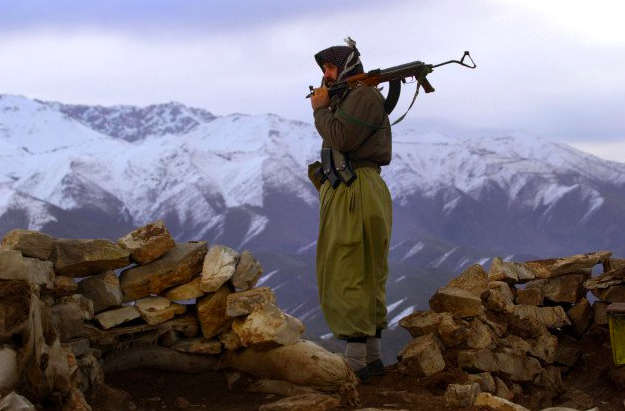
Tensions are rising in the Kurdistan Region of Iraq, where officials in the Kurdistan Regional Government (KRG) are speaking out against the long-accommodated but increasingly unwelcome Kurdistan Workers’ Party, better known as the PKK. The intensified rhetoric complemented by a new security agreement between authorities in Erbil and Baghdad that takes a decidedly anti-PKK stance seems to be part of a coordinated effort to pressure the group to leave its historic hideouts in the mountains of northern Iraq.
The Oct. 8 assassination of a Kurdish border official which the KRG’s security forces said was perpetrated by the PKK and attacks on a key pipeline and Peshmerga soldiers in early November have brought to the fore the long-simmering tensions between the KRG and PKK. The latter group is making it known that it has no intention of leaving Iraq peacefully.
Baghdad reached a deal with the Kurdistan Regional Government (KRG) on October 9 over the governance and security of Shingal, which is disputed between the two governments.
Implementation of the agreement began last week with the deployment of some 6,000 federal police to the areas of Shingal that border Syria. “Three brigades of Iraqi federal forces are placed on the border between Shingal and Syria in order to prevent any forces from going back and forth,” Deputy Governor of Nineveh province Sirwan Rozhbayani told Rudaw on Tuesday.
Flying only the Iraqi flag is the second phase in the deal that will ultimately put federal forces in full control of Shingal’s security.
It is clear that the KRG is planning to remove the PKK from Northern Iraq once and for all.
Skirmishes between KRG and PKK
Skirmishes between the outlawed Kurdistan Workers’ Party (PKK) and forces from the Kurdistan Regional Government (KRG) have raised fears of a full-blown conflict in northern Iraq.
On Oct. 28, the PKK attacked a KRG pipeline near the city of Mardin in south-eastern Turkey, halting production for ten days. The already cash-strapped KRG claimed the incident cost it $100 million in revenue.
“On a daily basis, the Kurdistan Region was losing $10 million as a result of the explosion,” said member of regional parliament Lanja Dizayee, according to pro-KRG Kurdistan24.
Earlier in the month, the KRG accused the PKK of assassinating the head of a security at a border crossing in the Amedi district of Duhok, where Turkish military operations have been particularly intense.
The PKK denied involvement in the killing. But the group has previously threatened those it accuses of working with Turkey following an increasingly successful campaign of Turkish drone strikes targeting senior PKK figures in northern Iraq.
Tensions between the PKK and KRG has escalated into open warfare before, clashing during the Kurdish civil war in the 1990s. But they have also fought side by side, with PKK fighters deploying in support of the KRG to halt expansion of the Islamic State (ISIS) into northern Iraq in 2014.
The KRG has since accused the PKK of using ISIS as an opportunity to expand its presence in the region, which it is now seeking to reclaim. However, the PKK maintains that the recent encroachment of KRG forces towards its positions is aimed at facilitating Turkish aggression against the group
“New checkpoints aim to enable a safe access for the (Turkish) ‘occupiers’,” PKK-affiliated ANF News said on Thursday.
Strong cooperation between Turkey and KRG
The PKK has come under growing pressure in the region from a Turkish military incursion aimed at isolating its headquarters in the Qandil Mountains that straddle the border between Turkey and Iraq and has accused the KRG of working with Ankara to target its forces.
The KRG has built a close working relationship with Turkey on the basis of shared political and economic interests, most notably an oil pipeline allowing Iraqi-Kurdish authorities to market their oil exports independently of the federal government in Baghdad.
This joins a string of increased security measures by the Kurdistan Regional Government (KRG) to cut off resources to militants of the Kurdistan Workers Party (PKK), which is designated as a terrorist organization by the United States, Turkey, the European Union and Israel, among others. While the uptick in PKK activity includes attacks on peshmerga forces as militants from the group have been pushed further south into the KRG region, there has been increased harassment targeting locals.
Turkey has repeatedly striked PKK targets in Northern Iraq in recent months, killing many prominent figueres in the group. This has heavily supported KRG’s attempts to remove the group from its territory, by severely weakening the PKK.
Increased cooperation between Turkey and KRG is certainly forecasted, and will be central in weakening the PKK, possibly successfully removing the group from Northern Iraq, unless a foreign power comes to its aid. This however remains unlikely, as Saudi Arabia has in recent days announced that it will cut its funding to the PKK, to bolster relations with Turkey.