The Illusion of Conventional Dominance
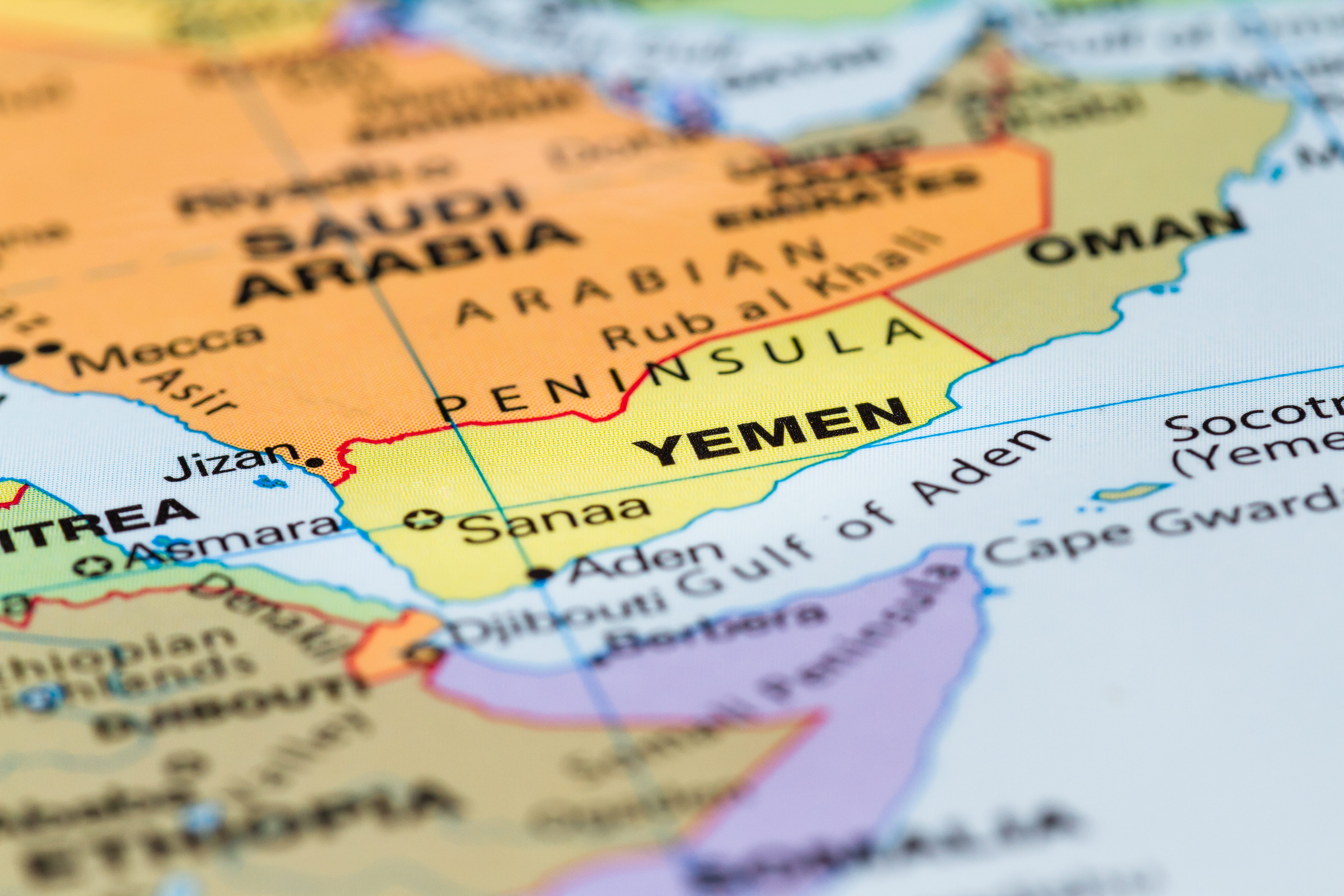
In the spring of 2015, the intervention in Yemen was framed as a demonstration of a new, assertive Arab military capability. Led by Saudi Arabia and the United Arab Emirates, the coalition possessed the world’s most advanced Western-made hardware, undisputed air superiority, and a seemingly bottomless exchequer. Yet, by 2026, the geopolitical balance has not tilted in favour of the Gulf monarchs. Instead, the Yemen conflict has served as a laboratory for the limits of hard power in the 21st century.
The central paradox is simple: more money did not produce more security. The coalition failed to understand that in modern irregular warfare, the cost of offensive operations scales exponentially, while the cost of defensive attrition scales linearly. For every million-dollar interceptor missile fired by Riyadh, the Ansar Allah (Houthi) movement countered with a drone costing less than a mid-range motorcycle. This is not merely a tactical nuisance; it is a structural transfer of leverage from the wealthy to the persistent.
The Incentive of Survival
To understand why the Houthis remain the dominant force in northern Yemen, we must look at human incentives. For the Gulf states, Yemen was a war of choice—a strategic 'boundary policing' exercise to prevent Iranian encroachment. For the Houthis, it was an existential struggle for the survival of their theological and political identity. In any conflict where one side fights for a policy objective and the other fights for its life, the latter will always outlast the former.
Furthermore, the war provided the Houthis with exactly what they lacked: a unifying nationalist narrative. By framing the conflict as a resistance against foreign aggression, they consolidated domestic control through the 'rally 'round the flag' effect. The blockade intended to starve their resources instead created a lucrative black market economy, which the Houthi leadership captured and taxed. They did not just survive the war; they were built by it.
The Suez Parallel
The historical parallel most relevant here is the 1956 Suez Crisis, though the roles are inverted. In 1956, the declining colonial powers (Britain and France) discovered that military brilliance meant nothing without political legitimacy and the backing of a global hegemon. In Yemen, the Gulf states discovered that they could not act as regional hegemons without a domestic industrial-military base and the ability to sustain casualties. Like Suez, Yemen marked the end of an era of easy interventionism. It signaled that the era of the 'Rentier Military'‒where states buy defence entirely from foreign contractors‒has hit its ceiling.
What Most People Miss: The Technocratic Decoupling
Most analysts focus on the religious or tribal nature of the conflict. What they miss is the total decoupling of the Gulf's 'Vision' economies from their military realities. Riyadh and Abu Dhabi are successfully transforming into global hubs for finance, tourism, and technology. However, these hyper-modern economies are inherently fragile. A single drone strike on a desalination plant or a luxury skyscraper in Dubai does more damage to 'investor confidence' than a dozen lost border skirmishes. The Houthis realised that they did not need to win on the battlefield; they only needed to make the Gulf look like an unsafe place to store global capital. The Gulf's greatest strength—its rapid economic integration with the West‒became its primary strategic vulnerability.
Strategic Consequences
The second-order effects of this realisation are now visible across the Middle East. First, we see the 'Great De-escalation.' Saudi Arabia’s 2023 rapprochement with Iran was not a move of friendship, but a pragmatic admission that the cost of proxy competition was too high to sustain alongside ambitious domestic reforms. Second, the UAE has shifted from direct military intervention to a 'string of pearls' strategy, focusing on maritime infrastructure and ports rather than inland territory.
Third, and perhaps most importantly, the Yemen war has permanently elevated the status of non-state actors in the region. The 'Axis of Resistance' now knows that a sufficiently motivated militia with cheap technology can effectively check the power of a G20 nation. This creates a more fractured, multi-polar Middle East where traditional borders matter less than 'corridors of influence.'
What to Watch
- Red Sea Militarisation: Watch for the establishment of permanent Houthi maritime capabilities. Deep-sea mining and telecommunications cables in the Bab el-Mandeb are the next frontier for leverage.
- The Saudi-Chinese Security Nexus: As Washington proves reluctant to offer iron-clad guarantees, Riyadh will increasingly look to Beijing as a neutral mediator that can influence Tehran and Sanaa.
- The Drone Proliferation: Monitor the export of Yemeni-modified drone designs to other conflict zones. Yemen has become a R&D hub for low-cost aerial and naval denial.
The KJ Verdict
Yemen did not just expose the limits of Gulf power; it redefined what power means in the Middle East. Hegemony can no longer be purchased through the acquisition of high-end Western platforms. Real power now resides in the ability to manage economic vulnerability and maintain domestic social contracts under the threat of persistent, asymmetric disruption. Riyadh has learned the hard way that a stable neighbour is more valuable than a defeated one. The 'Yemen Mirror' shows us a future where the wealthy are increasingly held hostage by the determined, and where the most expensive military in history is only as strong as its cheapest vulnerability.