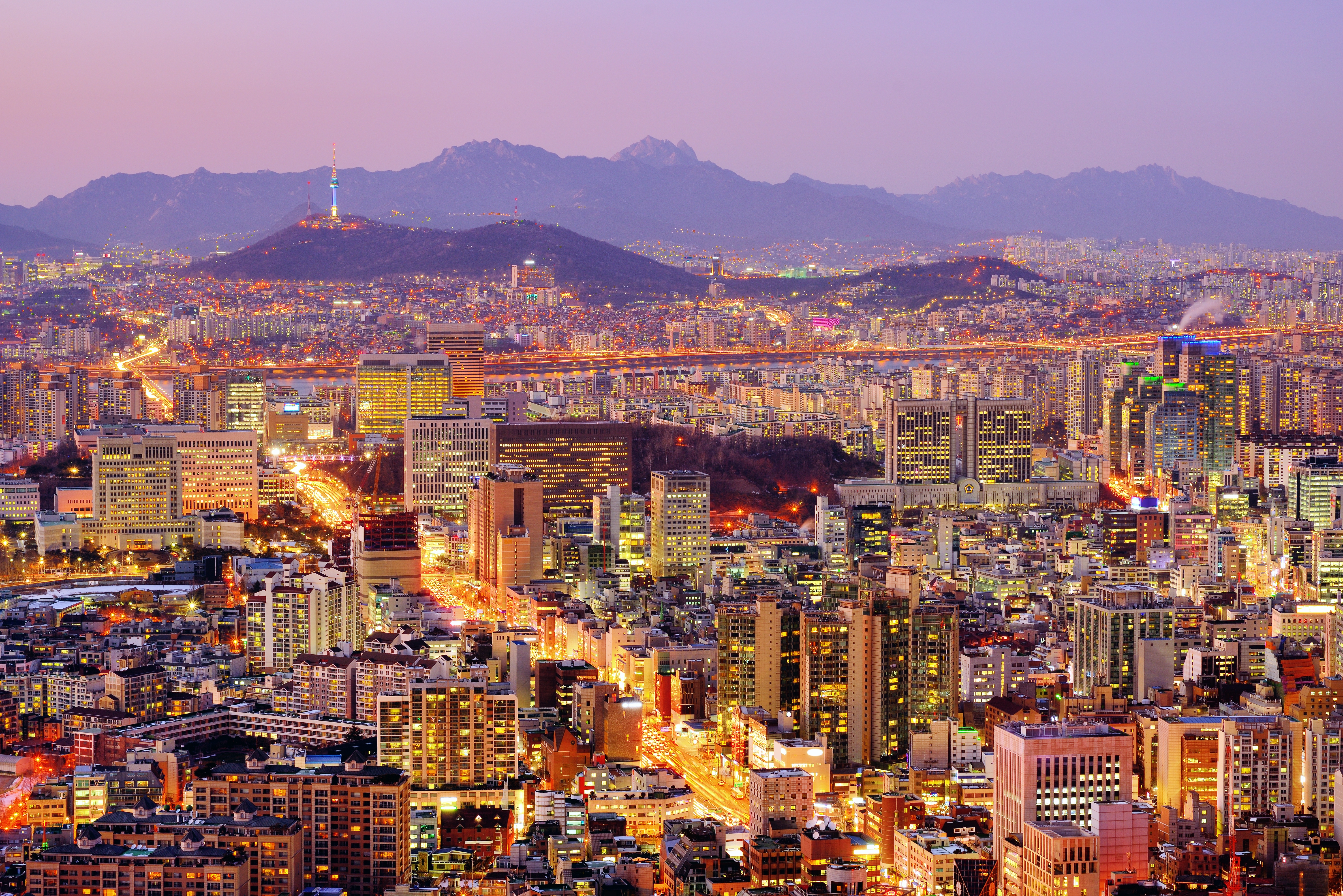
South Korea is recalibrating the most foundational trade-off in its modern history. For eight decades, Seoul accepted a simple bargain: American military protection in exchange for integration into a dollar-denominated liberal order directed from Washington. This nexus is now dissolving. Driven by the fear of being caught in the crossfire of a Sino-American industrial war, Seoul is pursuing a path of strategic autonomy that prioritises sovereign economic survival over ideological alignment. This is not a pivot to Beijing, but a withdrawal from the absolute certainty of the American orbit.
The Breakdown of the Ironclad Bargain
To understand the current divergence, one must look at the incentive structure of the South Korean chaebols. For companies like Samsung, SK Hynix, and Hyundai, the United States was once the primary market and the guarantor of freedom of navigation. Today, the arithmetic has changed. China remains the indispensable node in their supply chains and their largest customer for high-end intermediate goods. Washington’s recent use of export controls and industrial subsidies—designed to hollow out Asian manufacturing and reshore it to the American mainland—has fundamentally altered the ROK-US relationship from a partnership to a competition.
Seoul now views American industrial policy as a threat equal to Chinese regional hegemony. When Washington demands that South Korea limit its semiconductor exports to China, it is asking Seoul to commit economic suicide to further an American strategic goal. The Korean response has been a quiet, calculated divergence. We are seeing the rise of 'K-Neutrality': maintaining just enough security cooperation with the US to deter the North, while aggressively expanding trade and technological ties with the Global South and maintaining a workable status quo with Beijing.
The Logic of Sovereign Survival
The primary driver is not sentiment, but geography and demography. South Korea is a peninsula surrounded by three nuclear-armed powers and a fading global hegemon ten thousand miles away. The historical memory of the 'Shrimp among Whales' remains the dominant lens for Korean policymakers. They recognise that while an American security guarantee is valuable, it is not permanent. The volatility of American domestic politics has convinced Seoul that the US is no longer a predictable partner.
Consequently, South Korea has become one of the world's most aggressive arms exporters. By building its own world-class defence industry—selling K2 tanks to Poland and K9 howitzers to the Middle East—Seoul is ensuring its own industrial base can sustain a long-term conflict without total reliance on American logistics. This is the material foundation of strategic autonomy: you cannot be independent if you cannot arm yourself.
The Historical Parallel: The Gaullist Turn
What we are witnessing in Seoul is a 21st-century version of Charles de Gaulle’s France in the 1960s. De Gaulle recognised that the US nuclear umbrella was conditional; he doubted Washington would sacrifice New York for Paris. He subsequently withdrew France from NATO’s integrated military command and developed the force de frappe to ensure French relevance. Seoul is following this blueprint. It remains a treaty ally, but it is building the capability to act alone. The recent domestic debate in South Korea regarding the acquisition of an independent nuclear deterrent is the ultimate signal that the ROK-US Mutual Defence Treaty is no longer viewed as an absolute insurance policy.
What Most People Miss: The Financial Decoupling
Most analysts focus on missiles and microchips, but the real divergence is happening in the currency markets. South Korea is increasingly facilitating trade in non-dollar denominations with its regional partners. Beijing and Seoul’s currency swap agreements are being utilised more frequently to bypass the volatility of the dollar-driven financial system. This is a quiet rebellion against the 'exorbitant privilege' of the US dollar. As the US uses its currency as a weapon of statecraft (sanctions), South Korea—a trade-dependent nation—sees the dollar as a source of systemic risk. Strategic autonomy is as much about financial insulation as it is about military hardware.
The Second-Order Effects: Japan and the Taiwan Strait
The Seoul Divergence creates a precarious situation for Japan and Taiwan. If South Korea successfully carves out a middle-ground position, the 'First Island Chain' containment strategy desired by Washington becomes untenable. The gap between Seoul and Tokyo is widening; while Tokyo has doubled down on its integration into the US security apparatus, Seoul is positioning itself as a mediator. This weakens the trilateral 'Northern Triangle' (US-Japan-ROK) and gives Beijing a critical pressure point to exploit. The second-order effect is a fragmented East Asia where security is no longer a collective good provided by a single hegemon, but a series of transactional, bilateral deals.
The Winners and Losers
- The Winner: The South Korean military-industrial complex, which gains market share as a 'third-way' provider of advanced weaponry.
- The Winner: Beijing, which benefits from the thinning of the US alliance network without having to fire a shot.
- The Loser: US Strategic Command, which loses the ability to guarantee South Korean participation in a potential Taiwan contingency.
- The Loser: Japanese diplomacy, which finds itself increasingly isolated as the sole 'all-in' American partner in the region.
What to Watch
- Nuclear Rhetoric: Any official shift in Seoul toward pursuing a domestic 'latent' nuclear capability or advanced reprocessing technology.
- Export Control Deviations: Instances where South Korean tech firms bypass US-led restrictions on exports to Chinese entities under the guise of 'national economic security'.
- ASEAN Integration: Increased South Korean diplomatic and military investment in Vietnam and Indonesia as a hedge against both China and the US.
- The Won-Yuan Nexus: Growth in direct currency settlements between Seoul and Beijing that bypass New York clearing houses.
The KJ Verdict
The era of the 'Grand Bargain' is over. South Korea has realised that in a world of Great Power competition, being a loyal subaltern is a recipe for being the first casualty. Seoul is not 'leaving' the West, but it is reclaiming its sovereignty. The 'Seoul Divergence' is the most significant geopolitical shift in East Asia since the end of the Cold War. It signifies the transition from a world of American hegemony to a world of regional power centres. Washington must now learn to lead through negotiation and mutual interest, rather than through the assumption of loyalty. If it fails to do so, South Korea will be the first of many allies to choose the cold logic of the peninsula over the distant promises of the Potomac.