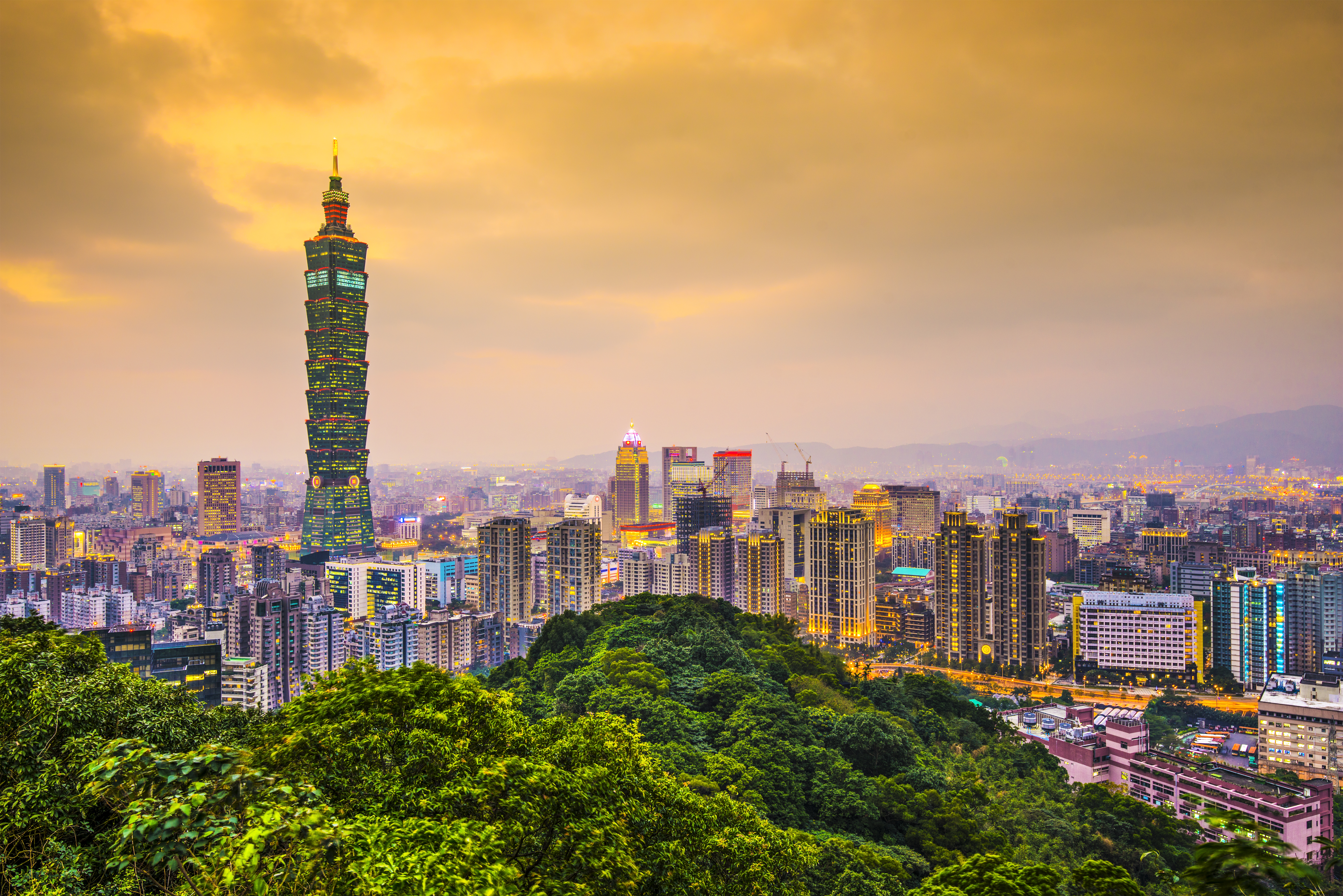
The stability of the First Island Chain no longer rests on the hulls of American destroyers or the range of Chinese missiles. It rests on the ability of Taiwan to remain a coherent political entity. In late 2026, the primary threat to the Pacific status quo is not a sudden amphibious assault, but the slow-motion collapse of Taipei’s domestic consensus. When a democracy becomes too divided to govern its own security, its allies lose their strategic anchor.
The Gridlock of Sovereignty
Taiwan is currently trapped in a legislative stalemate that transcends simple partisanship. The division between the executive and the legislature has moved beyond policy disputes into a fundamental disagreement over the island's existential direction. This is not merely a debate over taxes or healthcare; it is a structural fracture regarding how to manage the relationship with Beijing. The incentive for the opposition is to portray the ruling party as provocateurs, while the ruling party frames the opposition as a Trojan horse. The result is a total paralysis of defence procurement and infrastructure resilience.
For the first time in decades, Taiwan’s 'Silicon Shield' is showing micro-cracks. The political inability to secure long-term energy projects—specifically nuclear and liquefied natural gas terminals—now threatens the power stability required for high-end semiconductor fabrication. Without a functional domestic consensus, the very industry that makes Taiwan indispensable to the world is being cannibalised by internal political leverage.
The Geography of Incentives
Geography is fixed, but the political will to defend it is fluid. The First Island Chain, stretching from Japan through Taiwan to the Philippines, functions as a physical barrier to Chinese naval projection into the deep Pacific. Taiwan is the central link. If that link becomes politically compromised, the entire chain loses its structural integrity. Beijing understands this better than Washington. The strategy has shifted from high-cost military conquest to low-cost internal destabilisation.
By incentivising political gridlock, Beijing achieves two goals. First, it slows Taiwan’s military modernisation, as budgets are held hostage in the Legislative Yuan. Second, it creates a 'fatigue narrative' in the West. If Taiwan appears unable to govern itself, the argument for American intervention weakens. The incentive for the United States to risk a major conflict is directly proportional to the perceived resolve and unity of the partner it is defending. When that unity evaporates, the deterrent effect of the alliance goes with it.
A Historical Parallel: The Polish-Lithuanian Commonwealth
"A nation that cannot reach a decision is a nation that has already decided its own fate."
The historical parallel here is the 18th-century Polish-Lithuanian Commonwealth. It possessed a vast territory and a proud military tradition, but it was undone by the 'Liberum Veto'—a legislative mechanism that allowed any single member of the nobility to block government action. External powers—Russia, Prussia, and Austria—did not need to invade immediately; they simply funded different factions to ensure the state remained ungovernable. By the time the partitions began, the state was already a hollow shell. Taiwan faces a modern, digital version of this strategy. When internal factions prioritise the defeat of their domestic rivals over the survival of the state, they invite external orchestration.
What Most People Miss: The Energy-Silicon Nexus
Most analysts focus on the 'What'—the number of missiles or the frequency of air ADIZ incursions. They miss the 'Why' of the current domestic crisis: Energy. Taiwan imports 98% of its energy. The political fracture has prevented a clear transition strategy. The ruling party’s commitment to a nuclear-free island conflicts with the opposition’s push for energy security through traditional means. This isn't just a green energy debate; it is a national security failure.
If the power grid fails due to lack of investment or political bickering, TSMC stops. If TSMC stops, Taiwan’s value to the global economy plummets. The Silicon Shield is not a physical wall; it is an economic incentive. The moment Taiwan becomes a liability to the global supply chain rather than its heart, the geopolitical calculus for every Western capital shifts. Internal political gridlock is the fastest way to turn a strategic asset into a strategic burden.
Strategic Consequences and the Second-Order Effect
The second-order effect of this domestic fracture is a 'brain drain' of strategic talent. As the political environment becomes more toxic and the threat of instability grows, the very engineers and strategists who maintain Taiwan's edge are looking for exits. We are seeing a quiet migration of capital and human talent to Japan, Arizona, and Germany. This is a self-fulfilling prophecy: the more fractured the politics, the less secure the future, the faster the exodus of the talent that provides the security.
Furthermore, the 'Finlandisation' of Taiwan’s middle class is a growing reality. A segment of the population, weary of constant tension and political infighting, is becoming increasingly receptive to the idea of a 'managed peace'—a soft surrender that maintains the appearance of autonomy while ceding strategic control to Beijing. This shift is not driven by ideology, but by exhaustion.
What to Watch
- Defence Budget Approvals: Watch the specific line items for asymmetrical warfare. If these continue to be blocked or diluted in committee, it indicates the paralysis is terminal.
- Energy Grid Stability: Any significant blackouts in the coming months will be the catalyst for the next major political upheaval.
- The Japan-Taiwan Link: Look for Tokyo to take a more vocal role in Taiwan’s domestic security discourse, as Japan realizes its own security is tied to Taipei’s stability.
- Youth Voting Patterns: A shift away from the two main camps toward a third, populist alternative could either break the gridlock or deepen the chaos.
KJ Verdict
The greatest threat to Taiwan is not a storm from the sea, but a rot from within. Geopolitics often focuses on the clash of empires, but empires are frequently invited in by the failures of local governance. If Taipei cannot resolve its internal crisis of legitimacy and purpose, the First Island Chain will not be broken by force; it will simply dissolve. The Silicon Shield is only as strong as the political will to keep the lights on. Currently, that will is flickering.