The geopolitical centre of gravity in Europe has shifted two hundred miles to the east. For decades, the European Union was a vehicle for French political ambition and German industrial might. Today, that arrangement is failing to meet the continent’s primary existential requirement: physical security. Warsaw has stepped into the void. By leveraging a historical fear of Russian revanchism and a pragmatic distrust of Western European hesitation, Poland has transformed itself into the continent’s pre-eminent land power. This is not merely a military build-up; it is a fundamental reconfiguration of who leads Europe and how that leadership is exercised.
The Logistics of Leadership
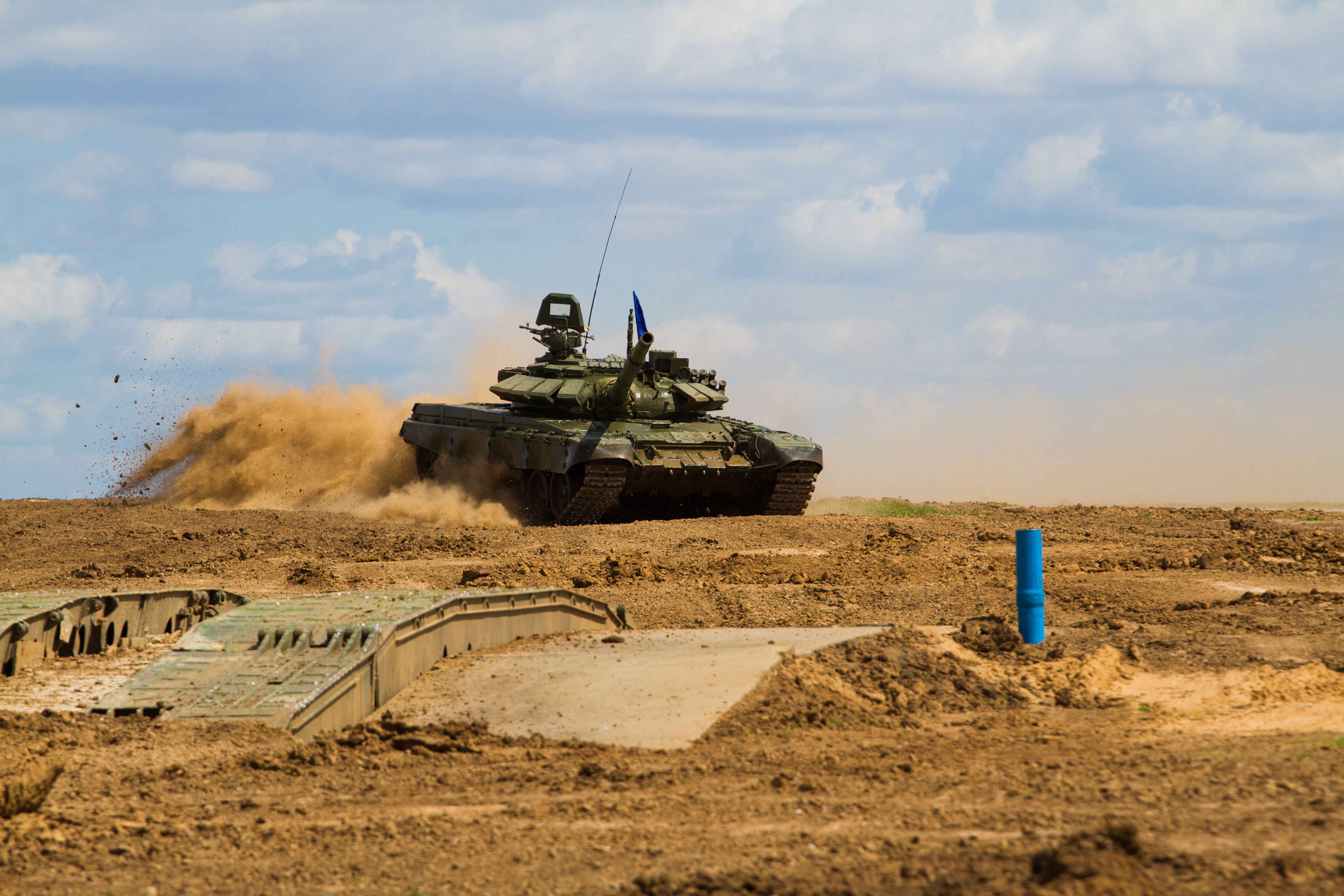
Power in Europe is currently measured in steel, not summits. While Berlin struggles with constitutional debt brakes and Paris faces chronic political fragmentation, Poland has committed to spending nearly 5% of its GDP on defence. This is not a temporary surge; it is a structural realignment of the state. Warsaw’s decision to bypass the sluggish European defence industry in favour of South Korean and American hardware—tanks, howitzers, and aircraft—reveals a core incentive: speed over solidarity. The Polish leadership has calculated that the time required to revitalise German military industry is a luxury they do not possess.
This procurement strategy has second-order effects. By becoming the largest operator of Abrams tanks and K9 howitzers in Europe, Poland is creating a new technical and logistical standard for the eastern flank. It is effectively building a parallel security architecture that relies on the United States and the Indo-Pacific supply chain rather than the traditional Brussels-Paris-Berlin triad. This makes Poland the indispensable bridge between NATO’s primary financier and its most vulnerable border.
The Incentive of Insecurity
To understand why this is happening, one must look at the divergence of incentives between the old and new Europe. For France, strategic autonomy is a way to reduce dependence on Washington and project French influence. For Germany, defence was long seen as a cost to be minimised to protect the social contract. For Poland, the military is the guarantor of the nation's physical survival. History has taught Warsaw that security guarantees from Western Europe are often conditional on domestic politics in Paris or Berlin.
Consequently, Poland has positioned itself as the 'frontline state' that cannot be ignored. By hosting the lion’s share of Ukrainian logistics and building the most capable army on the continent, Warsaw has ensured that no major decision regarding European security can be made without its consent. The Franco-German engine can no longer drive the EU forward if the wheels—the physical security and energy transit of the east—are controlled by a defiant and heavily armed Poland.
A Historical Parallel: The Rise of Prussia
The current rise of Poland echoes the ascent of Prussia in the 18th century. Like modern Poland, Prussia was a state defined by its vulnerable geography and surrounded by larger, established powers. It compensated for its lack of natural borders by creating a state that was, in effect, a support system for its army. Just as Prussia’s military efficiency eventually forced the existing European powers—Austria and France—to acknowledge a new reality, Poland’s current rearmament is breaking the old equilibrium. The difference today is that Poland is doing this within the framework of a multilateral alliance, yet the result is the same: the old centres of power must now accommodate a newcomer that they cannot outproduce or out-fight.
What Most People Miss: The South Korean Connection
Most analysts focus on the Polish-American relationship, but the deeper shift lies in the Polish-Korean strategic partnership. By choosing South Korea as a primary arms supplier, Poland has circumvented the political strings attached to German or French equipment. Seoul offers something the European defence industry cannot: mass production at scale and technology transfer without the baggage of EU internal politics. This has allowed Poland to become an industrial hub for Korean technology in Europe. The long-term result is a Poland that is not just a consumer of security, but a domestic producer of it, further insulating itself from the influence of the Franco-German industrial complex.
Strategic Consequences
The rise of Warsaw creates three significant frictions. First, it diminishes the relevance of the 'Strategic Autonomy' concept championed by Emmanuel Macron. True autonomy requires the ability to defend the frontier, and if that capability resides in Warsaw and relies on Seoul and Washington, the French vision loses its foundation. Second, it creates a new political bloc within the EU. The Baltic states, Czechia, and Romania increasingly look to Warsaw, not Berlin, for security leadership. This 'Intermarium' reality is creating a powerful voting bloc that can veto or redirect EU policy on energy, Russia, and enlargement.
Third, it places Germany in a strategic dilemma. For seventy years, Germany was the buffer. Now, Poland is the buffer. This reduces Germany’s leverage over its eastern neighbours. Berlin can no longer dictate terms to a country that provides the primary shield for Germany’s own borders. The economic lynchpin of Europe is now dependent on the military lynchpin of Europe.
What to Watch
- The Hub for Ukraine: Watch for the permanent institutionalisation of military repair and logistics hubs on Polish soil; this makes Warsaw the gatekeeper of the Ukrainian state's viability.
- Energy Sovereignty: The speed of Poland’s nuclear energy roll-out. If Warsaw achieves energy independence alongside military strength, its leverage over Germany increases exponentially.
- The Weimar Triangle Tension: Monitor whether meetings between France, Germany, and Poland remain cooperative or become a forum where Warsaw dictates terms to its senior partners.
The KJ Verdict
The era of a Franco-German Europe is over. We have entered a period of strategic duality where economic power remains in the West, but security and political willpower have migrated East. Poland has successfully traded its historical status as a victim of geography for the status of a master of it. While Paris and Berlin will continue to hold the levers of the EU bureaucracy, the actual direction of European history is now being forged in the shipyards of Gdańsk and the training grounds of Rzeszów. Investors and policymakers should stop looking at Poland as an emerging market and start viewing it as the new anchor of the European project.