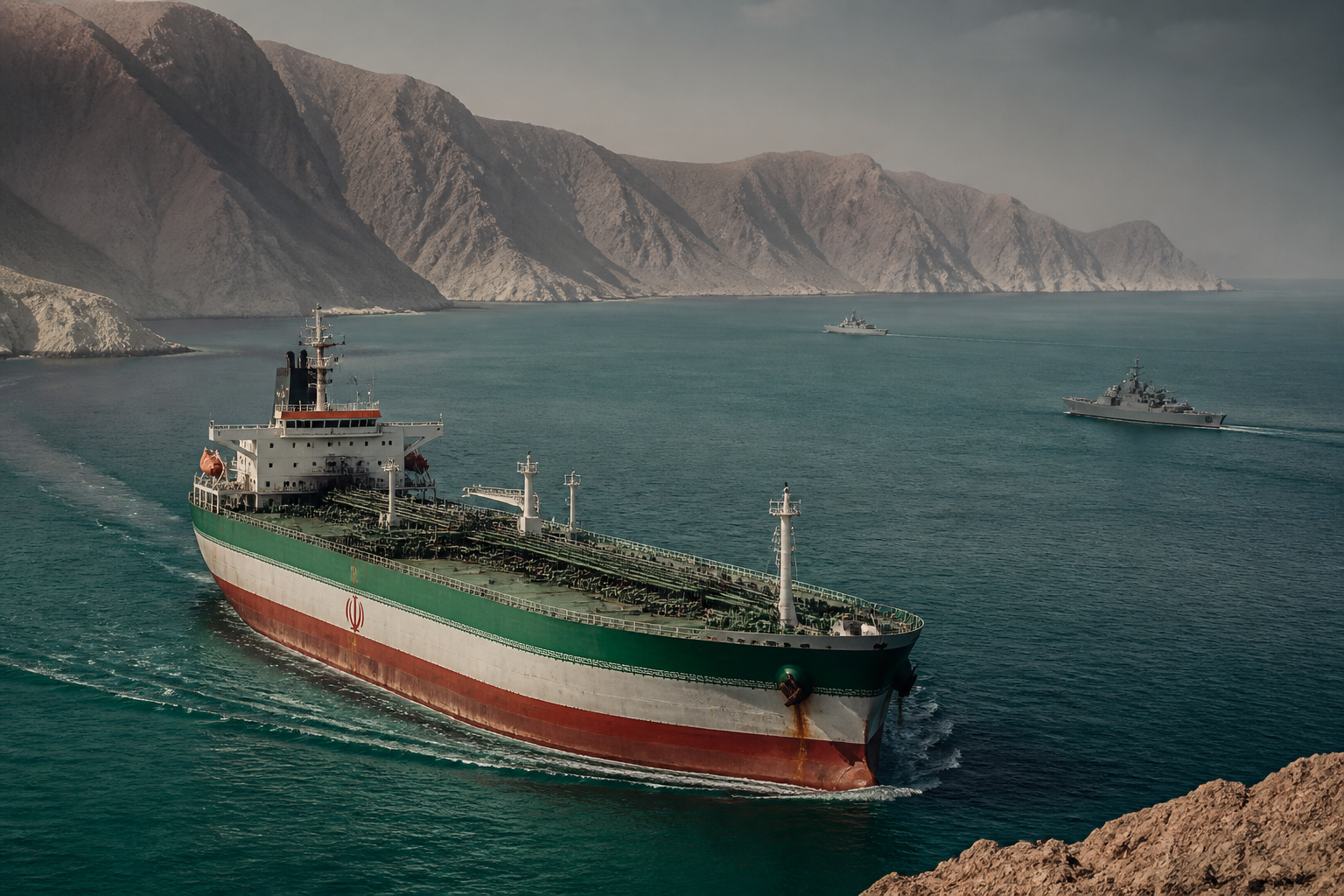
The Strait of Hormuz is the world’s most significant chokepoint. Approximately one-fifth of global petroleum liquids pass through this narrow ribbon of water. For decades, the geopolitical consensus has held that in the event of a direct conflict with the West or Israel, Tehran would play its 'ace': a total blockade of the Strait. This narrative assumes that the threat of a global economic meltdown is Iran’s ultimate deterrent. It is a fundamental misreading of the Iranian state's survival incentives.
The Survival Incentive
To understand why Tehran will not close the Strait, one must look past the military hardware and into the regime’s balance sheets. The Islamic Republic is currently navigating its most precarious internal period since 1979. Domestic insolvency is not merely an economic metric; it is a security threat. The regime’s legitimacy rests on a fragile social contract that has shifted from ideological fervour to basic provision. Closing the Strait would require Iran to stop its own exports. Unlike its neighbours, Iran lacks the foreign exchange reserves to survive a self-imposed oil embargo. Tehran does not just need oil revenue; it needs the constant flow of grey-market goods and Chinese currency that the maritime corridor facilitates. Closing the door on the world means locking itself in a room with a starving population.
The China Constraint
Power in the Middle East is no longer a binary struggle between the United States and regional actors. China is now the primary customer for Iranian crude. Beijing’s tolerance for regional instability ends exactly where its energy security begins. If Tehran were to choke off the global energy supply, it would not just be targeting Washington; it would be sabotaging its only major strategic partner. The second-order effect of a blockade would be the immediate alienation of China, leaving Iran isolated, bankrupted, and without a veto-wielding defender at the UN Security Council. For a regime obsessed with 'Strategic Patience', this is an unacceptable price.
The Historical Parallel: The Tanker War
History offers a sobering lesson. During the late 1980s ‘Tanker War’ in the Iran-Iraq conflict, Tehran attempted to disrupt shipping to punish Iraq’s backers. The result was not a victory, but the destruction of the Iranian navy by the US in Operation Praying Mantis. More importantly, the disruption failed to stop the flow of oil but succeeded in globalising the conflict. Today, Iran’s leadership remembers this lesson well. They have transitioned to a strategy of 'calibrated friction'—seizing occasional tankers or harassing patrols—to signal capability without triggering the catastrophic response that a full blockade would invite. They have learned that the threat is more valuable than the execution.
What Most People Miss: The Internal Front
Most analysts focus on the US Fifth Fleet or the range of Iranian anti-ship missiles. They miss the 'Internal Front'. Iran is currently facing a demographic crisis, chronic water shortages, and a crumbling infrastructure that requires billions in foreign investment just to maintain current output. The Iranian leadership knows that a spike in global oil prices helps them in the short term, but a total cessation of trade triggers hyper-inflation that the security apparatus cannot contain. The greatest threat to the Supreme Leader is not an American carrier group; it is a desperate Iranian middle class that has nothing left to lose. Closing the Strait would be the catalyst for that internal collapse.
Strategic Consequences
If the 'oil weapon' is effectively unusable, the geopolitical landscape shifts. First, it means Iran’s actual deterrent is moved from the sea to the land—specifically its network of regional proxies. Second, it suggests that Tehran’s maritime provocations are performance, not preparation. Third, and most critically, it reveals that the Islamic Republic is far more vulnerable to economic de-risking than conventional military strikes. The regime is trapped: it must maintain the threat of a blockade to remain a relevant power, yet it cannot afford to act on that threat without committing systemic suicide.
What to Watch
- The Asian Premium: Any significant shift in Chinese energy sourcing away from the Gulf would signal that Beijing expects a prolonged disruption.
- Subsidies and Riots: Watch for the removal of energy or bread subsidies in Iran. If these trigger uncontrollable nationwide protests, the regime may look for an external distraction.
- Naval Modernisation: A shift from fast-attack 'mosquito' craft to more traditional blue-water vessels would indicate a transition from asymmetric disruption to a more conventional naval posture.
The KJ Verdict
The Persian Paradox is simple: the very act intended to project Iranian strength would ensure its domestic destruction. Tehran’s leaders are rational actors focused on one goal above all others: regime survival. Closing the Strait of Hormuz is the 'nuclear option'—an act of strategic nihilism that ends the regime's story. Consequently, the Strait will remain open, not because of international law or American naval dominance, but because the Islamic Republic cannot afford to close it. Expect more shadows and skirmishes, but the oil will continue to flow.