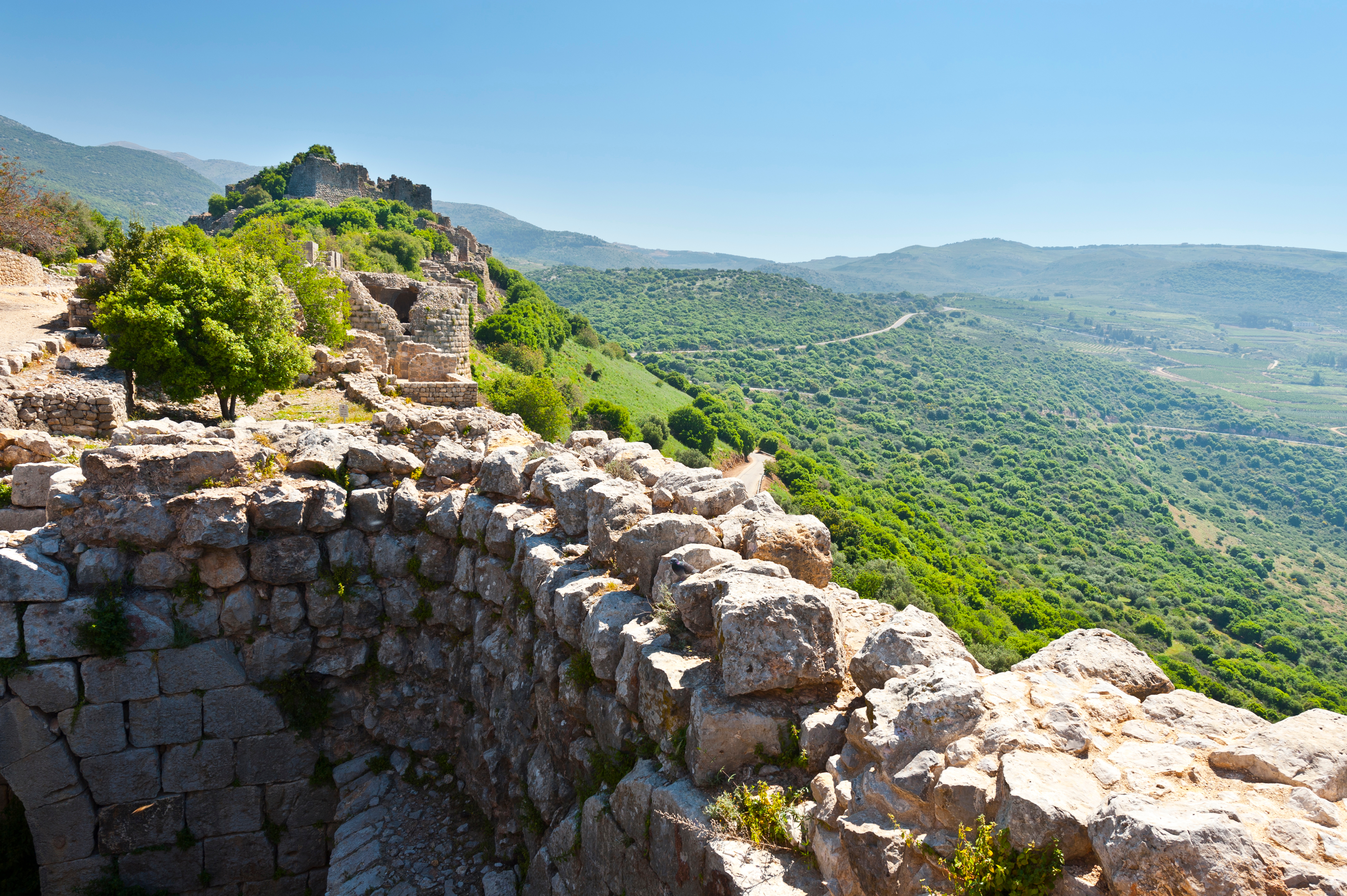
The map of the Levant is being redrawn, not through formal treaties or international recognition, but through the hard logic of kinetic presence. In the hills of Quneitra and the plains of Daraa, Israel has moved beyond reactive air strikes to a policy of structural denial. By establishing a permanent, tiered security architecture within sovereign Syrian territory, the Israel Defence Forces (IDF) have effectively neutralised the 'forward defence' strategy that Tehran spent two decades perfecting. This is not a temporary incursion; it is the creation of a permanent geographic buffer that eliminates the border as a meaningful tactical concept.
The Death of Strategic Depth
For years, the 'Axis of Resistance' relied on the Syrian interior as a vast, semi-permeable warehouse. Weapons moved from Tehran through Baghdad to Damascus, eventually pooling in southern Syria to pressure the Israeli-occupied Golan Heights. The incentive for Israel has shifted from merely intercepting shipments to physically occupying the space required to launch them. By pushing its intelligence sensors, electronic warfare units, and occasional ground patrols deep into the Syrian side of the 1974 disengagement line, Israel is performing a 'soft-annexation' of the tactical high ground.
This creates a new reality: the Syrian state no longer exercises sovereignty over its southwestern flank, and Iran no longer possesses a reliable land bridge to the Israeli border. The primary beneficiary is Israeli tactical security; the primary loser is the Iranian Revolutionary Guard Corps (IRGC), which now finds its most expensive assets exposed in a zone where Israel has achieved total situational awareness. Damascus, meanwhile, is forced into a humiliating silence, trading territorial integrity for the survival of the central regime.
The Mechanics of Encroachment
This process is not defined by flags or permanent bases, but by what is known as 'area denial by attrition.' Israel has established a pattern of activity that makes it impossible for the Syrian Arab Army (SAA) or Hezbollah to maintain a presence within 20 to 30 kilometres of the border. This is achieved through three specific layers:
- Kinetic Dominance: Any infrastructure beyond a certain technical threshold—be it a radar site or a reinforced bunker—is destroyed within hours of detection.
- Local Proxies: Intelligence suggests Tel Aviv is cultivating relationships with local Druze and Sunni factions who view both the Damascus government and Iranian militias as predatory.
- Technological Persistence: The deployment of persistent autonomous surveillance drones and seismic sensors ensures that the 'buffer' is monitored without a large, vulnerable footprint of Israeli boots on the ground.
The Historical Parallel: The South Lebanon Security Zone
The current strategy evokes the 'Security Belt' Israel maintained in Southern Lebanon between 1985 and 2000. However, the lessons of that failure have been integrated. Unlike the Lebanon experience, which relied on a visible and stationary proxy (the South Lebanon Army) and fixed outposts, the Syrian buffer is fluid. It does not seek to govern the population; it seeks to sterilise the geography. By avoiding the 'occupier's trap' of administrative responsibility, Israel maintains the benefits of a buffer without the political or human cost of a formal occupation.
What Most People Miss: The Russian Acquiescence
The common narrative suggests that Russia, as Bashar al-Assad’s primary patron, would oppose Israeli expansion into Syria. The reality is more nuanced. Moscow views the Iranian presence in Syria as a competitor for influence over the Damascus government. Every time Israel strikes an IRGC position or pushes Iranian proxies further east, it reinforces Russia’s position as the sole indispensable mediator in the country. The Kremlin is not failing to stop Israel; it is permitting Israel to do the dirty work of diluting Iranian power, provided the Assad regime itself is not targeted for collapse.
Strategic Consequences
The second-order effects of this geographic shift are profound. First, the 'Ring of Fire' strategy—Tehran's plan to surround Israel with high-precision missile threats—has been physically broken at its most critical link. Without the ability to station long-range assets in southern Syria, Iran is forced to rely on Lebanon, which is already saturated and politically volatile, or long-range strikes from Iraq and Iran, which are easier to intercept.
Second, this creates a new 'Red Line' for the region. The international community largely ignores the erosion of Syrian sovereignty because the alternative—an uncontrolled Iranian-Israeli war—is deemed worse. This establishes a precedent where borders are increasingly seen as suggestions rather than law, governed entirely by the capability of the neighbour to project power across them.
What to Watch
- The 'Alpha' Line Infrastructure: Watch for the construction of advanced Israeli sensor towers and all-weather patrol roads deeper into the Quneitra province.
- Local Governance Shifts: Monitor if Daraa-based factions begin receiving non-kinetic aid or 'protection' guarantees from across the border, bypassing Damascus.
- IRGC Relocation: Signs of Iranian high-value assets moving north toward Homs or east toward Deir ez-Zor, signaling a formal retreat from the border regions.
- Russian Deconfliction: Any change in the frequency of the 'hotline' communications between the IDF and the Khmeimim Air Base in Syria.
"Geography is the one factor in geopolitics that does not lie. While diplomats talk of sovereignty, the physical clearance of southern Syria tells a story of a border that has moved twenty kilometres east."
The KJ Verdict
Israel is not waiting for a political settlement to the Syrian Civil War; it is building a post-war reality that suits its survival. By hollowing out the Syrian side of the border, Tel Aviv has effectively shortened its defensive lines and pushed the threat further into the desert. The 'Axis of Resistance' now faces a geographic deficit it cannot easily bridge without a full-scale conventional war—a war that neither Damascus nor Tehran can currently afford. The soft-annexation of southern Syria is the most significant tactical shift in the Levant in a decade, and it is likely to become a permanent feature of the Middle Eastern power map.