The Strategy of Indispensability
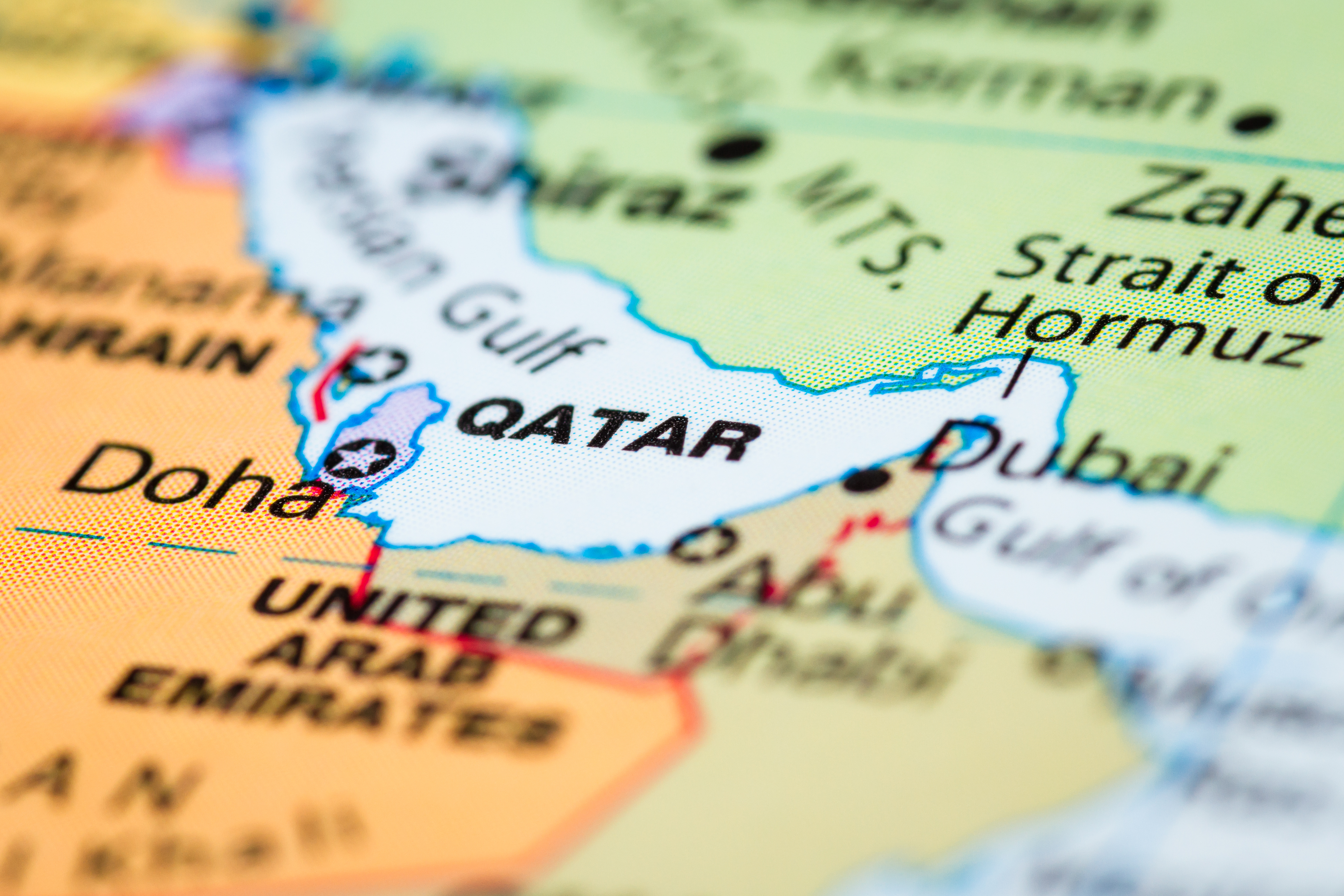
Qatar is a peninsula whose security depends entirely on being too useful to lose. In the Middle East, power usually derives from the barrels of guns or the size of a population. Qatar has neither. Instead, it has mastered the art of 'the niche'. By positioning itself as the solitary point of contact between irreconcilable enemies, Doha has converted its vast gas wealth into a form of geopolitical insurance that no military alliance could provide. The central objective is survival in a neighbourhood dominated by larger, often hostile, neighbours. If you are the person everyone must talk to, you are the person no one can afford to eliminate.
The North Field: The Engine of Autonomy
The foundation of Qatari power is physical: the North Field. Sharing the world's largest non-associated gas field with Iran creates a paradox of geography. It forces a degree of pragmatic cooperation with Tehran that infuriates Riyadh and Washington, yet it provides the capital required to fund a global soft-power empire. Natural gas is the transition fuel of the 21st century. As Europe decoupled from Russian energy, Qatar's leverage moved from the regional to the systemic. Unlike oil, gas requires long-term infrastructure and decades-long contracts. This creates 'sticky' dependencies. When Qatar signs a 27-year deal with China or Germany, it isn't just selling a commodity; it is purchasing a security guarantee from a Great Power.
The Swiss Guard of the Gulf
Doha's mediation is often criticised as 'double-dealing'. This misses the incentive. Qatar hosts the Al-Udeid Air Base, the largest US military installation in the Middle East, while simultaneously hosting the political offices of groups the US classifies as terrorists. To the casual observer, this is a contradiction. To the Qatari strategist, it is a hedge. By providing a 'neutral' ground for back-channel communications, Doha ensures that when Washington needs to talk to the Taliban, Hamas, or Tehran, the road must run through Doha. This makes Qatar a protected asset for the West, even when its guest list causes domestic political friction in the United States.
A Historical Parallel: The Venetian Model
To understand Qatar, look not to its neighbours, but to 15th-century Venice. Like Venice, Qatar is a small, ultra-wealthy maritime entity sitting at the crossroads of competing empires—the Ottomans and the Habsburgs then, the Iranians and Saudis now. Venice survived by being the essential merchant and diplomat. It traded with everyone, maintained a peerless intelligence network, and used its wealth to hire protection rather than build a massive standing army. Like the Venetians, the Qataris know that a small state cannot win a war of attrition; it must instead become the marketplace where wars are settled and contracts are signed.
What Most People Miss: The Internal Logic of Al Jazeera
Commentators often view Al Jazeera as a standard media conglomerate. It is actually a sovereign defence capability. Before the network's launch in 1996, the Qatari Emir was vulnerable to the whims of larger Arab capitals. Al Jazeera gave Doha the ability to reach the 'Arab Street' directly, bypassing the gatekeepers in Cairo and Riyadh. It is the 'asymmetric air force' of Qatari foreign policy. While the English channel builds brand equity and soft power in the West, the Arabic channel provides the leverage. It allows Doha to project influence, support preferred movements during the Arab Spring, and make the cost of bullying Qatar too high for its neighbours to pay in the court of public opinion.
The Second-Order Effects of the 2017 Blockade
The failed blockade of Qatar by the 'Quartet' (Saudi Arabia, UAE, Egypt, and Bahrain) between 2017 and 2021 was a watershed moment. It achieved the opposite of its intent. Rather than forcing Qatar into the Saudi orbit, it forced Doha to achieve total food and logistical security. It hardened the Qatari state, deepened its ties with Turkey and Iran, and proved that in a globalised economy, a wealthy enough state can bypass a regional siege. The second-order effect is a Qatar that is now more confident, less deferential to Riyadh, and more willing to strike an independent path in high-stakes negotiations.
Strategic Consequences
The primary consequence of Qatar's rise is the fragmentation of 'Sunni Bloc' unity. Doha provides an alternative pole of influence that isn't tied to the traditional leadership of Saudi Arabia. This creates a more complex, multi-polar Middle East where middle powers can play larger actors against one another. Furthermore, as the world moves toward 2030, Qatar's role as a primary LNG provider gives it a seat at the table in Beijing and Brussels that its size would never otherwise merit. However, this path is fraught with risk. The 'friend to all' strategy only works as long as the 'all' aren't at total war. If the regional cold war turns hot, the middle ground becomes a kill zone.
What to watch
- North Field East Expansion: Monitor the speed of output increases; more gas equals more diplomatic immunity.
- US-Qatar Bilateral Trends: Watch for any shift in the status of Al-Udeid; it is the ultimate barometer of Qatari security.
- Taliban and Hamas engagement: If Doha loses its status as the 'exclusive' intermediary for these groups, its value to the West drops precipitously.
- Post-Succession Dynamics in Riyadh: Whether the next generation of Saudi leadership views Qatar as a partner or a permanent nuisance.
KJ Verdict
Qatar is the world’s most successful experiment in sovereign branding. It has transformed from a quiet pearling backwater into a systemic pivot point for global energy and diplomacy. Its strategy is not based on ideology, but on the cold reality that for a small state, being 'useful' is more important than being 'liked'. Doha’s influence will persist as long as the world requires a pressure valve for its most intractable conflicts and a reliable source of gas for its power grids. Despite the risks of its 'multi-vector' foreign policy, Qatar has proven that in the modern era, geography is no longer destiny if you have enough money and the right guest list.