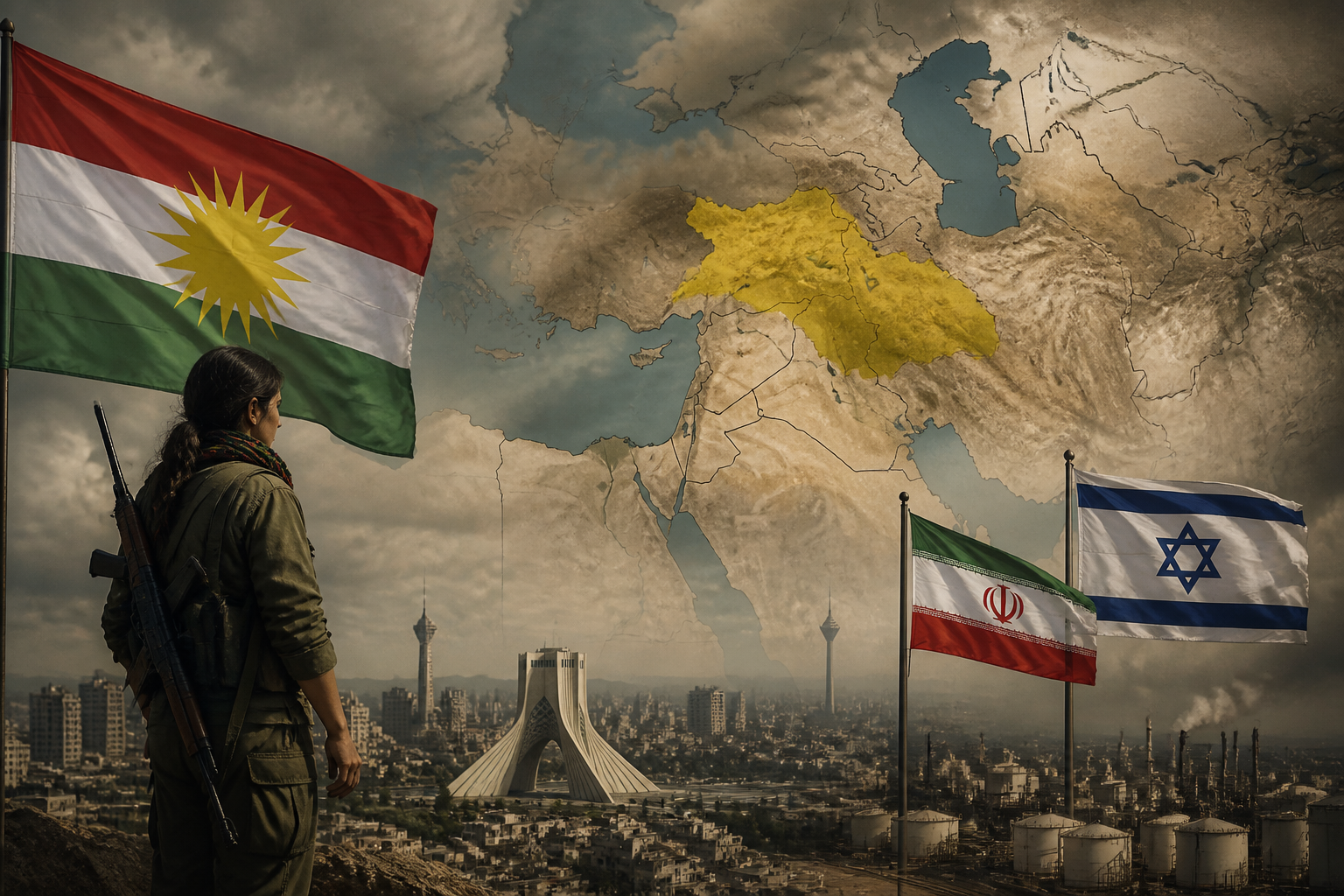
The Kurds are often described as the largest ethnic group in the world without a state. This is a descriptive truth but an analytical trap. By focusing on what the Kurds lack—a seat at the United Nations—observers frequently miss what they actually possess: a strategic veto over the stability of four major powers. In the current landscape, the persistent 'statelessness' of Kurdistan is no longer a failure of diplomacy. It is a functional requirement for the regional balance of power. No major actor wants a Kurdish state, yet no major actor can afford to let the Kurdish movement fail.
The Incentive of Instability
In geopolitics, the primary driver is survival. For the Turkish, Iranian, Syrian, and Iraqi states, a sovereign Kurdistan represents an existential threat to territorial integrity. However, for external superpowers like the United States and Russia, the Kurds represent the 'perfect proxy'. They are motivated, militarily competent, and geographically positioned atop the critical nexus between the Mediterranean and the Persian Gulf.
We must look at the incentive structures. For Washington, the Syrian Kurds (SDF) provide a low-cost footprint to deny Iranian influence and contain the remnants of extremist insurgencies. For Moscow, playing the Kurdish card provides leverage over Ankara. This creates a permanent paradox: the Kurds receive just enough support to remain a potent military force, but never enough diplomatic recognition to achieve statehood. To give them a state would be to lose them as a lever.
Geography as Destiny
The Kurdish heartland sits on the 'high ground' of the Middle East. Controlling the mountains of northern Iraq and south-eastern Turkey provides a natural fortress. More importantly, this geography controls the headwaters of the Tigris and Euphrates rivers. As water scarcity becomes a primary driver of conflict in the 21st century, the Kurdish-populated regions hold the literal lifeblood of downstream Iraq and Syria. Sovereignty over water is often more absolute than sovereignty over land.
Furthermore, the extraction of oil in the Kirkuk region and the Kurdish autonomous zone in Iraq has created a 'petro-proto-state'. This has forced Erbil into an uneasy marriage with Ankara. Turkey, despite its domestic conflict with the PKK, has historically allowed Iraqi Kurdish oil to reach the Ceyhan port. Turkey prefers a dependent, energy-exporting Kurdish entity in Iraq over a chaotic or Iranian-aligned one. Money, in this instance, overcomes ethnic grievance.
A Historical Parallel: The Polish Question
The current Kurdish situation bears a striking resemblance to the 'Polish Question' of the 18th and 19th centuries. For over a century, Poland was partitioned between the Prussian, Austrian, and Russian empires. Like the Kurds, the Poles were a distinct nation without a state, used as a buffer and a recruitment pool by the very empires that denied them independence. The Poles only achieved statehood when all three surrounding empires collapsed simultaneously following World War I. For a sovereign Kurdistan to emerge, a similar total collapse of the surrounding regional order—Turkey, Iran, and Iraq—would be the necessary precursor. Anything less results in autonomy, not independence.
What Most People Miss: The Intranational Divide
The most common analytical error is treating 'the Kurds' as a monolith. In reality, the Kurdish political landscape is deeply fractured. The KDP in Erbil, the PUK in Sulaymaniyah, and the PYD/YPG in Rojava have fundamentally different ideologies and backers. What most people miss is that the regional powers leverage these intra-Kurdish rivalries to ensure the 'Kurdish Question' remains a local policing issue rather than a national liberation movement.
The KDP tracks closer to Turkey; the PUK maintains linkages with Tehran; the YPG remains tied to the PKK's revolutionary socialism. This fragmentation is not a flaw; it is the mechanism by which the surrounding states prevent the emergence of a unified Kurdish front. The regional powers do not need to defeat the Kurds; they only need to keep the Kurds competing with one another.
The Strategic Consequences
The second-order effect of this perpetual statelessness is the 'militarisation of identity'. Because the Kurds cannot rely on international law for protection, they have built some of the most battle-hardened non-state infantries globally. This has turned the Kurdish regions into a permanent mercenary pool for global interests. The risk is that as these groups become more sophisticated—acquiring advanced drones and anti-aircraft capabilities—the cost for regional powers to contain them will eventually exceed the benefits.
We are seeing the emergence of 'Sovereignty Lite'. The Kurds have their own parliaments, armies, and schools, but they lack the ability to sign international treaties or protect their airspace. This creates a grey zone where global powers can operate without the constraints of international law. If the US strikes a target in Kurdish-controlled Syria, it does not technically violate the sovereignty of a state it recognises as legitimate in that territory, because the state (Damascus) has no presence there.
What to Watch
- The Turkish-Iraqi Development Road: If this massive infrastructure project bypasses Kurdish-controlled areas, it signals a strategic attempt to economically isolate the KRG.
- Iranian Succession: Any instability in Tehran during a leadership transition could embolden Iranian Kurds, potentially triggering a Turkish intervention to prevent a 'spillover' of autonomy.
- US Troop Withdrawal: If Washington exits eastern Syria, the Kurds will be forced into a survivalist pact with the Assad regime, effectively ending the Rojava experiment in exchange for security against Turkey.
The KJ Verdict
The Kurds will not get a state in the next decade. The geopolitical cost to the world order is too high, and the regional resistance is too unified. However, the Kurds have achieved something perhaps more modern: they have become a 'permanent non-state actor' that is too large to fail and too dangerous to ignore. They are the essential friction in the machinery of the Middle East. They provide the buffer that prevents direct collisions between regional giants. Their power lies not in the hope of a flag, but in the reality of their leverage. In the new Middle East, influence is often more valuable than legal sovereignty. The Kurds have mastered the masterless land.