1. Pressure on Russia
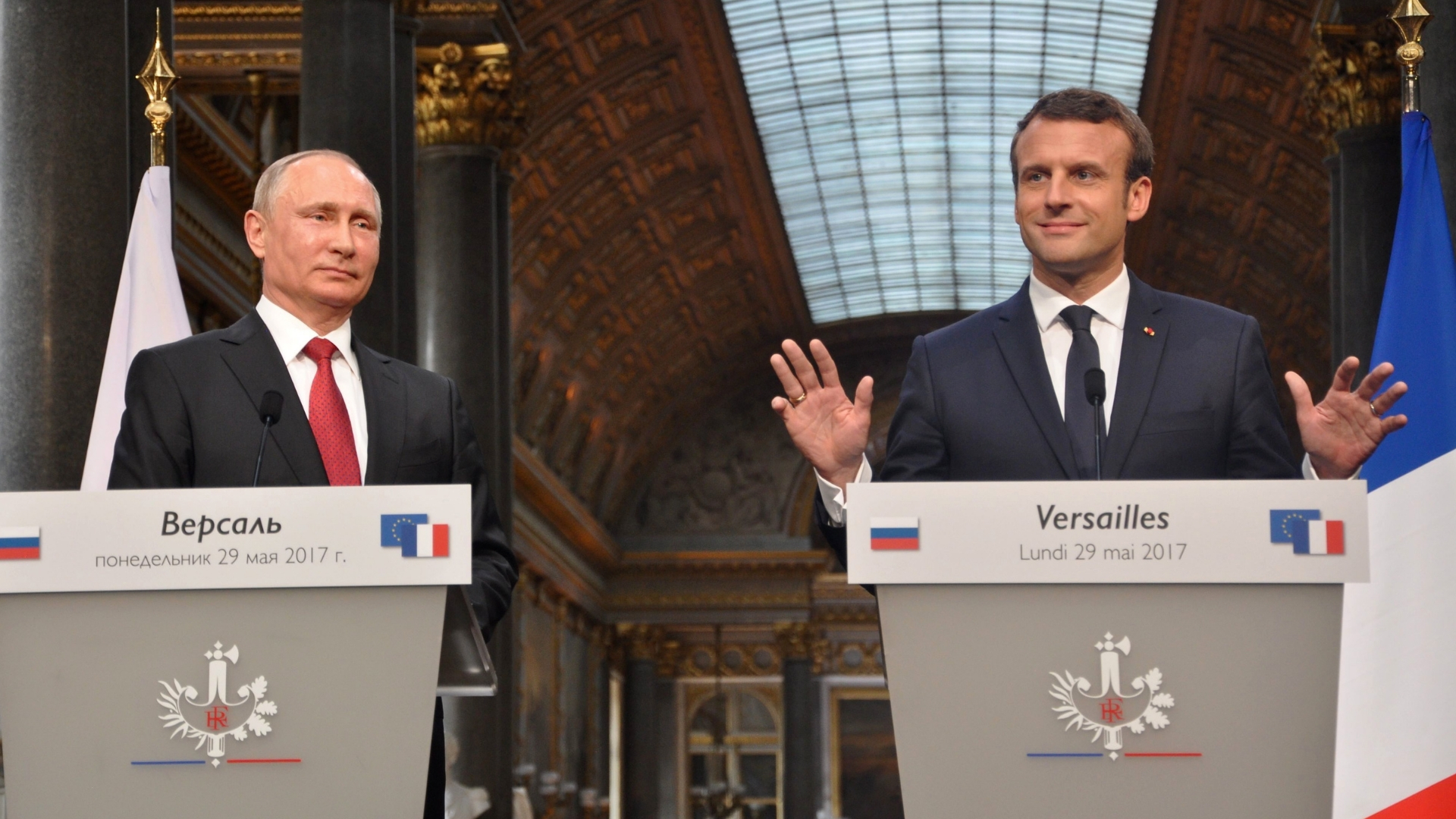
French President Emmanuel Macron is due to host Russian President Vladimir Putin for talks at his holiday residence in Bregancon in southern France on Monday. Putin is seldom invited by major Western powers for visits at a time of growing tensions between Russia and the West. Macron is expected to put pressure on Russian leader to end the conflict in the Donbass and to release 24 Ukrainian sailors captured during the Kerch Strait incident at the end of last year.
2. The Implementation of the Minsk Agreements
According to Alexander Baunov, a senior fellow at the Carnegie Moscow Center, the main public issue will be reviving the Minsk accords signed in 2015. Recently, Russia, Ukraine and the OSCE have recently announced an “indefinite” ceasefire in the Donbass. As expected, the truce has not been implemented, and the Minsk agreements remain a dead letter. “Peace progress” is possible only if Moscow ends its support to the self-proclaimed Donetsk People’s Republic and Lugansk People’s Republic. It remains to be seen if Putin will be ready to fulfil such demands.
3. Reintegration of the Donbass
Macron has taken a keen interest in brokering an end to the conflict in the Donbass that began in 2014. Two months ago he met Ukrainian President Volodymyr Zelensky who has pledged to end the war and shown signs of greater willingness to be more flexible than his predecessor Petro Poroshenko, though he has not signaled any major concession. Instead, he has pointed out that Ukraine is not ready to recognize the special status of the Donbass under any circumstances. The Kremlin, on the other hand, insists on a special status of the region, although, according to some analysts, it is looking for a way to reintegrate the Donbass into Ukraine.
4. Russia to stop Assad in Idlib
According to French officials, Macron will also press Putin to use his influence on the Syrian President Bashar al-Assad to stop an offensive in the northern region of Idlib. Paris has all the reasons to believe that pressure on Russia works. In the past, Russia managed to prevent Assad from recapturing territories in Idlib province. It also made Assad destroy Syria’s chemical weapons arsenal in 2013. Putin will likely urge Assad to stop the ongoing offensive and announce another truce with Western backed Jihadi factions.
5. Russia to put pressure on Iran
Iran will also feature high on the agenda of talks between Macron and Putin, with Paris keen for Moscow to use its close ties with Tehran to prevent a further escalation of conflicts in the Middle East. The problem for the Kremlin is that it has very limited influence in Tehran. Theoretically, it can put pressure on the Iranian leaders to obey Western demands, but it’s unlikely that the Islamic Republic leadership will follow such requests. Therefore, all Russia can do is to reaffirm that Iran must respect its commitments, which does not obligate Tehran in any case whatsoever.