
KJ ReportsKJ Reports

Germany withdrawing from Turkish air base

10 July 2017722

Listen to this article

KJ narrates this report in his own voice

Germany withdrawing from Turkish air base

Reuters

Read the original article By Francesco Canepa and Tulay Karadeniz or read the key points below;
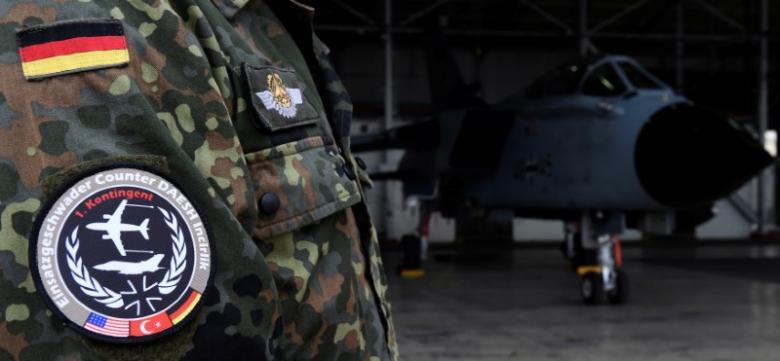
  1. Germany began on Sunday to pull its troops out of a Turkish air base where they have supported international operations against Islamic State following a row with Ankara over access.
  2. German tornado jets were due to keep operating out of Incirlik until the end of July as part of a mission providing reconnaissance aircraft to support U.S.-led coalition operations against Islamic State in Iraq and Syria.
  3. In the meantime the necessary material was to be moved to a new air base in Jordan, where the planes are scheduled to be deployed by October.
  4. Turkey had refused to allow German lawmakers to make what they saw as a routine visit to the base, saying that Berlin needed to improve its attitude towards Turkey first.
  5. German Chancellor Angela Merkel said on Saturday that a bilateral meeting with Turkish President Tayyip Erdogan had revealed “deep differences” between the two NATO allies.
 

#air#air-base#germany#nato#turkey#withdraw

Related Intelligence

More articles
The Amman Alignment: Jordan’s Break from the Pan-Arabist Fiction
Middle East

The Amman Alignment: Jordan’s Break from the Pan-Arabist Fiction

Jordan’s recent kinetic intervention against Iranian ordnance signals a fundamental shift in Levantine architecture. Amman has traded the ghost of pan-Arab solidarity for a hard-nosed survivalist pact with Western and Israeli security frameworks.

29 Jul 2026

The Iraqi Re-Alignment: Sovereignty vs Security in a Bipolar Baghdad
Middle East

The Iraqi Re-Alignment: Sovereignty vs Security in a Bipolar Baghdad

Baghdad faces a terminal dilemma as the dual-track presence of Iranian influence and American financial-military support becomes unsustainable. The era of playing both sides has reached its structural limit.

29 Jul 2026

The Hormuz Leverage: Why Tehran Engineered an Oil Crisis
Middle East

The Hormuz Leverage: Why Tehran Engineered an Oil Crisis

Conventional analysis views Iran’s maritime aggression as a tactical reaction to sanctions. In reality, Tehran is pursuing a deliberate strategy to force global oil prices into a permanent risk premium to fund its internal survival.

26 Jul 2026

The Damascus Gambit: Syria as the Pivot for Iranian Retreat
Middle East

The Damascus Gambit: Syria as the Pivot for Iranian Retreat

While global attention focuses on proxy skirmishes, the real game is being played in the Syrian corridor. Controlling Damascus is the only way to sever Iran’s Mediterranean reach and unlock regional energy integration.

25 Jul 2026

The Desalination Doctrine: Weaponising the Region’s Last Lifecycle
Middle East

The Desalination Doctrine: Weaponising the Region’s Last Lifecycle

Middle Eastern warfare has shifted from controlling territory to dismantling the survival floor. As desalination plants become primary strategic targets, the era of managed proxy conflict is being replaced by a permanent, unrecoverable state of collapse.

22 Jul 2026

The Yemen Settlement: Evaluating the Death of the Petrodollar Pact
Middle East

The Yemen Settlement: Evaluating the Death of the Petrodollar Pact

Saudi Arabia’s pivot to a permanent diplomatic settlement in Yemen marks the structural end of the 1945 Quincy House agreement. Riyadh is now prioritising internal economic insulation over its legacy security architecture with Washington.

21 Jul 2026