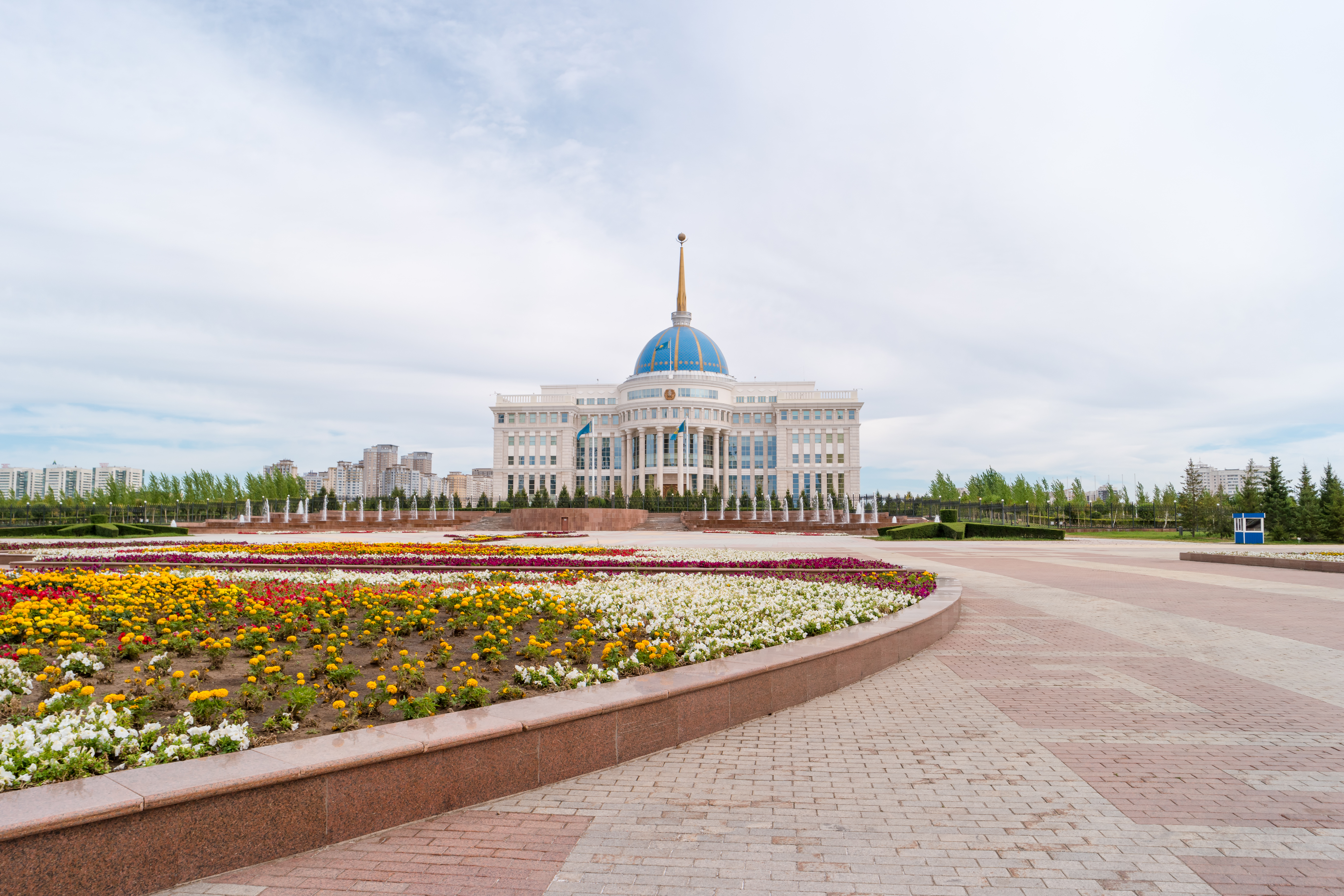
The traditional security architecture of the Persian Gulf is currently experiencing a structural failure. For decades, the implicit bargain was simple: the United Arab Emirates and its neighbours provided energy stability, and the United States provided an impenetrable security umbrella. The recent cycle of low-cost, high-frequency drone incursions targeting the Port of Fujairah has rendered this bargain obsolete. Abu Dhabi is not reacting with more Western hardware; it is reacting with a fundamental strategic decoupling.
The Geography of Vulnerability
Fujairah is the UAE’s only multi-purpose port on the Gulf of Oman, sitting outside the volatile Strait of Hormuz. It was designed to be the ultimate hedge against Iranian maritime blackmail. By piping oil across the desert to Fujairah, the UAE thought it had bypassed the chokepoint. However, geography offers no protection against the asymmetry of modern loitering munitions. The recent incursions demonstrate that while the UAE has invested billions in high-altitude missile defence like THAAD and Patriot systems, it remains porous to $20,000 drones launched from mobile platforms.
The paradox is clear: the more the UAE integrates into the Western security apparatus, the more it becomes a target for Iranian proxy attrition, yet that same apparatus is politically and technically incapable of stopping a slow-moving, carbon-fibre drone. This has led the Emirati leadership to a cold conclusion: Western protection is a liability in a grey-zone war.
The Incentive for Decoupling
Power in the Middle East is shifting from those who own the most expensive jets to those who can manage the most friction. The UAE’s primary incentive is the preservation of its status as a global logistics and financial hub. Kinetic conflict, even if won, is a commercial catastrophe. The Western response to Iranian escalation is typically 'deterrence through presence'—sending carrier groups or additional squadrons. To Abu Dhabi, this is archaic. It invites escalation without providing a shield for the glass towers of Dubai or the bunkering hubs of Fujairah.
Instead, the UAE is pivoting toward a policy of 'strategic autonomy through de-escalation.' This involves direct, bilateral intelligence sharing with Tehran and a deliberate distancing from U.S.-led maritime coalitions. By reducing its utility as a Western military outpost, the UAE reduces its profile as an Iranian target.
A Historical Parallel: The 1970 Withdrawal
The current sentiment in the UAE mirrors the anxiety of 1968, when the United Kingdom announced it would withdraw its military forces from 'East of Suez' by 1971. Then, as now, the Trucial States (precursors to the UAE) realised that their protector was no longer willing or able to bear the cost of their defence. In 1971, they formed a union to survive. In 2026, the UAE is forming a new kind of union—not of states, but of interests—bridging the gap between the U.S., China, and Iran to ensure that no single power can dictate its security posture.
What Most People Miss
Most analysts focus on the hardware—the drones and the interceptors. They miss the shift in the UAE’s sovereign wealth strategy. The decoupling is not just military; it is financial. Abu Dhabi is increasingly denominated in currencies and assets that are not susceptible to Western sanctions regimes. This gives them the 'geopolitical exit velocity' to ignore U.S. pressure to isolate Iran. The drones in Fujairah are not just a military threat; they are the catalyst that convinced the UAE that the dollar-denominated security guarantee is a depreciating asset.
Second-Order Effects: The New Security Market
The strategic decoupling will have three immediate consequences. First, the UAE will become the primary broker between the West and Iran, using its vulnerability as a diplomatic lever. Second, we will see a surge in UAE-China military co-operation, specifically in laser-based directed energy weapons (DEW) which are more effective against drone swarms than American interceptors. Third, the 'Abraham Accords' will be reinterpreted not as an anti-Iran front, but as a technological partnership where the UAE acquires Israeli defence tech to protect itself, while simultaneously maintaining a 'hotline' to Tehran to ensure those weapons are never used.
What to Watch
- The Fujairah-Tehran Direct Line: Watch for the establishment of a formal maritime safety coordination centre between the UAE and Iran, bypassing the U.S. Fifth Fleet.
- Chinese Directed Energy Sales: Any announcement of the 'Silent Hunter' or similar Chinese laser systems being deployed around Fujairah oil terminals.
- Insurance Premiums: A stabilization or drop in Lloyd’s of London war risk premiums for Fujairah, indicating that a back-room political deal has been reached.
The KJ Verdict
The UAE is not 'leaving' the West, but it is resigning from the Western security project. The Fujairah incursions proved that the cost of being a U.S. ally now outweighs the benefits when the threat is asymmetrical and the protector is distracted. We are entering an era of 'polygamous security,' where the UAE will maintain a U.S. base, buy Chinese lasers, and sign non-aggression pacts with Iran simultaneously. This isn't confusion; it is the highest form of realism. In the new Middle East, safety is not bought with a treaty; it is managed through the constant rebalancing of dependencies.