France and India to hold joint military drills
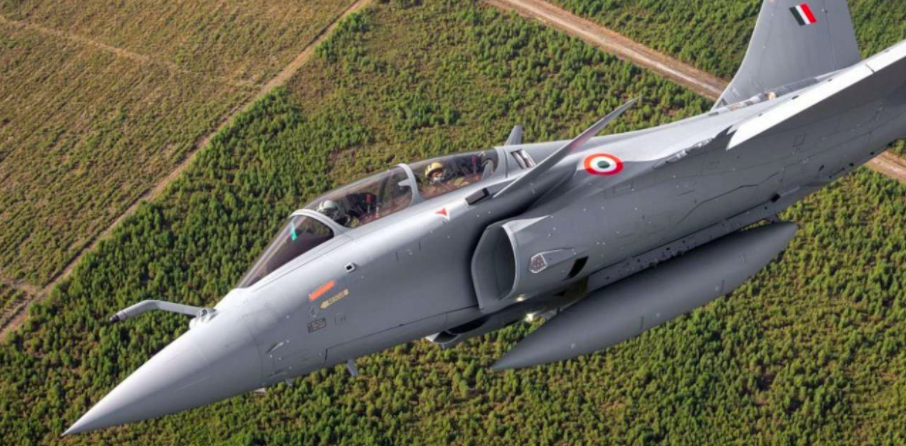
The air forces of India and France will kick off a five-day joint exercise in Rajasthan on Wednesday with a raft of aircraft, including Rafale fighters jets, Mirage 2000s, Sukhoi-30s, mid-air refuellers and airborne warning and control system (AWACS) platforms, the Indian Air Force (IAF) said in a statement on Tuesday, announcing the line-up of aircraft taking part in the wargames.
“The exercise is unique as it includes fielding of Rafale aircraft by both sides and is indicative of the growing interaction between the two premier Air Forces. As the two detachments commence their air exchange from 20 Jan onwards, they will put into practice operational experience gained across terrains and spectrums and endeavor to exchange ideas and best practices to enhance interoperability,” read the statement.
The French side will participate the exercise with Rafale, Airbus A-330 Multi-Role Tanker Transport, A-400M Tactical Transport aircraft and around 175 personnel, while India’s aircraft participating in the drill will include Mirage 2000, Su-30 MKI, Rafale, IL-78 Flight Refueling Aircraft, according to the statement.
The Defense Ministry said that as part of Indo-French defense cooperation, both the air forces have held six editions of air exercises named Garuda, with the latest held in 2019 at Air Force Base Mont-de-Marsan, France.
France and India strategic dialogue
In addition to the latest military drills, India and France have decided to intensify defence cooperation with Paris offering to shift 100 per cent assembly line for Panther medium utility helicopters as well as 70 per cent of the assembly line for Rafale fighters under “Make in India” rubric with full transfer of technology, people familiar with the matter said on Saturday.
Officials said there was a real possibility that India, which has a contract for 36 omni-role fighters, could buy more Rafale jets in light of the French offer to bring 70 per cent of the assembly line including local vendor development. This would reduce the cost of subsequent acquisition of the fighter jets.
The French offer to make the Panther choppers in India also works well with the government which has been looking to buy medium helicopters for the Indian Navy. The Airbus’ AS565 MBe is an all-weather, multi-role medium helicopter designed for operation from ship decks, offshore locations and land-based sites.
According to South Block sources, the India-France strategic dialogue this week has led to forward movement over 9,900 MW Jaitapur nuclear power plant over reactor pricing issues with state-run Electricite de France (EDF) and Nuclear Power Corporation of India (NPCIL). The strategic dialogue was headed by National Security Advisor Ajit Doval and Emmanuel Bonne, Diplomatic Advisor to French President Emmanuel Macron.
According to senior officials, India has decided to consider the French offer of six Airbus 330 multi-role transport tankers on lease while making it clear that French defence technologies shared with Indian military should not be given to its adversaries. To this, the French have informed India that their relationship particularly in the defence sector has reached a new low with Pakistan after Prime Minister Imran Khan attacked President Macron personally over a terrorist incident.
Is Pakistan the target?
It is widely believed that Pakistan is the target of this strengthening of French-India ties. We already wrote previously on how it is clearly one of India’s main targets, but it is now becoming more clear, that countering Pakistan is also increasingly in France’s interests, especially with the increasingly strong ties forming between Pakistan and Turkey.
Last week, Foreign Minister Mevlüt Çavuşoğlu will pay an official visit to Pakistan. Turkish companies are said to be working to supply patrol craft and a fleet tanker for the Pakistan navy and upgrade the South Asian nation’s French-designed submarines. Ankara also sealed a deal in 2018 to sell a batch of 30 T-129 attack helicopters to Pakistan, but there has been little progress to execute it because the U.S. has not granted export licenses to Turkey. Later that year, a Turkish shipbuilder announced it had signed a contract to supply four MILGEM stealth corvettes, which are small multi-role warships, to the Pakistani navy. Last month, Turkey and Pakistan reaffirmed the resolve to further strengthen defense cooperation after a two-day meeting among the high-level military officials of the two countries on Thursday.
France’s ramped up military cooperation with India appears to mirror these developments, and can be seen as an attempt to counter them. France of course is a major geopolitical rival of Turkey, largely due to conflicting interests in the Mediterranean and Libya, as well as recent ideological battles.
As a result, in a sign of increased French hostility towards Pakistan, France has said that Paris hasn’t let China play procedural games regarding Kashmir and slammed Pakistan in regards to terrorism. Emmanuel Bonne, French President Emmanuel Macron’s top advisor, said that his country has always supported India over Kashmir issue and never minced words. France consistently points out the Chinese threat, but Turkey’s increasing influence could also be a major worry that is accelerating French ties with India.
Pakistan watchers said that it was on account of the French government’s restrictive approach that the Mirage 3 and Mirage 5 fighter jets in Pakistan air force’s inventory did not participate in last month’s joint aerial exercises