
KJ ReportsKJ Reports

Yemen Faces ‘Total Collapse’ The UN Warns

1 June 2017696

Listen to this article

KJ narrates this report in his own voice

Yemen Faces ‘Total Collapse’ The UN Warns

Read original article on Euro News or read some of the key points below;

  1. The UN Security Council has warned Yemen is in urgent need of a peace accord to avoid “total social, economic and institutional collapse.” However, Ismael Ould Cheikh Ahmed, the body’s special envoy for the country says “we are not close” to such an agreement as key parties are unwilling to compromise.
  2. Yemen is in the throes of a humanitarian crisis following years of fighting between pro-government forces and Shia Houthi rebels.
  3. Stephen O’Brien, United Nations Under-Secretary-General for Humanitarian Affairs and Emergency Relief Coordinator added “Crisis is not coming. It is not even looming. It is here today on our watch and ordinary people are paying the price. What is worse is the threat of famine is driven and exacerbated by conflict. Yemen is not facing a drought. If there was no conflict in Yemen there would be no descent into famine, misery, disease and death.”
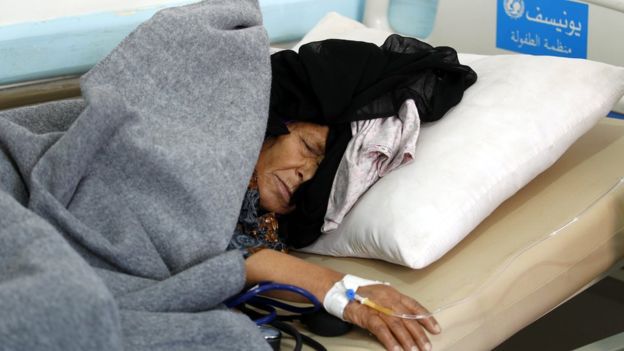
  4.  It comes as a quarter of the population find themselves on the brink of famine, a cholera outbreak has killed at least 500 people and a further 150,000 fresh cases are expected by November.
  5.  The UN is negotiating to stop the conflict from spreading to the port city of Hodeidah, where some 80 percent of Yemen’s food imports arrive. An attack there would, it claims, lead to “a devastating loss of civilian life.”


 

#conflict#famine#houthi#shia#un#united-nations#yemen#yemen-conflict#yemen-crisis#yemen-famine

Related Intelligence

More articles
The Pickaxe Leverage: Why Tehran’s Hardening Rewrites the Map
Middle East

The Pickaxe Leverage: Why Tehran’s Hardening Rewrites the Map

Iran's strategic shift toward deep-earth nuclear fortification has rendered traditional kinetic options obsolete. As the 'mountain-fortress' strategy matures, Washington and Jerusalem are forced into a permanent, high-stakes containment model they are ill-equipped to fund.

12 Sept 2026

The Blackout Doctrine: Tehran’s Calculated Trade-off
Middle East

The Blackout Doctrine: Tehran’s Calculated Trade-off

Iran is prioritising its regional proxy network and missile deterrence over domestic stability. By starving its internal economy to fund external fronts, the Islamic Republic is betting that a regional shield will prevent an internal collapse.

10 Sept 2026

The Qasem Gambit: Why Tehran’s Maritime Strategy Breaks US Naval Power
Middle East

The Qasem Gambit: Why Tehran’s Maritime Strategy Breaks US Naval Power

Iran’s evolution into a sophisticated anti-access maritime power has rendered the traditional US carrier strike group obsolete in the Persian Gulf, forcing a fundamental rethink of Western power projection in the Middle East.

8 Sept 2026

The Fujairah Paradox: The End of the Western Security Umbrella
Middle East

The Fujairah Paradox: The End of the Western Security Umbrella

As Iranian drone incursions breach the strategic Port of Fujairah, the UAE is quietly dismantling its reliance on Western protection. This shift marks the rise of a new, transactional security architecture in the Gulf.

7 Sept 2026

The Emirates Buffer: Abu Dhabi’s Strategic Disengagement
Middle East

The Emirates Buffer: Abu Dhabi’s Strategic Disengagement

As tensions between Washington and Tehran reach a volatile equilibrium, the United Arab Emirates is quietly decoupling its security architecture from Western-led containment to pursue a policy of radical neutrality and economic preservation.

7 Sept 2026

The Larak Conundrum: Tehran’s Shift to Preemptive Deterrence
Middle East

The Larak Conundrum: Tehran’s Shift to Preemptive Deterrence

Iran has abandoned the doctrine of 'strategic patience' for a model of proactive intervention. This shift signals the death of managed escalation and introduces a volatile new era for global energy security and maritime power.

6 Sept 2026