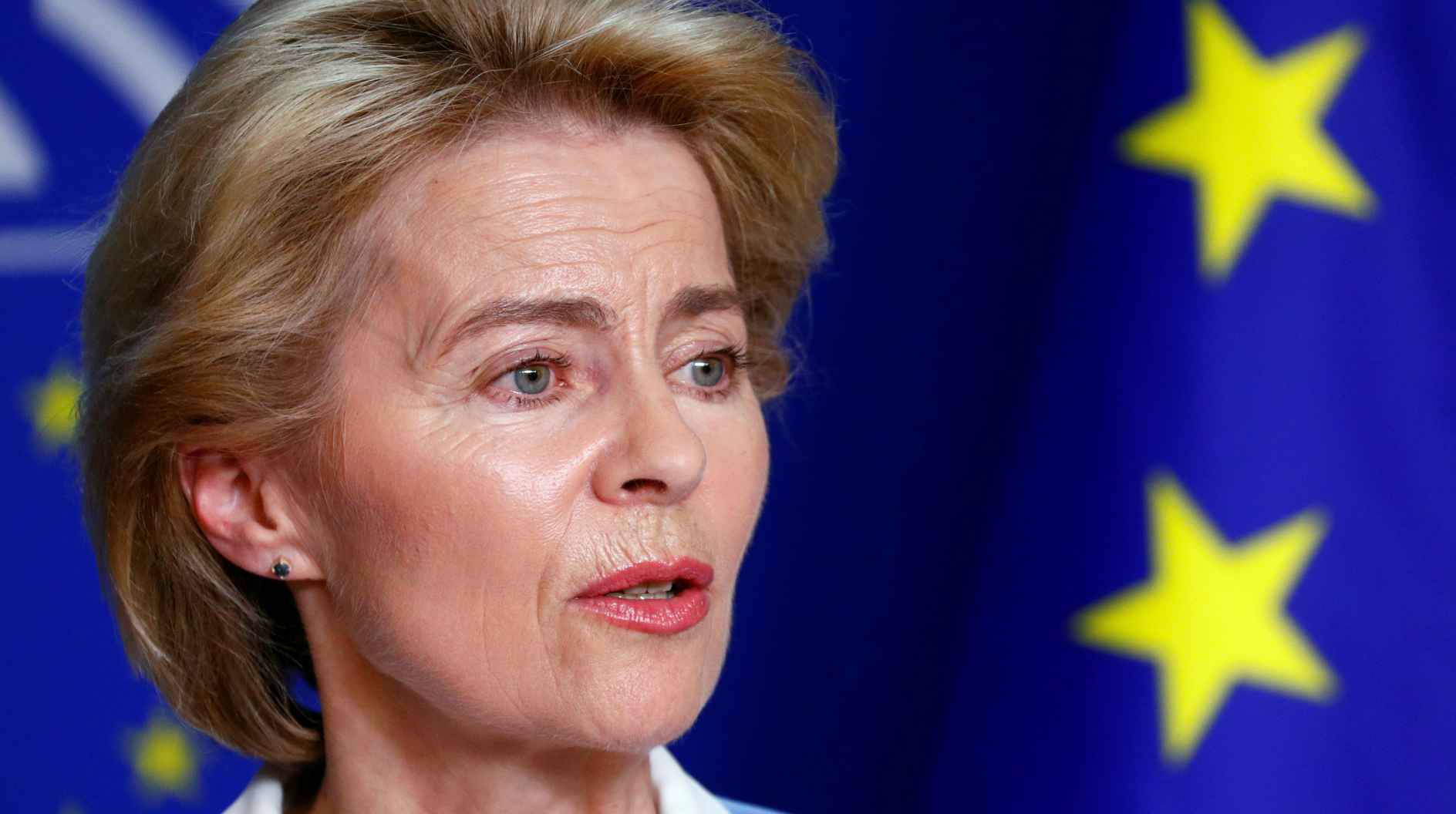
The EU has a new president for its Commission – Ursula von der Leyen. The candidate for Presidency is put forward by national leaders in the European Council, then elected on a majority rule by the members of the European Parliament. The President of the Commission, then, must nominate commissioners, from each member states.
Ursula gathers both factors that may lead her to thrive in this role but other that may lead to her doom.
Thrive
Ursula has, undeniably, a charismatic personality. Not only, she looks good on screen, but she has great communications skills. In the digital era that is ours, this is an advantage. She is, indeed, betting a lot on social media and public relations. She has hired Storymachine an independent PR firm to manage her Twitter account. In these days where a lot in politics relies on image, politicians must behave like they were a brand if they want to survive. Ursula seems to be rather skill in that domain.
She is good at rallying generations: imagine you had a social media savvy grandmother, who supports both the “stay at home mum” and “working women”. She is also good at rallying extremes. Pro-European parties congratulate themselves with her election while Eurosceptic pride themselves on giving her the swing vote.
She is seen as a woman of strong liberal and ethical values: she stands for gender equality, wants to create a carbon neutral Europe and has adopted a Syrian refugee who is now able to speak German and English perfectly.
Growing up in Brussels, she was surrounded by diplomats that has made her into a strong politician. Her father Ernst Albrecht was the powerful premier of Lower Saxony.
Although she is a person who likes big gatherings and networking, she relies on a small number of trusted advisors.
SUBSCRIBE TO KJ VIDS FOR UNLIMITED ACCESS TO NEWS, ANALYSES AND FORECASTS
Doom
She is one of the less popular politicians in Germany, her homeland. She has overseen the Bundeswehr (German army) for 6 years and the state of the army is not good as Germany’s weaponry is ageing.
She is also under investigation by the Bundestag (German Parliament) for an illegal practice in the context of the Bundeswehr: she decided to hire a consultant directly rather than going through public procurement. This decision not to abide by the law falls in stark contradiction with one of the principles of the EU: the rule of law.
Conclusion
Ursula’s skills in communication and her capacity to rally people in order to create compromise will serve her in this new role.
She seems to embody the values of the European Union, but the ongoing hearing in the Bundestag may darken her image.
Where she will appear as the most vulnerable is on the pure political side. Her lack of political prowess and the reputation resulting from it, might put her in a difficult position. This is where her capacity of choosing advisors might save the day for her.
CHOOSE YOUR SUBSCRIPTION TO KJ VIDS
12 weeks for £12
£1 per week
£12.00
then £30 quarterly
- Access to all content
- Questions for Video Q&As
- Vote on Future Topics
- Name Mention in Credits
- Free KJ T-Shirt
Subscribe
Try us out
1 Year
OF FULL ACCESS
£90
£1.88 per week
- Access to all content
- Questions for Video Q&As
- Vote on Future Topics
- Name Mentioned in Credits
- Free KJ T-Shirt
Subscribe
Popular Option
2 Years
OF FULL ACCESS
£160
£1.67 per week
- Access to all content
- Questions for Video Q&As
- Vote on Future Topics
- Name Mentioned in Credits
- Free KJ T-Shirt
Subscribe
Best Value