China’s oppression of Uighurs
China’s minority Uighur population in Xinjiang are predominately Turkic-speaking Sunni Muslims who live primarily in the autonomous region of East Turkestan. Islam arrived in the region in the 10th century. Uyghurs embraced Islam in 934 during the Karahanid Kingdom. Kashgar, the capital of the Kingdom, quickly became one of the major learning centres of Islam. This has infuriated China’s communist atheist government, who in recent years have tried to assimilate the Uighurs by force through concentration camps.
In recent years, there have been many reports of students, teachers, and civil servantshave been forbidden from fasting during Ramadan, forbidden from wearing their traditional dress and even keeping a beard.
As of 2017, the Uyghur language has been banned from schools and a religious crack-down has morphed into a total ban of Islam. In the last 12-18 months, China has put more than a million Uyghurs in re-education camps, where they are held without charge or any terms of release.
They have demolished thousands of mosques (almost 70 percent) in Kashgar city and confiscated religious books, including the Quran.
Beijing played the terrorism card against the Uyghurs by hijacking the 9/11 tragedy and conflating civil disobedience as terrorism.
The Uyghur homeland has become China’s springboard to Central Asia and beyond, and an obstacle to Chinese global expansion.
Muslim countries’ silence
Since China’s brutal oppression of Muslim Uighurs became well-known around the world, the Muslim world has remained silent on the issue, and even suported China’s policies towards the minority. In response to the extraordinary revelations about China’s programme of “re-education” camps for Uighur Muslims, member states of the Organisation of Islamic Cooperation stayed silent.
In July 2019, Pakistan, Saudi Arabia, Egypt, the United Arab Emirates, Algeria and other Muslim-majority states that pose as defenders of the faith helped to block a western motion at the United Nations calling for China to allow “independent international observers” into the Xinjiang region. Iran issues occasional criticisms but wants Chinese support in its struggle against the Trump administration and so keeps its complaints coded.
The last OIC statement on the Uighurs dates back to a simple communiqué in 2015, in which the 57-member group of Muslim countries said it was “concerned” about whether they would be able to celebrate Ramadan. “There is less solidarity than there is for the Palestinian or Rohingya causes,” noted Sophie Richardson, director for China at Human Rights Watch. “China has managed to win these countries’ support because they need Chinese investment.”
China is now a more active and influential voice at the United Nations because so many countries are benefiting from billions of dollars in Chinese investments through its “Belt and Road” infrastructure programme. Muslim nations have therefore put economic and especially in Iran’s case geopolitical interests ahead of their moral guidelines.
Egypt, which wants Beijing to finance its infrastructure, most importantly its new capital to ease the population density in Cairo, went so far as to allow Chinese police to come and interrogate Uighur exiles on its soil in 2017. Even Pakistan which has spoken out for the Rohingyas with particular alacrity has been silent on the Uighurs while the Chinese Belt and Road Initiative proceeds in the country.
Turkey was one of the exceptions to this silence on China’s actions in Xinjiang. Most notably, Ankara decried the detention of Uighurs in “concentration camps” as a “great cause of shame for humanity”. Despite this, not not much has been done since, and objections have turned quiet.
It is clear that China’s economic and geopolitical influence has become so large in recent years, that no regional countries can object to its policies.
The US imposing sanctions against China
The only country as economically and geopolitically capable as China in the current world order is the US. Interestingly, it is the US that has launched an offensive against China’s treatment of the Uighurs. The country has imposed sanctions on three senior officials of the Chinese Communist party, including a member of the ruling politburo, for alleged human rights abuses targeting ethnic and religious minorities in the western part of the country.
Among them is Chen Quanguo, who is the Communist Party Secretary in the far western region of Xinjiang, where the UN estimates about one million Uighurs have been detained. He is the most senior Chinese official ever to have been blacklisted by the US. “The United States calls upon the world to stand against the CCP’s acts against its own minority communities in Xinjiang, including mass arbitrary detention, forced labour, religious persecution, and forced birth control and sterilisation,” a White House official told reporters, saying the blacklisting was “no joke”. The US is therefore the first big power to have launched direct action to counteract this phenomenom.
However, there are question marks as to whether these sanctions will make a difference, and lead China to stop the internment camps. In fact, it is likely that it won’t. Instead, China on Thursday warned of countermeasures in response to the sanctions. China’s foreign ministry said in a statement the United States must bear all the consequences of any responses from Beijing and urged Washington to stop harming China’s interests. The US’s probable failure ultimately comes down to the fact that, as we have seen in the recent trade war between them and China, the US and China’s economy is too closely inter-connected for the US to force China into any action through sanctions. Secondly, the US’s sanctions do not have near the same effect on China as they have on smaller nations that are dependent on trade and positive relations with the US.
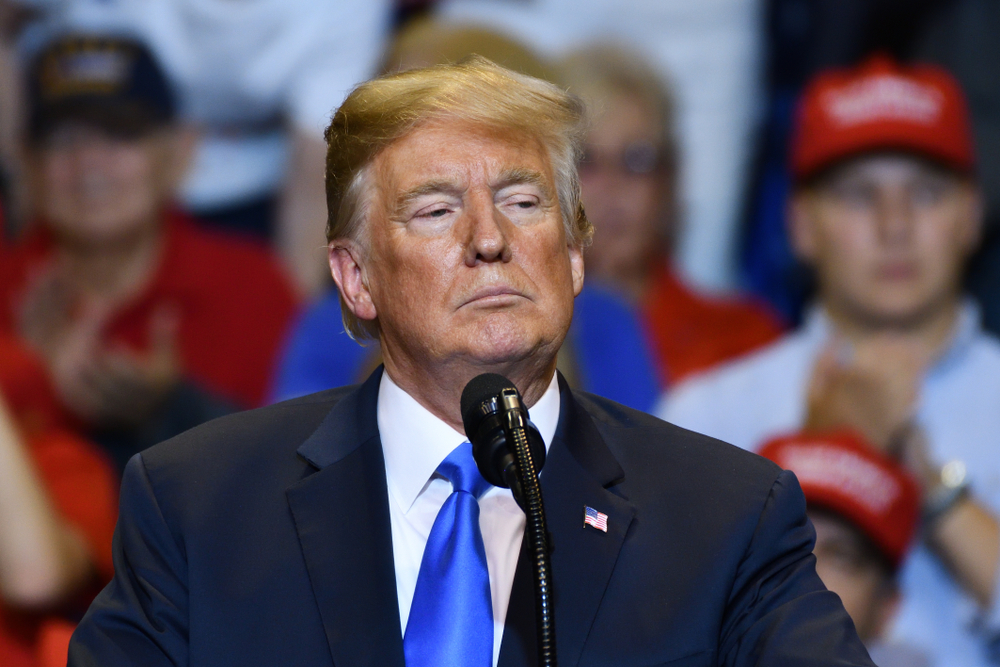
China has simply become too powerful to be stopped even by the US in its domestic policy. In fact, China had even forced the US to stay quiet on the issue earlier in return for the pursuit of a trade deal. President Donald Trump says he did not sanction Chinese officials further over the detention of Muslims in Xinjiang as he was in the “middle of a trade deal”.
It is therefore clear that the US will not stop China’s actions, and the only way China’s oppression can be stop is through united international action, which is very unlikely given China’s influence on many countries in the region and worldwide.