Iranian top nuclear scientist killed
The Iranian nuclear scientist Mohsen Fakhrizadeh was assassinated Friday east of Tehran was shot by a remote-controlled machine gun operating out of another car, the semi-official Fars News Agency. He was the head of the research centre of new technology in the elite Revolutionary Guards and was a leading figure in Iran’s nuclear program.
According to a published report in Fars News, it is reported that on Friday Fakhrizadeh was travelling with his wife in a bulletproof car, alongside three security personnel vehicles, when all of sudden he heard some bullet alike sound hitting the vehicle. To which he exited the vehicle to determine what had happened. When he left the vehicle, a remote-controlled machine gun opened fire from a Nissan stopped about 150 meters (164 yards) from Fakhrizadeh’s car.
Fakhrizadeh was hit at least three times, according to Fars News. His bodyguard was also shot. Following the gunfire, the Nissan exploded, Fars News reported, adding the attack lasted three minutes. The semi-official Iranian Students News Agency (ISNA) also reported Fakhrizadeh’s car was hit by gunfire, followed by an explosion and more gunfire, citing Iranian Defense Minister Brig. Gen. Amir Hatami.
Iranian Foreign Minister Mohammad Javad Zarif called on the international community “to end their shameful double standards” and “condemn this act of state terror.” He added that the attack showed “serious indications of Israeli role.” Maj. Gen. Hossein Dehghan, Khamenei’s military adviser, tweeted Saturday that “Zionists” are seeking to create “all-out war” and vowed to “descend like lightning” on Fakhrizadeh’s killers.
Iran’s English-language Press TV reported on Monday that the weapon used in the killing of prominent Iranian nuclear scientist Mohsen Fakhrizadeh last week was made in Israel, the Islamic Republic’s longtime enemy.
“The weapons collected from the site of the terrorist act (where Fakhrizadeh was assassinated) bear the logo and specifications of the Israeli military industry,” an unnamed source told Press TV. In Jerusalem, there was no immediate reply from Israeli officials contacted for comment on the report.
Hopes of rebuilding UAE Iran relations
The UAE has in recent years played a monumental role in countering Iranian influence in the Gulf and Middle East as a whole, arguably even more so than Saudi Arabia.
The UAE has in the last 2 years shown an increase in cooperation and bilateral ties with Iran, which is officially its geopolitical rival. 2 months ago, the foreign ministers of Iran and the UAE held rare talks on several bilateral and regional issues, including the outbreak of coronavirus in the Middle East. In a video call, during which they also exchanged greetings for the Muslim Eid al-Adha holiday, Sheikh Abdullah bin Zayed al-Nahyan told his Iranian counterpart that strengthening bilateral cooperation was important in tackling COVID-19, according to WAM, the Emirati, state news agency.
The spread of the coronavirus in the Middle East has brought “more reason and logic” to Iran’s relationship with the United Arab Emirates, Iranian Foreign Ministry spokesman Abbas Mousavi said in April. In addition to this, Major General Yahya Rahim Safavi, a top military advisor to the Leader, has said Iran’s relationship with the UAE has improved. “Our relationship with the UAE has improved and Abu Dhabi’s attitudes towards us have changed,” the Middle East Monitor on Tuesday quoted Rahim Safavi as saying, citing Al Jazeera.
Furthermore, Iran and the UAE have increased economic cooperation this year, as Iran’s non-oil exports to the United Arab Emirates (UAE) during the first quarter of the current Iranian calendar year starting March 20 rose by eight percent in value year on year, Eghtesadonline reported Sunday. From March 20 to June 20, Iran exported around 3.8 million tons of non-oil commodities worth 967 million U.S. dollars to the UAE, said Farzad Piltan, director general of Trade Promotion Organization of Iran’s Arab-African Affairs Office. The figures also registered a 39-percent rise in weight compared with the same period last year, Piltan added. The director said watermelons worth 19 million dollars and tomatoes worth 18.47 million dollars topped the list of Iran’s exports to the UAE during the three-month period under review. The growth in exports to the southern neighbour comes despite obstacles to Iran’s trade with other countries caused by the unilateral U.S. sanctions and challenges posed by the coronavirus pandemic, said Piltan. The annual trade between Iran and the UAE hovers around 12 billion dollars, he noted.
Overall, it is clear that the UAE has carved out and is carrying out its geopolitical aims regardless of what Saudi Arabia says. However, we wrote in a previous article that the UAE’s reaction to the latest planned annexation by Israel will show us whether the UAE has really escaped the clutches of the US and Israel, and now that the UAE has officially normalized ties with Israel, it is evident that this is not the case, and this is a major obstacle already in any hopes of stronger ties with Iran.
Iran threatens attack on UAE if US strikes
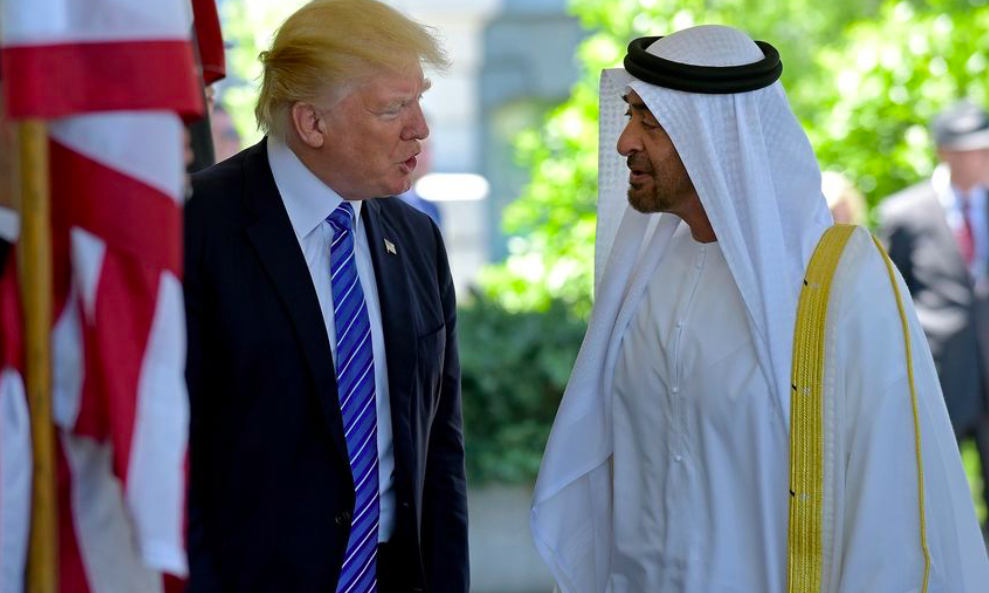
The Islamic Republic of Iran “directly” contacted Emirati Crown Prince Mohammed bin Zayed (MBZ) over the weekend and threatened that if attacked by the US, Tehran will retaliate against the United Arab Emirates (UAE), outlet Middle East Eye (MEE) reported on Monday.
The threat came amid the killing of key Iranian nuclear scientist Mohsen Fakhrizadeh on Friday, in the outskirts of Tehran.
A top Emirati source told MEE that “MBZ received a direct threat from Iran. It was not delivered through proxies.”
Iran further told the crown prince that “We will hold you responsible for the assassination of Fakhrizadeh.”
While the Iranians accused Israel for the killing, they also fear a possible attack by the United States prior to January 20, when outgoing President Donald Trump leaves office.
Reports emerged over the past week that the president asked his advisors to look into a potential strike against Iran that will take out its nuclear program.
Despite this, interestingly, it appears like the UAE still intends to maintain steady relations with Iran, the UAE has condemned last week’s assassination of a top Iranian nuclear scientist and urged countries in the region to avoid instability. According to MEE, Abu Dhabi’s statement condemning the killing of the scientist came hours after the threat was issued to bin Zayed.
However, a simple condemnation will not be enough to repair the damage done to the UAE-Iran ties by the former’s normalization with Israel.