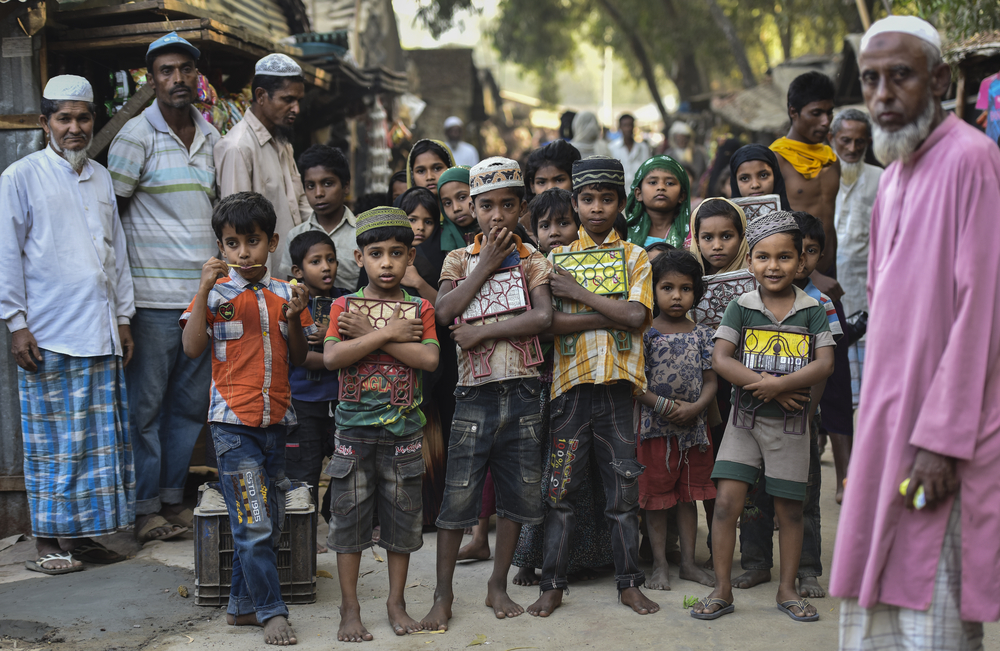
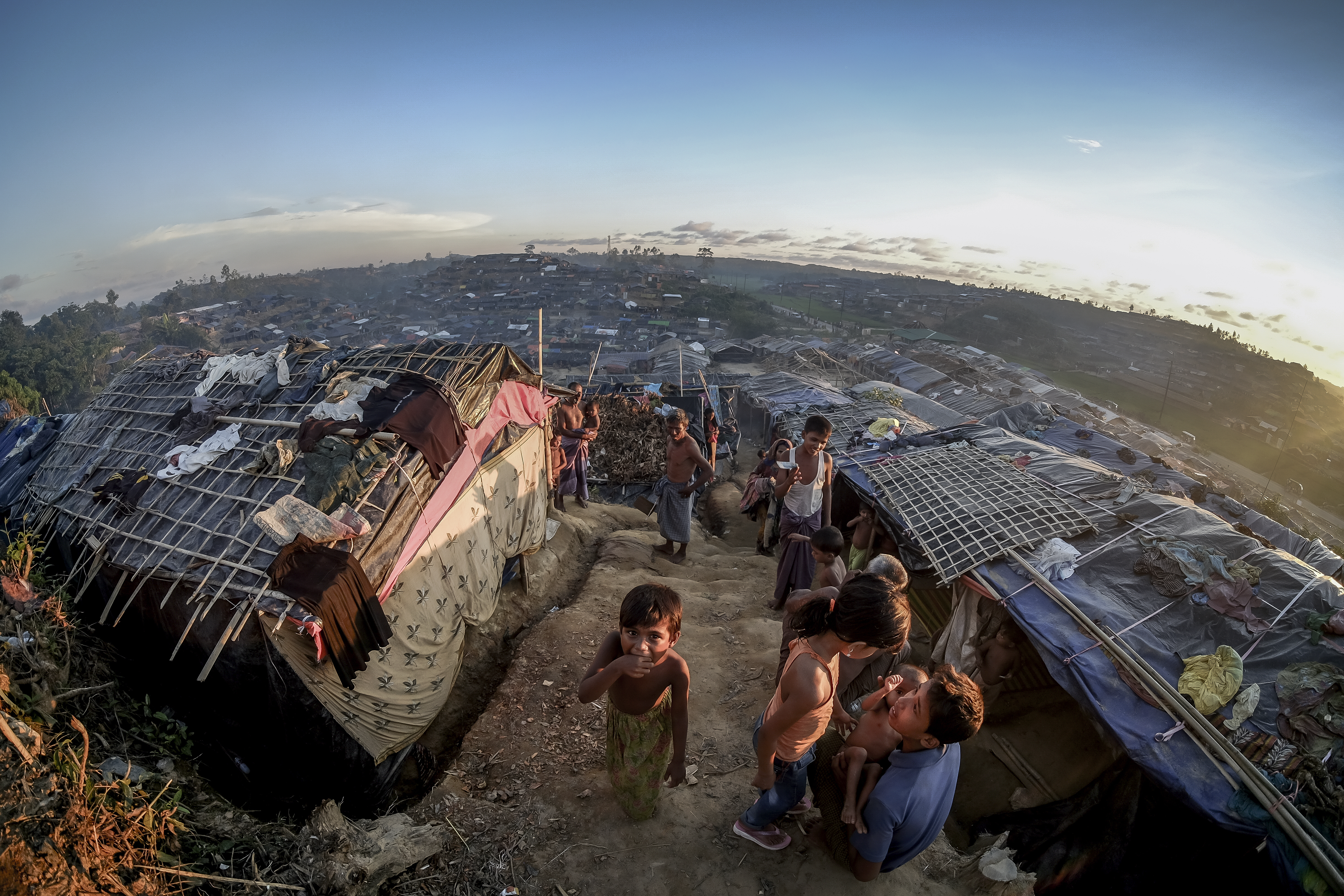
Two years ago, 671,000 Rohingya fled violence and persecution in Myanmar for the safety of Cox’s Bazar, near the south eastern tip of Bangladesh. They joined over 200,000 Rohingya who were displaced in the last 20 years. There are now almost a million Rohingya living Bangladesh, in the largest refugee camps in the world.
The situation remains fragile with the serious and long-term challenges presenting Bangladesh, yet to be resolved. But why did the Rohingya Crisis escalate so rapidly and why does the International community not care?
“Textbook Ethnic Cleansing”
The Rohingya have faced systemic discrimination and exclusion for decades, being denied the recognition of their ethnicity. The 2017 attacks by the Myanmar military were described by the UN high commissioner for human rights as “textbook ethnic cleansing”. He also said of the military campaign: “You cannot rule out the possibility that acts of genocide have been committed.”
While these attacks were the most systematic and the largest in scale, they were not the first. Attacks in 2012 and 2016 led to the internal displacement of more than 100,000 Rohingya people who continue to live in what are effectively prison camps with extremely limited access to food, healthcare and shelter.
The Rohingya crisis needs to be seen in the context of a rapidly evolving geopolitical environment in which Myanmar has become ever so important to China’s string of pearls strategy. This Chinese strategy seeks to strengthen the network of Chinese military and commercial facilities in countries falling on the Indian Ocean between the Chinese mainland and Port Sudan.
Geopolitics of Myanmar
The coastline of Myanmar provides naval access in the proximity of one of the world’s most strategic water passages, the Strait of Malacca, the narrow ship passage between Malaysia and Indonesia. It is the shortest sea route between the Persian Gulf and China and the key chokepoint in Asia. More than 80% of all China’s oil imports are shipped by tankers passing the Malacca Strait.
If the strait were closed, nearly half of the world’s tanker fleet would be required to sail further. Closure would immediately raise freight rates worldwide and effect more than 50,000 vessels per year that transit through the Strait of Malacca. The region from Myanmar to Banda Aceh in Indonesia is fast becoming one of the world’s most strategic chokepoints. Whoever controls those waters controls China’s energy supplies.
The United States has been trying to militarise the region since September 11, 2001 on the argument of defending against possible terrorist attacks. The US managed to gain an airbase on the northernmost tip of Indonesia, but the governments of the region, including Myanmar, adamantly refused US efforts to militarise the region.
Since it became clear to China that the US was hell-bent on a unilateral militarisation of the Middle East oil fields in 2003, Beijing stepped up its engagement in Myanmar. Chinese energy and military security, not human rights concerns drive their policy.
In recent years Beijing has poured billions of dollars in military assistance into Myanmar, including fighter, ground-attack and transport aircraft; tanks and armoured personnel carriers; naval vessels and surface-to-air missiles. China has built up Myanmar railroads and roads and won permission to station its troops in Myanmar.
China also built a large electronic surveillance facility on Myanmar’s Coco Islands and is building naval bases for access to the Indian Ocean.
Myanmar is an integral part of what China terms its “string of pearls,” its strategic design of establishing military bases in Myanmar, Thailand and Cambodia in order to counter US control over the Strait of Malacca chokepoint. There is also energy and other important minerals on and offshore of Myanmar, and lots of it.
The emboldened Myanmar military is able to oppress the Rohingya minority as they know they have unequivocal support from China, Russia and India who will shelter Myanmar’s international position.
Even though Chinese and Indian troops may be involved in periodic stand-offs on the disputed Himalayan border and are competing for influence in Myanmar, they are on the same page regarding the Rohingya crisis. Both India and China have huge infrastructure projects in Rakhine and are giving strong backing to the Myanmar leadership.
Binoda Mishra, who heads the Centre for Studies in International Relations and Development in India said that “China supports Myanmar to retain its influence built over three decades of massive development aid and supply of military hardware, India supports Myanmar to play catch-up and build influence partly by development financing and partly by playing on civilisational linkages based on the shared Buddhist heritage,” “And both India and China engage the Burmese military as much as the civilian government because the country is key to India’s ‘Act East’ policy and China’s Belt and Road Initiative.”
The US, while expressing concern about the violence, has mostly stopped short of criticising Myanmar’s President Win Myint, or the formal Nobel laureate Aung San Suu Kyi. They hoped that she could prove to be a useful ally in countering China’s influence. But as it becomes more apparent that China has a much stronger relationship and advantages with Myanmar, the US could use the Rohingya card in order to undermine their Government.
Only recently the US placed sanctions on several commanders and units of Myanmar’s security forces for their roles in the “ethnic cleansing” of Rohingya Muslims and other minority groups in the country. But Aung San Suu Kyi was not amongst those sanctioned, nor are Myanmar’s top military commanders, according to Reuters.
Regional and global powers will not want to distance themselves from Myanmar, however distasteful its treatment of the Rohingya. Unfortunately, the Rohingya will remain as a pawn in a wider geopolitical context.