Saudi Arabia investing in domestic defense industry
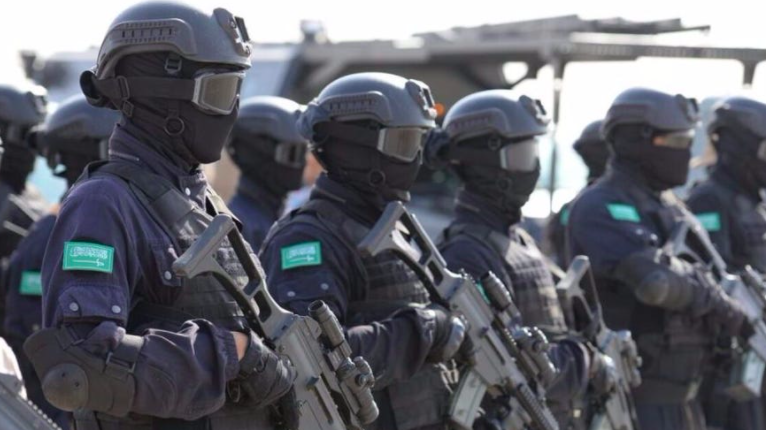
Saudi Arabia has in recent months stepped up its plans to increase indigenous military production, in an effort to reduce the heavy reliance on defence imports it has had for years.
Saudi Arabia’s General Authority for Military Industries (GAMI) launched the country’s first Military Industries Human Capital (MIHC) strategy on 6 February.
The MIHC has six strategic objectives to help develop the country’s domestic defence industrial knowledge base: enabling the sector through supporting policies and regulations; enhancing the level of professionalism, skills, and excellence within the sector’s human capital development; empowering research and innovation in defence; assuring the availability of requisite and sustainable human capital; developing digital capabilities; and encouraging participation among stakeholders in planning, training, and funding.
The strategy will also contribute to military technology and production transfer to the kingdom, as well as the expansion and establishment of local manufacturing companies.
According to GAMI, the organisation will achieve these goals through education and training, awareness and guidelines, and policy formation. Priority initiatives to be undertaken include broadening technical training programmes, offering defence-related academic scholarships, expanding defence-related disciplines at university level, introducing specialised training programmes, and empowering women in defence.
Italy’s Leonardo and the UK’s Cranfield University also signed collaboration agreements with GAMI on the sidelines of the event. The memorandum of understanding (MoU) with Leonardo covered the creation and development of investment opportunities in the education field specialising in the defence sector, as well as working on developing academic programmes and graduate projects.
In a sign that the Saudi military industrial complex has already gained some knowledge and readiness, in the first program of its kind in Saudi Arabia, a local organization is teaming with American firm Lockheed Martin to produce parts for the Terminal High Altitude Area Defense system. During the World Defense Show in Riyadh, which took place March 6-9, the General Authority for Military Industries, or GAMI, announced it approved two local projects for the THAAD air defense system: the first for manufacturing missile interceptor launchers, and the second for producing the missile interceptor canisters. The projects are part of Saudi Arabia’s effort to domestically spend 50% of its money set aside for defense equipment and services by the year 2030, according to a statement by GAMI. Although Saudi involvement in this project would have been unheard of a couple of years ago, the joint project shows that Saudi Arabia has already made some significant steps in increasing its productive and technical capabilities. Such a project will also significantly help the Saudi industry develop the much needed experience and knowledge that will be crucial in further internalization of production.
Shift away from the US
Saudi Arabia’s defence policy has also been accelerated by the cooling of relations between the Kingdom and the US, which, although not unprecedented, is a rarity in recent decades, especially since the two countries have built a strong partnership off the oil industry and arms trade. Now that the US is energy independent and is increasingly shifting away from Saudi arms trade, and the Kingdom is diversifying its economy and focusing on a more regional geopolitical approach, the two countries ties have significantly cooled. Saudi Arabia wants to reduce its military dependence on US equipment in order to expand the geopolitical freedom it can enact.
Nevertheless, Saudi still maintains contacts and defence ties with the US, as it recognizes that this will be a long process and until then it is crucial to maintain the US’s military anchor to a certain level. Prince Khalid bin Salman, Saudi Arabia’s deputy minister of defense, on Wednesday met the US Secretary of Defense Lloyd Austin in Washington, the Saudi Press Agency reported.
The pair reviewed the Saudi-US partnership, and ongoing and future strategic military and defense cooperation between the Kingdom and US.
Prince Khalid expressed Saudi Arabia’s appreciation for the close cooperation between the two countries’ defense bodies to achieve the two sides’ common interests and enhance security and peace regionally and internationally.
The meeting discussed regional and international developments, and a number of issues on defending common interests and global security and stability.
The meeting was attended by Gen. Fayyadh bin Hamed Al-Ruwaili, Saudi Chief of General Staff, and other Saudi and US senior officials.
Incentive for reconciliation with Turkey
As Saudi Arabian foreign policy shifts towards a more regional landscape, reconciliation with Turkey has been inevitable, and although moving more slowly than Turkey’s reconciliation with the UAE for instance, is nevertheless moving forward. A central reason and incentive for Saudi Arabia’s interest in strengthening ties with Turkey is the latter’s sophisticated and large defence industry, which could on one hand help Saudi Arabia diversify its defence imports, away from US reliance, until its domestic defence industry is ready, and on the other, provide an important boost in Saudi Arabia’s defence capabilities in the short term, at a low cost, acting as a strong deterrent to Iran.
The kingdom of Saudi Arabia is preparing for talks to buy Turkish Bayraktar drones, an international news site has said.
“The Saudi Arabian Military Industries (SAMI) has expressed interest in Turkish drones and is ready for talks with the producing company, Baykar,” Lebanon-based Tactical Report wrote on May 22.
The site is known for its feature news on intelligence from Middle Eastern countries.
The allegation drew interest on local media, with daily Milliyet headlining, “Another candidate for Bayraktar.”
“The number of countries that the TB2 drones have been exported to has reached 20,” the daily wrote on May 23.
The company has another unmanned combat aerial vehicle (UAV), “Bayraktar Akıncı,” a high-altitude long-endurance (HALE). The first three units entered service with the Turkish Armed Forces on Aug. 29, 2021.
According to local reports, Baykar has made a deal with three countries for the sale of “Bayraktar Akıncı.”
The Turkish drones got worldwide fame amid the Second Nagorno-Karabakh War that broke out on Sept. 27, 2020, between Armenia and Azerbaijan.
Meanwhile, Saudi Arabia could soon start developing its own drones, as experts at the International Exhibition and Conference on Artificial Intelligence and Cloud Computing, held in Riyadh, discussed enhancing AI for the drone sector in smart cities and the possibility of localizing the technology in the Kingdom last week.