
KJ ReportsKJ Reports

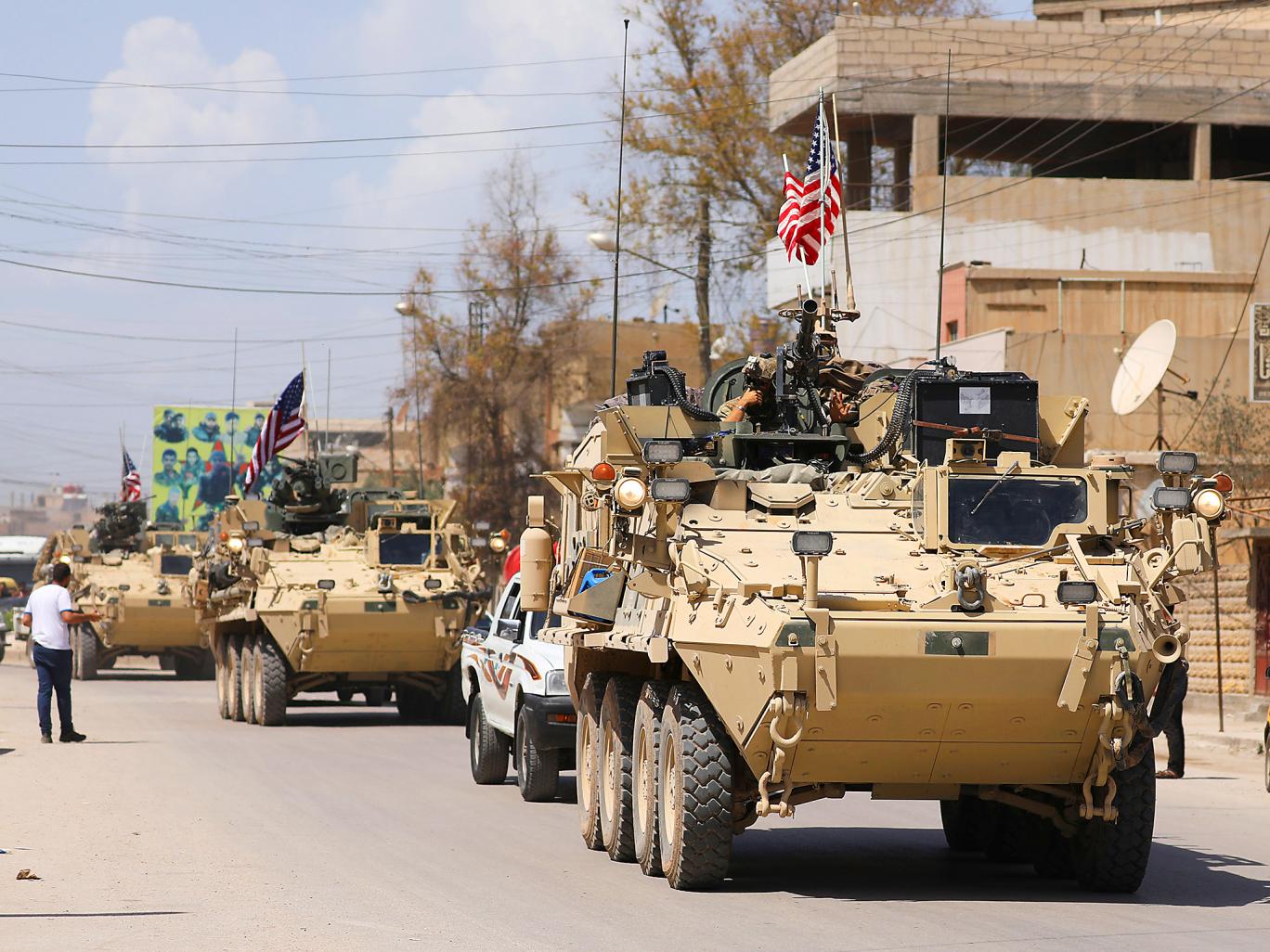
US facing new era of instability as Middle East sinks further into turmoil

1 June 2017654

Listen to this article

KJ narrates this report in his own voice

US facing new era of instability as Middle East sinks further into turmoil

Read original article by Anna Pujol-Mazzini on the Reuters or read some of they key points below;

  1. “An annual global peace index has concluded that US political turmoil had pushed North America into deep instability in 2016 while the Middle East sank deeper into turmoil.”
  2. “Although this year’s up-tick is reassuring, the world is still mired with conflict in the Middle East, political turmoil in the US, refugee flows and terrorism in Europe,” said Steve Killelea, founder of the Sydney-based Institute for Economics and Peace (IEP), which produces the index.”
  3. “Three out of the five least peaceful countries – Syria, Iraq and Yemen – are in the Middle East, and Syria retained the top spot of least peaceful country for the fifth year in a row.”
  4. “It measures 23 indicators including incidents of violent crime, levels of militarisation, weapons imports, as well as refugee tallies and the number killed in internal conflict. Syria retained its overall top spot in the index.”
  5. “About half a million people are estimated to have been killed in Syria’s six-year civil war, which has dragged in regional and world powers and caused the biggest refugee crisis since the Second World War.”
  6. “Many countries in the Middle East and North Africa, however, became more peaceful in 2016, including Morocco and Iran, where political stability has increased, the index said.”
  7. “Meanwhile, political stability in the United States dropped as the presidential campaign that elevated Donald Trump to the White House highlighted deep divisions within society.”Add Row
  8. “Iceland is the world’s most peaceful country listed in the index, followed by New Zealand, Portugal, Austria and Denmark.”
#iraq#middle-east#reuters#somalia#syria#yemen

Related Intelligence

More articles
The Hollow Pillar: Why Tehran’s Internal Decay Trumps Proxy Power
Middle East

The Hollow Pillar: Why Tehran’s Internal Decay Trumps Proxy Power

Iran’s sprawling ‘Axis of Resistance’ offers a façade of regional dominance. Yet, a widening rift between the clerical elite and a disillusioned populace transforms every foreign intervention into a domestic liability, eroding the Islamic Republic’s ultimate deterrent.

9 Jul 2026

The Escort Trap: Unifying the Mediterranean and Persian Gulf
Middle East

The Escort Trap: Unifying the Mediterranean and Persian Gulf

NATO’s permanent naval deployment in the Strait of Hormuz has effectively dissolved the geographic distinction between European and Middle Eastern security, creating a single, interlocking conflict theatre from Gibraltar to the Arabian Sea.

8 Jul 2026

The Swiss Conduit: Doha and Islamabad’s New Security Architecture
Middle East

The Swiss Conduit: Doha and Islamabad’s New Security Architecture

A quiet structural shift has transformed Qatar and Pakistan into the indispensable intermediaries of the Middle East. By leveraging geography and intelligence depth, this new axis is managing volatility that traditional Western diplomacy can no longer touch.

28 Jun 2026

The Anatolian Bridgehead: Why Türkiye is the Pivot of the 2026 Order
Middle East

The Anatolian Bridgehead: Why Türkiye is the Pivot of the 2026 Order

As the global architecture fractures into competing blocs, Ankara has transformed from an erratic NATO outlier into the indispensable arbiter of Eurasian logistics, energy security, and regional containment.

27 Jun 2026

The Gulf Restoration: Abu Dhabi’s Strategic Decoupling
Middle East

The Gulf Restoration: Abu Dhabi’s Strategic Decoupling

The UAE’s 14-Point Pact and aggressive production capacity expansion have fundamentally altered the relationship between oil and regional chaos. For the first time, Abu Dhabi has ensured its economic survival no longer depends on regional peace.

26 Jun 2026

The Iranian Chokepoint: Why $200 Oil is Tehran’s Strategic Veto
Middle East

The Iranian Chokepoint: Why $200 Oil is Tehran’s Strategic Veto

As regional tensions escalate, Iran’s ability to throttle the Strait of Hormuz has transformed from a military threat into a sophisticated macroeconomic weapon designed to neutralise Western sanctions and leverage global energy markets.

16 Jun 2026