The era of the reliable satellite state is over. We have entered an age of strategic promiscuity. While the 20th-century non-aligned movement was defined by a shared moral objection to imperialism and a desire for distance from the Cold War superpowers, the 21st-century iteration is driven by something far more cynical and effective: price discovery. Nations in the Global South no longer seek to avoid the giants; they seek to auction their alignment to the highest bidder on a case-by-case basis.
The Multi-Vector Reality
In the current geopolitical landscape, strength is defined by the ability to say 'no' without consequence. Major middle powers—specifically India, Brazil, Indonesia, Saudi Arabia, and Vietnam—have mastered the art of multi-vector diplomacy. They are not choosing sides; they are choosing issues. This is not a lack of vision; it is a calculated response to a fragmented world where no single power can offer a complete security and economic package.
The incentive is clear. If a nation aligns too closely with Washington, it loses its leverage with Beijing, and vice-versa. By maintaining a state of perpetual 'un-commitment', these nations force the superpowers into a cycle of competitive courtship. This results in better trade terms, technology transfers, and security guarantees that would be unavailable to a loyal vassal.
The Failure of Binary Thinking
Western policy circles often view the world through the prism of 'Democracy vs. Autocracy'. This is a category error when applied to the Global South. For a country like Vietnam or Turkey, this distinction is a luxury. Their primary concerns are terminal infrastructure, energy security, and the avoidance of secondary sanctions. They see the international order not as a rules-based system to be preserved, but as a toolkit to be used.
Who benefits from this? The middle powers who possess 'bottleneck assets'. Indonesia holds the world’s largest nickel reserves, essential for the global energy transition. Saudi Arabia holds the surplus oil capacity required to stabilise Western economies. Brazil provides the agricultural surplus that keeps the Chinese population fed. By controlling these physical realities, they have decoupled their economic survival from ideological loyalty.
A Historical Parallel: The 19th Century Concert
The better historical model for today is not the Cold War, but the 19th-century 'Concert of Europe'. Following the Napoleonic Wars, European powers operated in a shifting web of alliances. There were no permanent friends, only permanent interests. Britain often played the role of the balancer, tilting its weight to prevent any single power from dominating the continent. Today, the roles have shifted. The Global South is collectively acting as the balancer between the US and China. They are not trying to replace the giants; they are trying to ensure neither giant ever wins decisively, as a unipolar world reduces the value of a middle power's swing vote.
What Most People Miss: The Technology Arbitrage
The most significant shift is happening in technology. Most analysts focus on whether a country uses Huawei 5G or Ericsson. What they miss is that the most successful middle powers are aggressively pursuing 'sovereign tech stacks'. They are using Chinese hardware to build the physical network while using Western software and capital to run the services. By refusing to standardise on a single superpower's ecosystem, they prevent 'digital enclosure'. They are effectively building 'firewalls of neutrality' that allow them to extract data sovereignty concessions from both Silicon Valley and Shenzhen.
Strategic Consequences
The primary second-order effect of this trend is the erosion of the US dollar’s role as a tool of coercion. As middle powers build parallel payment systems and trade in local currencies, the effectiveness of Western sanctions regimes diminishes. This creates a more resilient, albeit more chaotic, global economy where financial power is diffused. Furthermore, it forces the US and China to engage in 'economic statecraft'—actually building things in these countries—rather than relying on traditional diplomacy or military threats.
"Strategic autonomy is not about isolation; it is about the diversification of dependency until no single dependency can be used as a weapon."
The Risks of Overplaying the Hand
There is a limit to this strategy. The risk for the 'non-aligned' is that they may eventually find themselves in a 'geopolitical vacuum'. If the rivalry between the US and China turns into open conflict, the middle ground disappears. Those who have not secured firm security guarantees may find themselves exposed. Additionally, if the two superpowers decide to coordinate on certain issues—an unlikely but possible scenario—the leverage of the swing states evaporates overnight.
What to Watch
- The Expansion of BRICS+: Watch for whether the group moves toward a functional trade bloc or remains a symbolic talk shop. Real institutional depth would signal a long-term shift.
- Critical Mineral Cartels: Look for attempts by nations like Indonesia, Chile, and the DRC to form OPEC-style organisations for lithium, cobalt, and copper.
- India’s Manufacturing Pivot: If India can successfully absorb supply chains leaving China without adopting Western political constraints, it becomes the ultimate non-aligned blueprint.
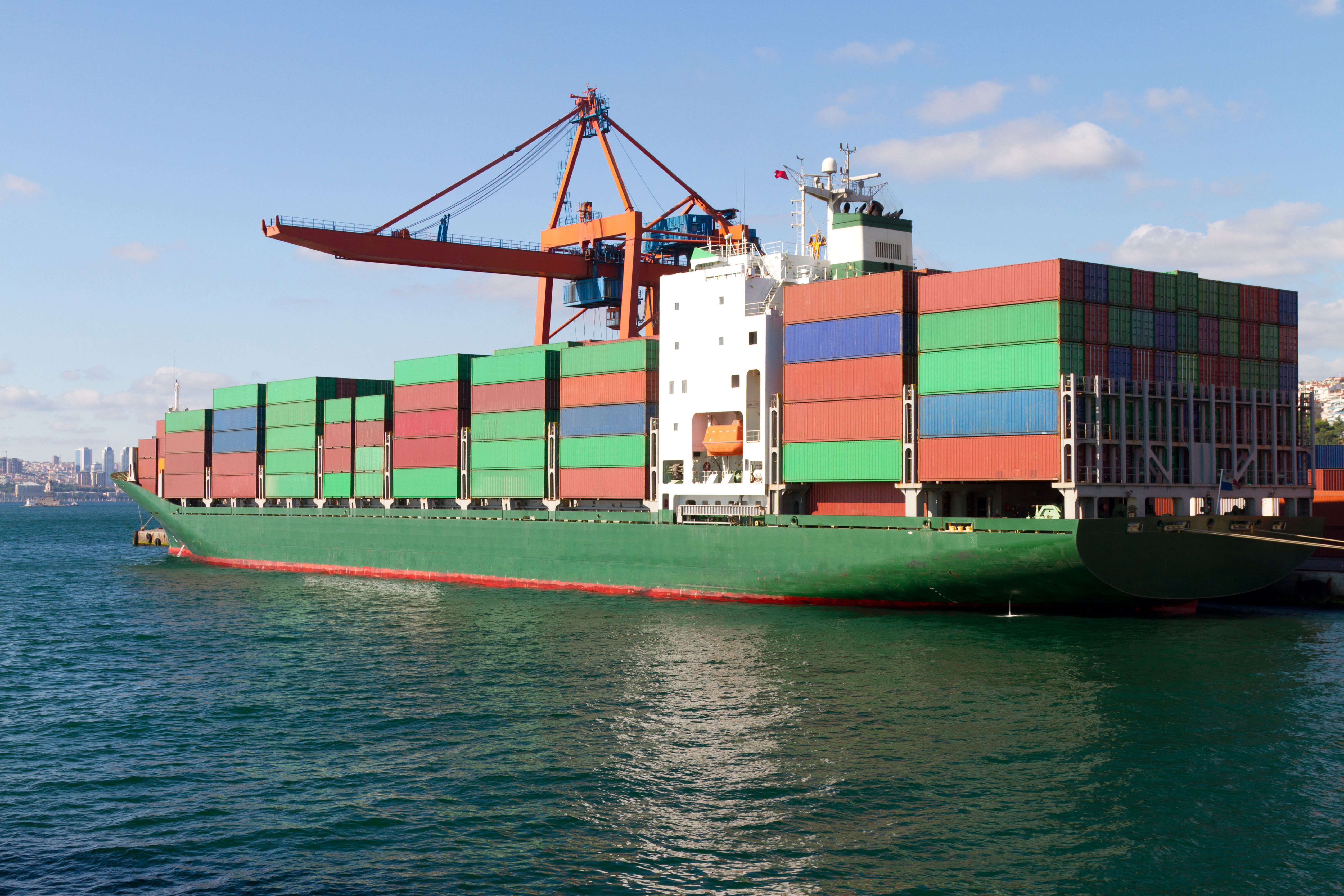
- Port Infrastucture Ownership: Keep track of who owns the physical terminals in the Global South; these are the ultimate indicators of long-term strategic alignment.
The KJ Verdict
The Global South is no longer a theatre for superpower rivalry; it is the architect of it. By refusing to join a side, middle powers have commodified their allegiance. This has created a world that is less stable but more balanced. For the West, the challenge is to stop demanding loyalty and start offering better deals. In a competitive market for influence, the power lies with the buyer, not the seller. The new non-aligned movement is not a protest against the global order—it is a sophisticated play to profit from its fragmentation. This trend will intensify as the US and China move from trade friction to structural decoupling, making the 'swing state' the most important actor in the next decade of geopolitics.