KJ ReportsKJ Reports

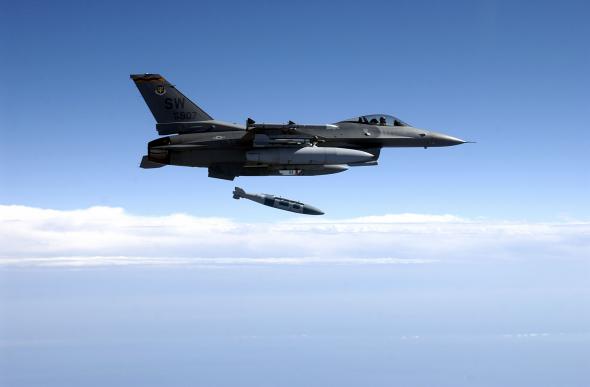
The US-led coalition killed nearly 500 civilians in one month in what the United Nations has called a “staggering loss of life”

24 June 20171,066

Listen to this article

KJ narrates this report in his own voice

The US-led coalition killed nearly 500 civilians in one month in what the United Nations has called a “staggering loss of life”

Read original article by Josie Ensor on the Telegraph or read just the stats below;

  1. The US-led coalition killed nearly 500 civilians in one month in its pursuit of Islamic State militants in Syria, in what the United Nations has called a “staggering loss of life”.
  2. Some 470 civilians, including 137 children, died in air strikes on the Islamic State of Iraq and the Levant (Isil)-held cities of Raqqa and Deir Ezzor in eastern Syria between May 23 and June 23.
  3. The UK-based Syrian Observatory for Human Rights SOHR) monitor said the period saw the highest civilian death toll in coalition raids for a single month since they began on September 23, 2014.  The figure was more than double the previous 30-day toll.
  4. Rami Abdel Rahman, SOHR’s director, said that the new deaths brought the overall civilian toll from the coalition’s campaign in Syria to 1,953, including 456 children and 333 women.
  5. In March, more than 200 mostly women and children were reported to have been killed while they seeking refuge in a school building in the village of Mansoura.
 

#syria-bombing#syria-crisis#syria-war#us-airstrikes#us-airstrikes-syria

Related Intelligence

More articles
Chokepoint Logic: Why Hormuz Remains the World’s Only True Thermostat
Middle East

Chokepoint Logic: Why Hormuz Remains the World’s Only True Thermostat

Despite the rise of American shale and the green energy transition, the Strait of Hormuz remains the single most critical vulnerability in the global economy. Power here is measured in barrels and leverage, not just navies.

15 May 2026

The Levantine Void: Lebanon’s Final Descent into State Dissolution
Middle East

The Levantine Void: Lebanon’s Final Descent into State Dissolution

Lebanon is no longer a state in crisis; it is a geographic theatre where the concept of the nation has been replaced by a fragmented security patchwork. Here is the structural reality of why the old Lebanon cannot return.

1 May 2026

The Yemen Mirror: Why Gulf Billions Failed to Buy Security
Middle East

The Yemen Mirror: Why Gulf Billions Failed to Buy Security

A decade of conflict has revealed a stark gap between military expenditure and strategic influence. As Riyadh pivots to diplomacy, the lessons of the Yemeni quagmire are reshaping the architecture of Middle Eastern power.

15 Apr 2026

Stateless Sovereignty: Why the Kurdish Dream is Now a Buffer Weapon
Middle East

Stateless Sovereignty: Why the Kurdish Dream is Now a Buffer Weapon

As regional powers in the Middle East fragment, the Kurdish 'non-state' has evolved from a historical tragedy into a permanent geopolitical buffer. While formal independence remains a mirage, the Kurds have become the indispensable veto players in the Levant.

1 Apr 2026

The Leviathan's Edge: Why America Still Monopolises the Future
United States

The Leviathan's Edge: Why America Still Monopolises the Future

While critics forecast a hollowed-out empire, the United States has widened its lead in the global technology race. The reason is not policy, but a unique synthesis of capital risk, institutional elasticity, and geographic isolation.

1 Mar 2026

The Pharaoh’s Gamble: Egypt’s Structural Trap and the New Nile Order
Middle East

The Pharaoh’s Gamble: Egypt’s Structural Trap and the New Nile Order

As Cairo’s debt-to-GDP ratio enters a terminal spiral, the Sisi administration faces a structural trilemma. Egypt must now navigate a thirsty domestic population, a belligerent upstream Ethiopia, and a regional credit market that is finally running dry.

1 Feb 2026