In a brand new series of KJ Videos, we will take an analytical look at the Syrian civil war from the beginning to today. In this episode, we will take you way back in time when the Syrian uprisings all began. But before we begin, don’t forget to like and subscribe to our YouTube channel for the latest KJ Videos.
In 2011, successful uprisings – that became known as the Arab Spring – toppled Tunisia’s and Egypt’s presidents giving hope to Syrian activists who began mobilising protests.
At first it seems everything could be easily contained without the need for Gaddafi-like crackdowns.
On 17th February, however, the same day as the Benghazi protests began, things seemed more tense following an argument, between police and protestors in Damascus holding banners saying “The Syrian people will not be humiliated”
But when the interior minister visited the scene in person to assure the crowds that the police officers involved would be investigated, and when Bashar announces a range of new social welfare programmes along with the unblocking of social media platforms, it still seemed likely Syria could avoid the fate of Libya.
By March, however, things seemed to be getting more out of control as the increasingly heavy-handed and undoubtedly nervous regime proved unwilling to take more chances.
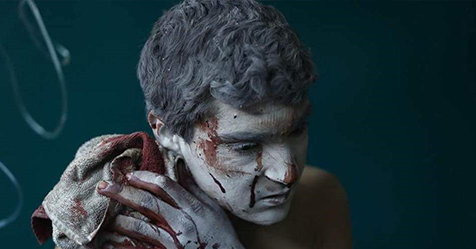
That March, peaceful protests erupted in Syria as well, after 15 boys were detained and tortured for writing graffiti in support of the Arab Spring. One of the boys, a 13-year-old, was killed after having been brutally tortured.
Dissidents in Syria’s southernmost city, Daraa, seemed poised to become the epicentre of an Urban revolt.
As the Syrian equivalent of Benghazi, Daraa’s message, soon spread to the historically restive Hama along with Homs and even parts of Damascus. A ‘day of dignity’ was held on 18th March, with an even bigger protest staged the following Friday.
As with Cairo’s Tahrir square, there were a mixture of protestors in Homs. Some were heard chanting ‘peaceful, Muslims, and Christians along with other such as ‘God, Syria freedom and nothing else.’ Other protests were calling for “the downfall of the Assad regime”
Although there were some reports of public buildings and Baath headquarters being burned down, in many cases the protests remained peaceful, with some even marching without their shirts to prove they held no concealed weapons.
Galvanised by the martyrdom of Hamza al-Khatib, a 13-year-old boy, who had been arrested and whose mutilated corpse was afterwards returned to his family, then protests gained a much harder edge.
The Syrian government responded to the protests by killing hundreds of demonstrators and imprisoning many more.
With dozens being killed every day and reportedly more than eight thousand arrested in just two months, mobile phone video footage began to go viral of soldiers haphazardly shooting protestors, including women and children.
Beyond such repression, the regime also engaged in two other strategies in an effort to keep its core constituency as loyal as possible and also to ward off any attempted external influence.
With much the same goal as Yemen’s, Ali Abdullah Saleh’s encouraging of Al-Qaeda militants to take over certain towns, Bashar began a ‘highly selective’ amnesty of prisoners. According to a report prepared for the European Parliament, these were known to include numerous prominent Jihadis such as Muhammed Al-Jowlani, Abu Khalid Al-Suri and Abu Musab al-Suri.
Adding further weight to claims that Bashar was trying to radicalise then opposition by emptying Jihadists into their ranks, there were reports that even before their release such inmates had already been moved to more comfortable prisons so that they could mingle with other political prisoners.
According to one Jihadist fighter later interviewed by the Guardian this was because the regime “wanted them to be radicalised…if this stayed as a street protest, it would have toppled the regime within months and they knew it.”
Within months of Bashar’s spring amnesty, suicide bombings begun in Damascus and Aleppo and by February 2012, the al-Jowlani formally established a Syrian Al-Qaeda franchise known as Jabhat al-Nusrah. Now more easily able to frame opposition attacks as terrorism and marginalise any remaining peaceful protestors.
We’re also currently running a crowdfunding campaign to help our operation produce more and better videos. You may donate what you towards our project here – http://www.crowdfunder.co.uk/kj-vids
Support our content by becoming a KJ Patreon
https://www.patreon.com/kjvids
Website – www.kjvids.co.uk
Facebook – www.facebook.com/KJVids
Twitter – www.twitter.com/kjvids2016
Instagram – www.instagram.com/kjvidsofficial
All Rights Reserved. Contact info@kjvids.co.uk if you are interested in licensing our content, advertising or working with us in other ways.