The Anatomy of a Vacuum
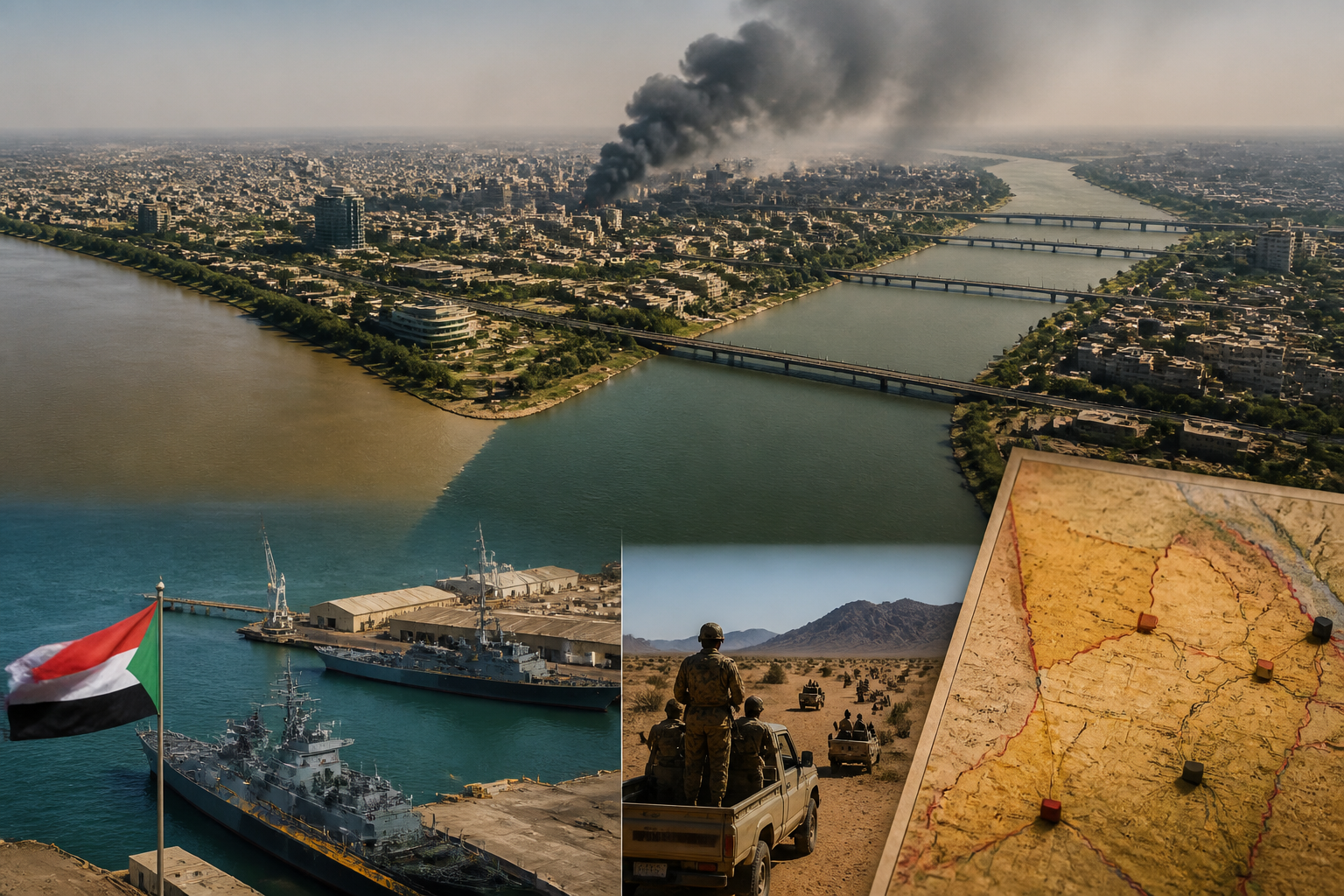
Sudan is no longer a state in the traditional Westphalian sense. It is a geographic theatre where the central nervous system of Khartoum has been severed, leaving a power vacuum that stretches from the Red Sea to the Atlantic coast of the Sahel. This collapse has triggered a second-order effect that most observers have overlooked: a continental arms race. African middle powers are no longer waiting for Western or UN security guarantees. They are pivoting toward autonomous militarisation to secure their own resource perimeters.
The incentive is clear. When a pivotal state like Sudan fragments, the traditional borders of the Sahel become porous to more than just refugees. They become conduits for illicit gold flows, advanced drone technology, and mercenary influence. For the surrounding capitals—from N'Djamena to Addis Ababa—the lesson of Khartoum is that internal cohesion is the only currency of survival. To understand the current escalation, we must look at who benefits from a broken Sudan and how that instability is being weaponised to redefine sovereignty across the continent.
The Geography of Incentives
Geography dictates the stakes. Sudan is the bridge between the Arab world and Sub-Saharan Africa. It holds the keys to the Nile waters and provides a maritime window via Port Sudan. The disintegration of the Sudanese Armed Forces (SAF) and the Rapid Support Forces (RSF) into competing fiefdoms has turned the country into a supermarket for hardware and a laboratory for proxy warfare. Middle Eastern powers seek naval access; Russian interests seek gold to bypass sanctions; and Western powers seek a containment that they are increasingly unable to enforce.
However, the primary drivers are now internal to the continent. The 'Sudano-Sahelian Vacuum' has forced a realisation in regional capitals: the old security architecture is dead. We are seeing the rise of 'Sovereignty Realism'. Countries like Ethiopia, Chad, and the members of the Alliance of Sahel States are aggressively procuring Turkish TB2 drones, Iranian munitions, and Chinese electronic warfare suites. They are not preparing for peacekeeping; they are preparing for the inevitable spillover of a stateless Sudan.
The Mahdist Parallel
History Repeating in Reverse
To understand today, we must look to the late 19th century and the Mahdist War. Then, as now, a charismatic movement in Sudan challenged the established order, leading to a decade of regional upheaval that eventually drew in the Great Powers of the day. The British intervened not out of altruism, but because the collapse of Sudanese authority threatened the Suez Canal and the stability of Egypt. The Suez was the 'choke point' of the 1880s.
Today, the 'choke point' is twofold: the Red Sea maritime corridor and the burgeoning lithium and gold mines of the Sahel. In the 1880s, the vacuum was filled by colonial expansion. In the mid-2020s, the vacuum is being filled by a fragmented multipolarity. History shows that when the centre in Khartoum fails, the entire Nile Basin and Sahelian belt vibrate. The difference today is that the external powers—the UAE, Russia, and Turkey—are playing a more sophisticated game of influence via local proxies rather than direct boots on the ground.
What Most People Miss
The common narrative focuses on the humanitarian disaster. While catastrophic, this masks the underlying economic shift. Sudan’s collapse has effectively de-territorialised the gold trade. Gold is now the primary medium of exchange for arms across the Sahel, bypassing the US dollar-dominated financial system. This 'Gold-for-Guns' economy is creating a new class of warlord-entrepreneurs who have no incentive to return to a centralised state model.
Furthermore, the conflict is serving as a testing ground for 'low-cost' air superiority. We are witnessing the first major conflict where traditional main battle tanks are secondary to cheap, commercially available drones modified for precision strikes. This technology has democratised lethality. It allows smaller states and even non-state actors to project power that previously required a billion-dollar air force. The arms race is not just about quantity; it is about the rapid adoption of asymmetric technology that renders traditional border security obsolete.
Strategic Consequences
- The End of the African Union Consensus: The principle of 'non-interference' is being replaced by 'pre-emptive intervention'. Neighbours are now more likely to cross borders to secure their interests rather than waiting for a diplomatic solution.
- The Fragmentation of the Nile: With Sudan in chaos, the delicate balance of the Grand Ethiopian Renaissance Dam (GERD) negotiations has shifted. Ethiopia now has a significant tactical advantage, as Khartoum lacks the unified leverage to challenge Addis Ababa's water management.
- The Red Sea Militarisation: Port Sudan is the ultimate prize. Expect to see a permanent presence of non-Western naval facilities as the RSF or SAF trade port rights for survival-critical munitions.
What to Watch
- Chadian Internal Stability: As the RSF consolidates power in Darfur, the ethnic spillover into Chad will test the presidency of Mahamat Déby. Any coup in N'Djamena would be the second-order shockwave of the Sudanese collapse.
- Turkish and Emirati Logistics: Watch the frequency of cargo flights from the Gulf and Anatolia to airfields in eastern Libya and western Sudan. This is the pulse of the conflict.
- The Price of Artisanal Gold: Any significant fluctuation in gold prices will directly impact the procurement cycles of the warring factions.
The KJ Verdict
The collapse of Sudan is not a temporary breakdown of order; it is a permanent reconfiguration of African power. The central state in Khartoum is unlikely to be restored in its previous form. Instead, we are entering an era of 'Fragmented Sovereignty' where power is held by those who can control resource extraction sites and the drone-monopolised skies above them. For the rest of the world, Sudan is a warning. It shows how quickly a pivotal regional state can transition from a partner in the global order to a black hole that consumes the security of an entire continent. The arms race currently unfolding across the Sahel is the logical response to a world where geography remains fixed, but the rules of power are being rewritten in real-time.