The Illusion of Total Protection
For decades, Russian military doctrine rested on the assumption of strategic depth. The vastness of the Eurasian landmass was its own shield. Today, that assumption is dead. Low-cost, long-range autonomous systems have turned Russia's geography from an asset into a liability. The Kremlin is now facing a structural crisis of prioritisation: it possesses the world’s most dense integrated air defence network, yet it is currently insufficient to cover the sheer volume of high-value targets now in range.
The fundamental problem is not a lack of technology, but a crisis of geometry. Russia has roughly 2,500 kilometres of frontline and border to monitor, plus thousands of square kilometres of industrial interior. To protect a single oil refinery or a government district in Moscow requires the same high-end lateral systems—such as the S-400 or Pantsir-S1—that are needed to prevent Ukrainian Close Air Support from decimating Russian ground units in the Donbas. Every battery moved to the suburbs of Moscow is a battery removed from the theatre of operations. This is the Kremlin’s Scarcity Doctrine: a forced rationalisation of protection that prioritises political optics over tactical necessity.
The Incentives of Vertical Power
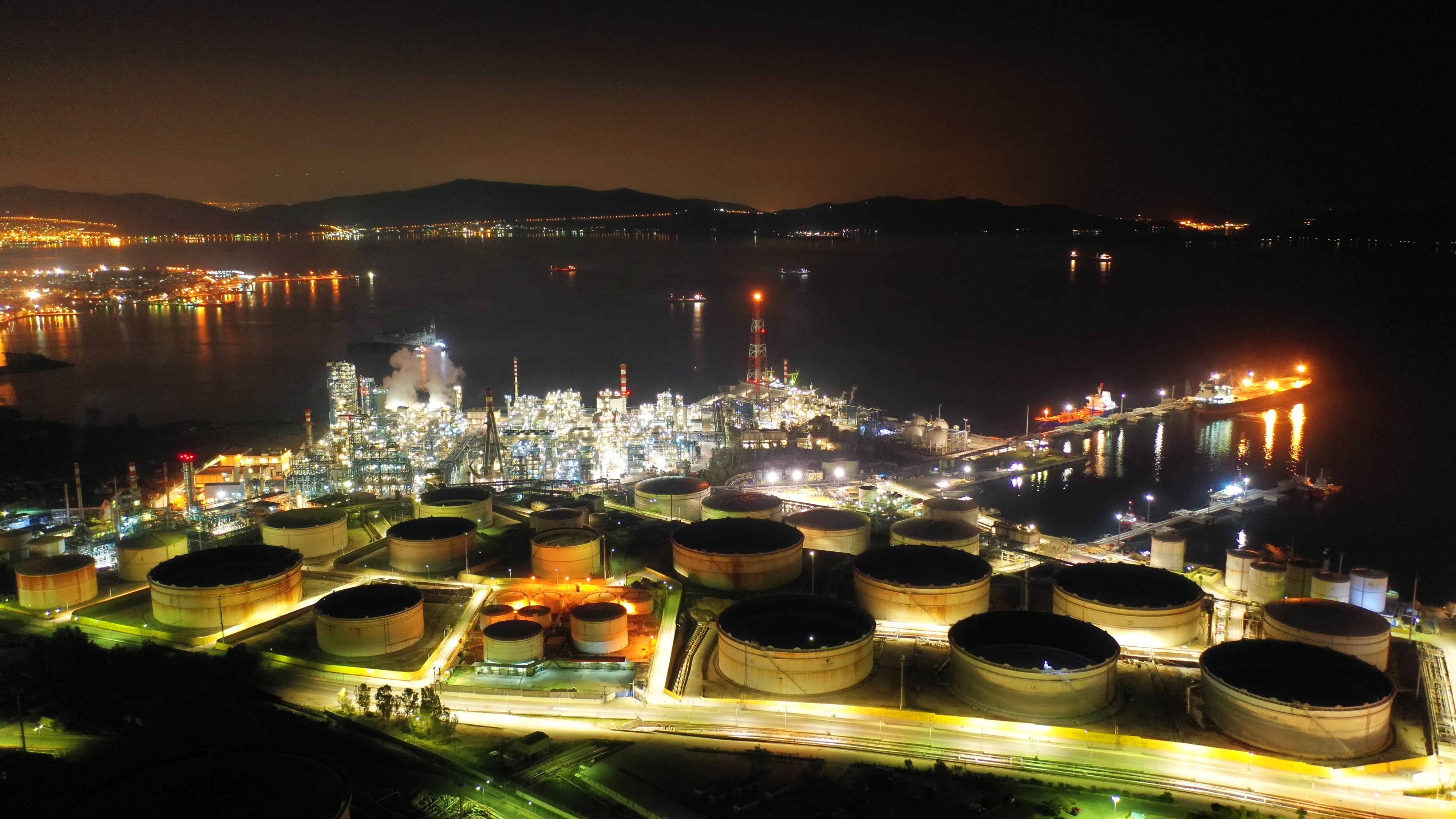
In a centralised autocracy, the hierarchy of protection follows the hierarchy of power. The Russian state is built on the image of invulnerability. When drones strike the Federation Tower in Moscow or the refineries in Tatarstan, the damage is not merely economic; it is a puncture in the social contract. The Kremlin’s primary incentive is regime survival, which requires the pacification of the metropolitan elite. Consequently, the Russian General Staff is under immense political pressure to pull advanced assets away from the front to create a 'Steel Dome' over the capital.
However, the secondary incentive is military success. If the frontline is stripped of short-range air defence (SHORAD), Russian armoured columns and logistics hubs become easy prey for precision-guided munitions and tactical drones. This creates a friction point between the Ministry of Defence and the political leadership. The current strikes are designed to exploit this friction. By forcing Russia to choose, the adversary creates 'corridors of opportunity'—blind spots in the radar net that can be exploited by increasingly sophisticated cruise missiles.
Historical Parallel: The 1943 Luftwaffe Dilemma
History offers a stark warning for the Kremlin. In 1943, as Allied bombing raids on German cities intensified, the Luftwaffe was forced to withdraw its most capable fighter wings and anti-aircraft batteries from the Eastern Front to defend the Reich’s industrial heartland. This 'Defence of the Reich' campaign succeeded in shooting down many bombers, but it left the Wehrmacht on the ground without air cover.
The result was catastrophic. The Soviet Air Force gained air superiority by default, not because their planes were better, but because the German air defence was elsewhere. Today, Russia is repeating this pattern. By successfully targeting Russian energy infrastructure, Ukraine is forcing a 're-distribution' of Russian assets that mirrors the German dilemma. The more Russia protects its 'rear,' the more vulnerable its 'spear' becomes. Air defence is a finite resource; it cannot be everywhere at once.
What Most People Miss
Most analysts focus on the physical damage caused by the drones—the charred storage tanks or broken windows. This misses the real strategic shift. The drones are not designed to win the war through kinetic destruction; they are designed to perform 'electronic exhaustion' and 'logistics displacement.'
When a drone enters Russian airspace, the entire defensive grid must react. Radars go live, exposing their positions to electronic intelligence. Interceptor missiles, costing millions of pounds, are fired at drones costing fifty thousand. This is an asymmetric economic defeat. Furthermore, because Russia’s air defence is integrated, pulling a single S-400 battery out of a coastal region to protect a refinery creates a 'radar shadow' that allows other, more dangerous threats to pass through. The true target is the integrity of the network, not the building at the end of the flight path.
The Second-Order Effects
The Scarcity Doctrine will lead to three distinct shifts in Russian strategy over the coming months. First, we will see the emergence of 'Private Air Defences.' Major state-linked corporations like Rosneft and Gazprom are already attempting to purchase their own electronic warfare (EW) systems and light anti-aircraft guns. This decentralisation of military power is a sign of state weakness. It suggests the Russian military can no longer fulfill its side of the bargain.
Second, Russia will be forced to cannibalise its export commitments. To replenish domestic stocks, Moscow will likely delay the delivery of S-400 systems to foreign buyers like India or Turkey. This erodes Russia's standing as a reliable security partner and reduces its hard currency revenue. Third, we will see an increase in Russian 'grey zone' retaliation. If Moscow cannot stop the drones, it will attempt to raise the cost for the West through sabotage or cyber-attacks on European energy infrastructure, trying to create a parity of pain.
What to Watch
- The 'Ring of Steel' around Moscow: Look for the permanent installation of elevated radar towers and stationary Pantsir platforms in the Moscow region. This confirms the prioritisation of the capital over the front.
- Cannibalisation of the Periphery: Watch for the removal of air defence systems from Kaliningrad or the Kuril Islands. This would signify that the shortage has reached a critical level.
- New Export Delays: Monitor diplomatic cables or trade data regarding S-400 components. Delays indicate that factory output is being diverted entirely to domestic 'gap-filling.'
- The Rise of 'Trench-Level' EW: On the frontlines, expect Russian infantry to become increasingly reliant on handheld jammers as the larger, more capable AD systems are pulled back to the interior.
The KJ Verdict
The Kremlin’s current air defence strategy is a gamble that its industrial base can survive a thousand cuts while its frontline waits for a breakthrough. It is a prioritisation of political stability over military efficiency. This trade-off is sustainable in the short term, but it creates a structural fragility. By forcing Russia to treat its own soil as a theatre of war, the adversary has already achieved a major strategic objective: the dilution of Russian combat power. Moscow can have a protected capital or a protected army, but in the age of autonomous attrition, it can no longer have both. Expect the Russian frontline to become progressively 'softer' as the Kremlin's fear of a humiliated capital dictates its military deployments.