The Saudi Palace Plot
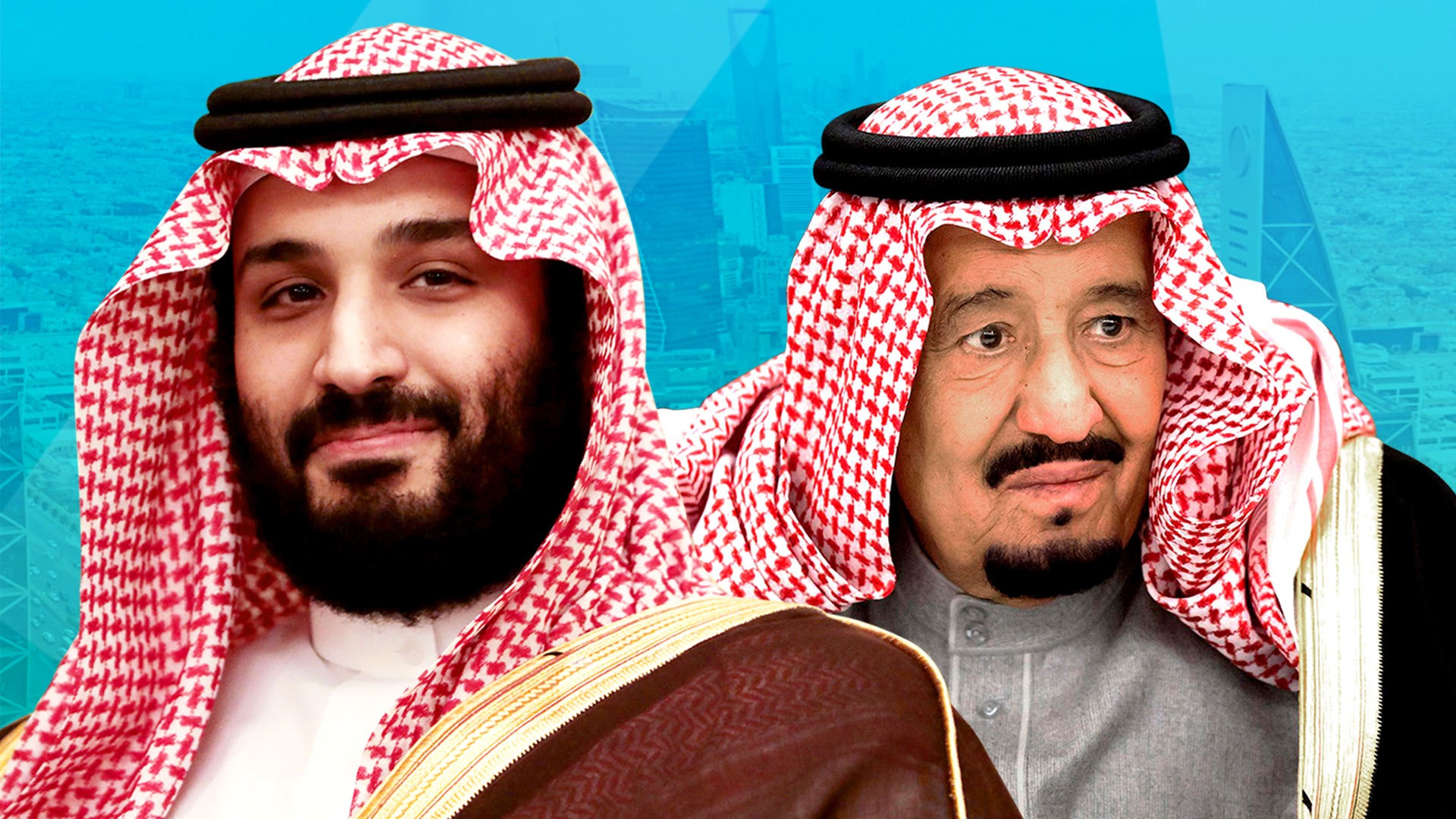
In January 2015, Salman Bin Abdul-Aziz, took the throne following the death of his half-brother, Abdullah (A son of the founder Ibn Saud)
Behind-the-scenes a power struggle was taking place for King Salman to crown his son, Mohammed Bin Salman, a prince and name him his chosen successor.
This power struggle became public on November 4th 2017 when Salman and his son had more than a dozen princes and former high-level officials arrested, including a world-famous billionaire.
The reason for their detention is simple: Salman is trying to remove obstacles that could prevent Mohammed bin Salman from succeeding him.
King Salman is the first monarch in the history of the modern kingdom to buck this particular tradition. Usually, a successor is chosen by consensus among the sons of the founder of the kingdom.
But now that the second generation is nearly all dead, and now that there are too many third-generation princes to convene, it has become more difficult to choose who will become the next king.
He has bucked other traditions too. Salman has strengthened his son’s claim by bestowing on him sweeping powers over security and economic affairs.
Mohammed bin Salman is the defense minister, the head of a strategic economic council, controller of Saudi Aramco and, after Nov. 4, the chief of an anti-corruption agency.
And Salman did all this by removing from power his half brother and his nephew, both of whom were crown princes. He has also sidelined powerful members of the clerical and tribal establishments.
Some rumors suggest that the purges were made in response to a plot against Mohammed bin Salman. It’s unclear if that is actually the case.
But whether the rumors are true or whether the arrests were pre-emptive, the outcome is the same: There are fewer threats to a Mohammed bin Salman reign.
Arresting these individuals accomplishes two things. First, it guarantees their capitulation to Mohammed bin Salman.
Second, it gives the Salman faction more mileage out of the anti-corruption drive.
Between that and their attempts to secularise Muslims in Saudi, the king and his son are moving away from the traditional sources of support (clerics and tribal establishments) and toward new ones: popular appeal among the country’s youth, which makes up about two-thirds of the population.
They are using populism to inoculate themselves from the potential consequences of their power grab. In the process, though, they are inadvertently laying the foundations for the next crisis. Relying on popular support means they will be forced to enact more reforms than they actually want to – or are even capable of. Despots who try to be populists usually end up being neither and, in their failure, lose power.
It is too early to tell what will be the outcome of the power struggle. Whoever comes out on top will be unable to ignore the fact: that Saudi Arabia is a country in decline, largely because of low oil prices but also because of the general disarray in the Middle East.
In this context, then, the events of Nov. 4 are more than petty power grabs – they are attempts to make the country pliable enough to accept reforms at a time of increasing regional chaos.
The kingdom cannot both change its nature and hope to meet the external challenges at the same time. It has to consolidate at home before it can act effectively beyond its borders.
But this sequence of priorities is not a luxury that the Saudis enjoy. Their rivals, the Iranians are gaining ground, and they cannot simply focus on domestic politics.
Riyadh’s inability to deal with external threats, if anything, will only intensify its domestic ones. Even though the king and his son have the upper hand, an inability to effectively counter the Iranian threat could weaken their position at home and thus aggravate the infighting.
All of this is taking place in a broader geopolitical struggle in which America is attempting to maintain its political hegemony in the Middle East using Saudi Arabia as its chief proxy.
Don’t forget to subscribe to our YouTube Channel
Support our content by becoming a KJ Patreon
https://www.patreon.com/kjvids
Sign up to our website and submit video suggestions:
www.kjvids.co.uk
Like our Facebook page for exclusive updates:
https://www.facebook.com/KJVids
Follow us on Twitter to be informed when we post:
https://twitter.com/kjvids2016
All Rights Reserved. Contact info@kjvids.co.uk if you are interested in licensing our content, advertising or working with us in other ways.