The Death of Pan-Arab Security
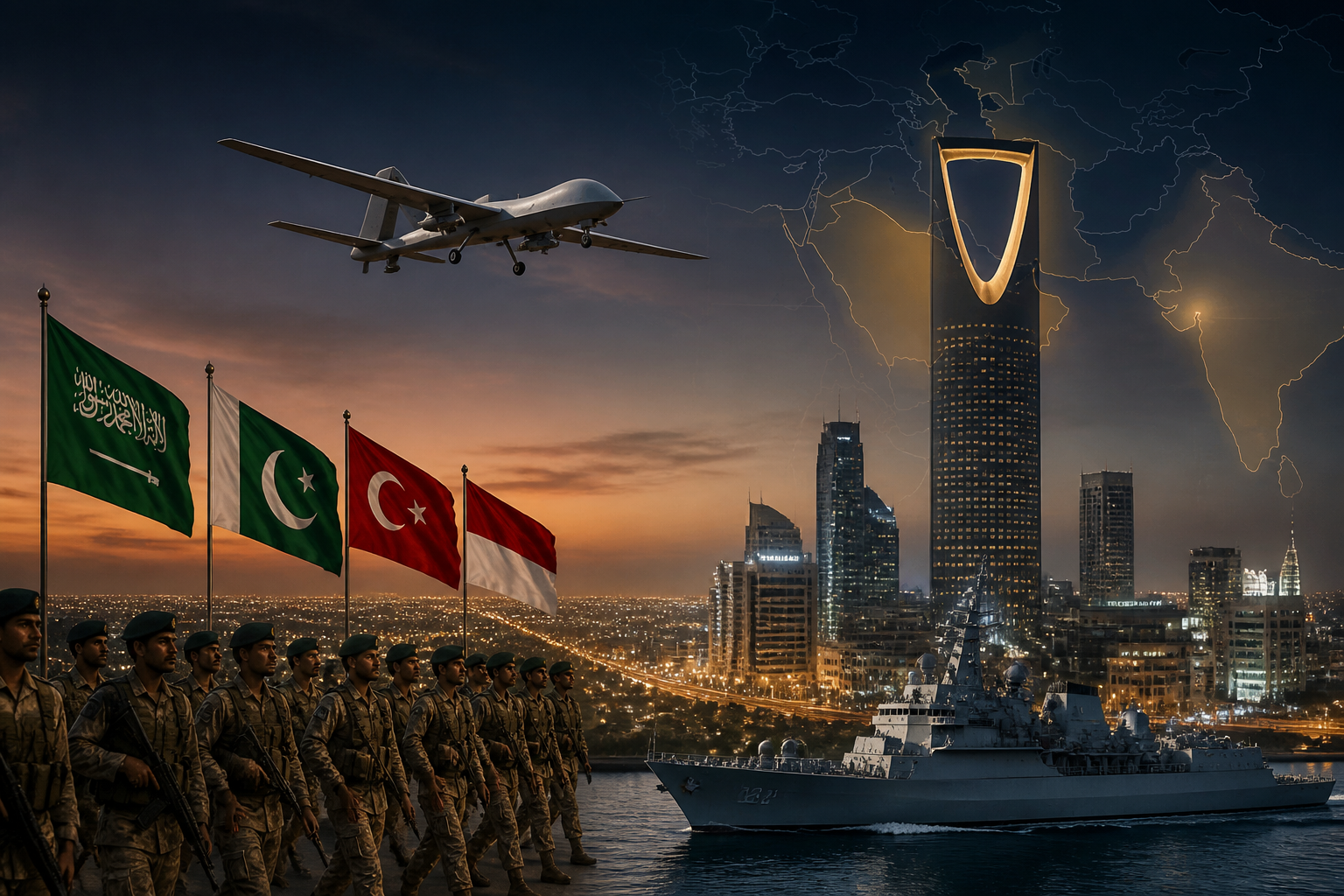
Riyadh has reached a structural conclusion: the traditional Arab security architecture is dead. For decades, the Saudi state relied on two pillars: American hardware and Egyptian manpower. Neither is now viewed as reliable. Washington’s internal political volatility makes it an inconsistent guarantor, while Cairo is too preoccupied with domestic economic fragility to project power. The result is the Makkah Defense Pact, a discrete but profound realignment that shifts the kingdom’s security dependencies away from the Arab heartland toward the non-Arab Islamic periphery.
This is not a religious alliance, despite the branding. It is a cold, transactional arrangement. Riyadh is trading sovereign capital and energy security for the one thing it cannot buy or build domestically: high-end military depth and nuclear-adjacent deterrence. By integrating the military industrial complexes of Turkey and Pakistan into the Gulf’s defense layer, Saudi Arabia is creating a multi-polar insurance policy against both Iranian expansion and American withdrawal.
The Core Incentives: Why Now?
To understand this shift, one must look at the failure of the 'Arab NATO' concept. Regional rivals such as Qatar and the UAE have divergent views on the Muslim Brotherhood and political Islam, making a unified Arab military command a fantasy. Riyadh has stopped trying to lead a fractured Arab world and has instead started hiring established powers with proven battlegrounds. Pakistan provides the 'boots on the ground' and a nuclear umbrella; Turkey provides the advanced drones and naval technology; Indonesia provides the strategic depth in the Indian Ocean.
The primary beneficiary is the House of Saud’s longevity. By outsourcing high-risk kinetic operations to the periphery, Riyadh reduces the domestic political cost of military failure. The losers are the traditional regional brokers, specifically Egypt and Jordan, who now find themselves sidelined from the Gulf’s new security purse. This is a transition from 'Pan-Arabism' to 'Pragmatic Transactionalism'.
The Historical Parallel: The Abbasid Guard
History provides a clear template for this move. In the 9th century, the Abbasid Caliphate realized that their local Arab tribal levies were becoming unreliable and politically dangerous. To preserve the central authority in Baghdad, they began recruiting from the periphery—specifically Turkic warriors from Central Asia. These outsiders were loyal to the paymaster rather than local factions. Riyadh is replicating this model. By bringing in Turkish aerospace engineers and Pakistani divisions, the Saudi leadership creates a security layer that is insulated from the complex tribal and ideological baggage of the Levant and North Africa.
What Most People Miss: The Technology Transfer Clause
The headline of the Makkah Defense Pact is military cooperation, but the real engine is technology transfer. Unlike the United States, which sells 'black box' technology that Saudi Arabia cannot repair or replicate, Turkey and Pakistan are offering the keys to the factory. The pact mandates the co-production of ballistic missile components and unmanned aerial vehicles (UAVs) on Saudi soil. This is Riyadh’s path to autarky. The goal is not just to buy weapons, but to ensure that if a future US administration cuts off the supply of spare parts, the Saudi military does not grind to a halt within a fortnight.
Strategic Consequences and Second-Order Effects
The first consequence is the formalisation of a 'Sunni Bloc' that is distinctly non-Arab in its leadership. This creates a new friction point with Tehran, which now has to account for Turkish and Pakistani interests whenever it considers a maritime provocation in the Gulf. Secondly, this pact accelerates the decline of Western influence. When Riyadh buys Turkish drones or Pakistani missiles, it bypasses the human rights conditions and Congressional oversight that define American arms deals.
Thirdly, we should expect a realignment in the Indian Ocean. With Indonesia joining the periphery of this pact, Saudi Arabia is securing its eastern energy routes. This is a 'String of Pearls' for the Gulf, ensuring that as the world shifts toward a multi-polar reality, Riyadh’s oil can reach Asian markets without total reliance on the US Fifth Fleet.
What to Watch
- The Gwadar-Neom Pipeline: Watch for announcements regarding infrastructure projects linking Pakistani ports to Saudi investment; this is the financial glue of the pact.
- Joint Naval Exercises in the Red Sea: Specifically, the involvement of Turkish naval assets alongside the Saudi fleet, signaling a shift in Mediterranean-Red Sea power dynamics.
- The Nuclear Question: Any increase in Saudi-Pakistani personnel exchanges within 'specialist' divisions may indicate the quiet extension of a nuclear deterrent.
- Egypt’s Reaction: Look for Cairo attempting to re-assert its value through intelligence sharing as it fears losing its status as the 'indispensable' Arab partner.
The KJ Verdict
The Makkah Defense Pact is the ultimate expression of Saudi 'strategic autonomy'. Riyadh has accepted that the Arab world is too broken to provide security and the Western world is too fickle to guarantee it. By turning to the non-Arab Islamic periphery, the Kingdom is building a bespoke security architecture that prioritises survival over ideology. This is a hedge against a post-American world, and it marks the end of the post-WWII regional order. The periphery is now the centre.