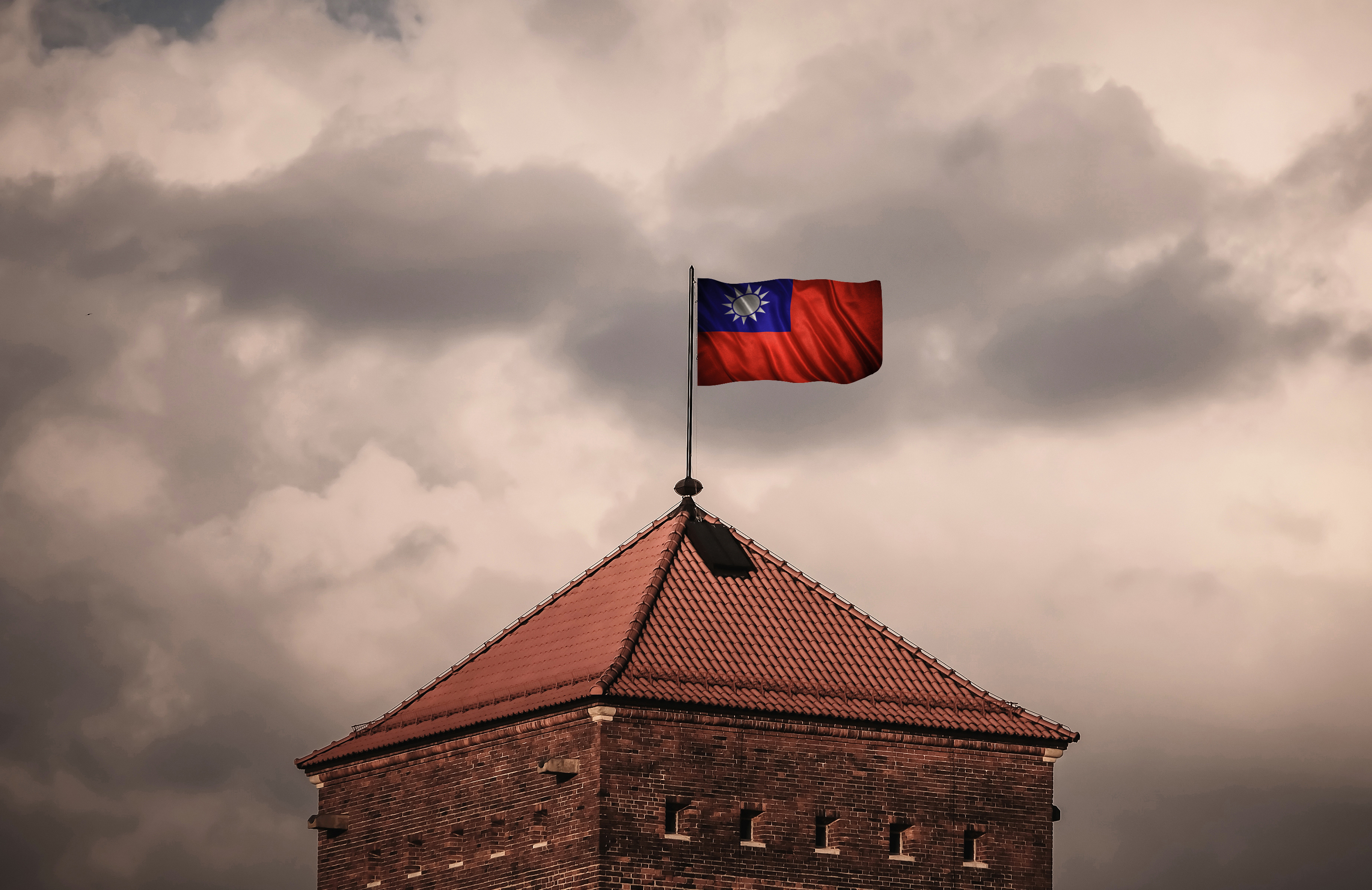
The prevailing consensus in Western capitals suggests that an invasion of Taiwan is imminent, with 2027 often cited as the definitive 'red line' for regional stability. This analysis is narrow. It mistake’s military capability for political intent. Beijing's real intentions are shaped not by a calendar of conquest, but by a complex calculus of risk, economic resilience, and the slow-motion reconfiguration of global trade. Direct military confrontation remains a high-risk gamble that the Chinese Communist Party (CCP) is currently unprepared to take, despite the escalating rhetoric.
The Multi-Front Conflict
For Beijing, Taiwan is not merely a territorial dispute; it is the final piece of a national rejuvenation project that hinges on escaping the 'middle-income trap'. An invasion today would likely trigger a total economic decoupling from the West. China’s leadership understands that the People’s Liberation Army (PLA) could win a battle at sea but lose the war at home if the domestic economy collapses under the weight of sanctions and severed energy lines.
The real timeline is governed by three structural requirements: achieving self-sufficiency in high-end semiconductors, securing alternative energy routes that bypass the Malacca Strait, and insulating the domestic financial system from US dollar hegemony. Until these three pillars are secure, Beijing is more likely to pursue 'grey zone' tactics—a strategy of attrition designed to exhaust Taiwan’s willpower and military readiness without crossing the threshold of kinetic war.
The 2027 Mirage
The 2027 date, frequently mentioned by US intelligence officials, marks the centenary of the PLA. It is a deadline for modernisation, not necessarily for mobilization. China’s goal is to possess the capability to seize Taiwan, thereby forcing a diplomatic surrender or deterring external intervention. There is a profound difference between being ready to fight and being willing to risk the survival of the regime on a cross-strait gamble.
Historical Parallel: The 1904 Precedent
History suggests that rising powers rarely strike when they feel strong; they strike when they believe their window of opportunity is closing. Consider the Russo-Japanese War of 1904. Japan attacked not because it was certain of victory, but because it feared that the completion of the Trans-Siberian Railway would make a future Russian presence in the Pacific insurmountable. Beijing currently views time as being on its side. However, if they begin to perceive that Taiwan is moving toward permanent de jure independence with US backing, or that China’s own internal demographic and economic crises are reaching a point of no return, the logic of 'pre-emptive' action may take hold.
What Most People Miss: The Silicon Shield is Eroding
The common narrative suggests that Taiwan’s dominance in semiconductor manufacturing (TSMC) protects it—the so-called Silicon Shield. The logic is that China would not destroy the factories it needs. This is a misunderstanding of Beijing’s priorities. In the eyes of the CCP, national sovereignty and territorial integrity outweigh economic utility. If the choice is between a unified China without chips and an independent Taiwan with them, Beijing chooses the former every time.
Furthermore, as the US and the EU subsidize their own domestic chip production, Taiwan’s 'indispensable' status weakens. As the world becomes less dependent on Taiwanese fabs, the geopolitical cost of a conflict for the West changes. Beijing is watching this shift closely. They are not waiting for China to catch up; they are waiting for the West’s incentive to defend Taiwan to diminish.
Strategic Consequences
The consequence of this 'latency logic' is a period of heightened volatility that stops just short of war. We are entering an era of perpetual crisis. This serves Beijing's purpose by maintaining a high cost of business for Western firms in the region, encouraging a slow exodus of capital from Taiwan, and testing the endurance of the US's 'strategic ambiguity'.
- Military Burnout: Constant PLA incursions into Taiwan’s Air Defence Identification Zone (ADIZ) are designed to wear down airframes and exhaust pilots.
- Economic Coercion: Incremental bans on Taiwanese agricultural goods and selective trade barriers serve as a proof-of-concept for a total blockade.
- Psychological Warfare: Beijing’s narrative focuses on the inevitability of unification, aiming to demoralise the Taiwanese public into accepting a 'Hong Kong style' settlement.
What to Watch
- The Strategic Petroleum Reserve: Watch for massive, non-commercial increases in China’s oil and grain stockpiles. This is the first signal of war preparation.
- Cross-Strait Financial Movements: Any significant withdrawal of Chinese state assets from Western-denominated bonds or banks.
- The Submarine Gap: Developments in the PLA Navy’s quietening technology. Success here would challenge the US Navy’s primary advantage in the South China Sea.
- Taiwan’s Presidential Elections: Beijing’s reaction to the 2024 results will provide the clearest signal of whether they believe a peaceful path remains viable.
KJ Verdict
Beijing is not in a rush to invade, nor is it bluffing. The CCP is currently in a phase of structural preparation, waiting for a moment when the international cost of intervention exceeds the West’s domestic political willpower. The real danger for the global economy is not a sudden 'bolt from the blue' invasion, but a gradual 'anaconda strategy'—a tightening grip that suffocates Taiwan’s economy and autonomy until the cost of resistance becomes unbearable. Expect the status quo to persist, but with increasing friction and a diminishing margin for error. The risk is not 2027; the risk is the moment Beijing believes it has achieved economic invulnerability.