Xinjiang is one of China’s ethnic “autonomous” regions where China has critical strategic issues at stake.
The province, like Tibet, is one of the vast buffer zones shielding the core of China from an invasion by foreign hordes.
Xinjiang also has long served as a key route for Chinese commerce via the Silk Road.
Throughout Chinese history, various dynasties sought to maintain a grip over the cities linking China to Central Asia, the Middle East and Europe.
China defended these routes from the Mongols in the north, the
Central Asians and even the Tibetans.
These trade routes, were so useful in supplying China with anything it could not find or produce at home.
These Western land routes were so vibrant that there just wasn’t a pressing economic need for a major naval presence.
But as China entered the modern era, the Silk Road routes faded as sea commerce became the dominant form of economic intercourse with the world.
From the foreign treaty ports to the booming coastal cities like Shanghai and Qingdao or manufacturing hubs in Guangdong, China now looks more and more to the seas for its economic lifelines.
But this is exposed China’s weakness: The seas are vast, and U.S. forces patrol them. China’s maritime trade routes are vulnerable.
Beijing has grown more dependent upon these sea routes for vital commodities especially, energy and export markets.
This had led Chinese strategists to look back to the old days, to the old Silk Road routes, as a way to preserve economic security.
Central Asia has vast energy resources, and the oil and natural gas doesn’t have to be loaded into tankers and shipped by sea.
Instead, it is moved by pipeline in a steady flow to China’s booming coast. And the gateway to Central Asia is Xinjiang.
This reinforces Beijing’s perceived need to keep the Uighurs and other ethnic minorities under control.
Beijing prevents these ethnic communities from attempting true autonomy or even secession, through a policy of internal migration.
China has moved the majority Han Chinese into these ethnic regions to dilute the population — an old tactic seen before.
These Han settlers are given economic incentives and dominate certain segments of the local economy and political machinery.
In addition, they begin to change the ethnic balance of the region over time. In Xinjiang Han Chinese now make up some 40% of the total population.
Compared to the Uighurs, there are now nearly as many Han, and in the capital Urumqi, Han outnumber Uighurs by nearly 3 to 1.
This reality has created its own tensions, as the Uighurs feel discriminated against in their own homeland.
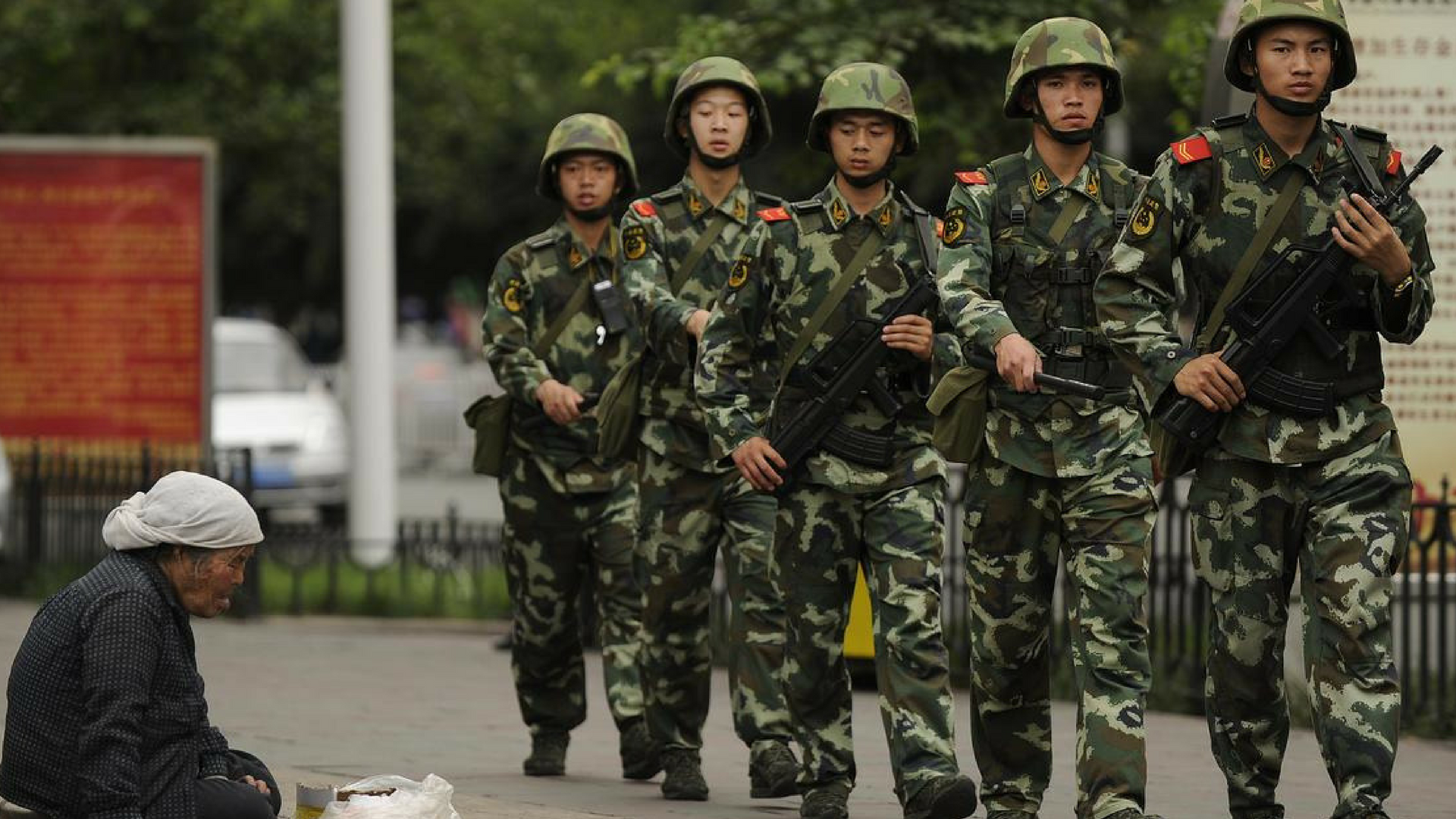
China has responded to this through the use of overwhelming force and political repression of the Uyghurs.
Don’t forget to subscribe to our YouTube Channel
Support our content by donating to fundmypage.com/kjvids
Website – www.kjvids.co.uk
Facebook – www.facebook.com/KJVids
Twitter – www.twitter.com/kjvids2016
Instagram – www.instagram.com/kjvidsofficial
All Rights Reserved. Contact info@kjvids.co.uk if you are interested in licensing our content, advertising or working with us in other ways.