KJ ReportsKJ Reports

The Geopolitics of Saudi Arabia

30 June 2018821

Listen to this article

KJ narrates this report in his own voice

The Geopolitics of Saudi Arabia

Saudi Arabia has an estimated population of 32 million, the 40th largest in the world and 6th largest in the Arab world.

Its territory is roughly the size of Turkey, France, Germany and Japan put together.

But much of this territory is desert. Saudi Arabia’s arable land per capita, according to the World Bank, is just 0.1 hectares per person.

The Saudi state is an artefact of Western imperialism, growing out of the dissolution of the Ottoman Empire after World War I.

Ever since, Saudi has fallen prey to sectarian politics and have relied on the support from Britain and the US.

Looking out from Riyadh, the Saudi leadership sees potential border-region threats in almost every direction.

During the Cold war they tried to combat the Shiite Iranians, the Pan Arab Nasserites in Egypt and the Ba’athists in Iraq.

Today Saudi Arabia attempts to project its influence in various ways in countries like Egypt, Bahrain, Iraq, Syria Lebanon and Yemen.

Along its maritime borders the Saudis are insecure, a result of the narrowness of the Red Sea and Persian Gulf.

Saudi Arabia is outnumbered in the Gulf even just by the Kuwaitis, Qataris, and Emiratis, with 15 million people combined.

Saudi is also worried about threats from within. Foreign-born labourers outnumbercitizens in many of these Gulf States.

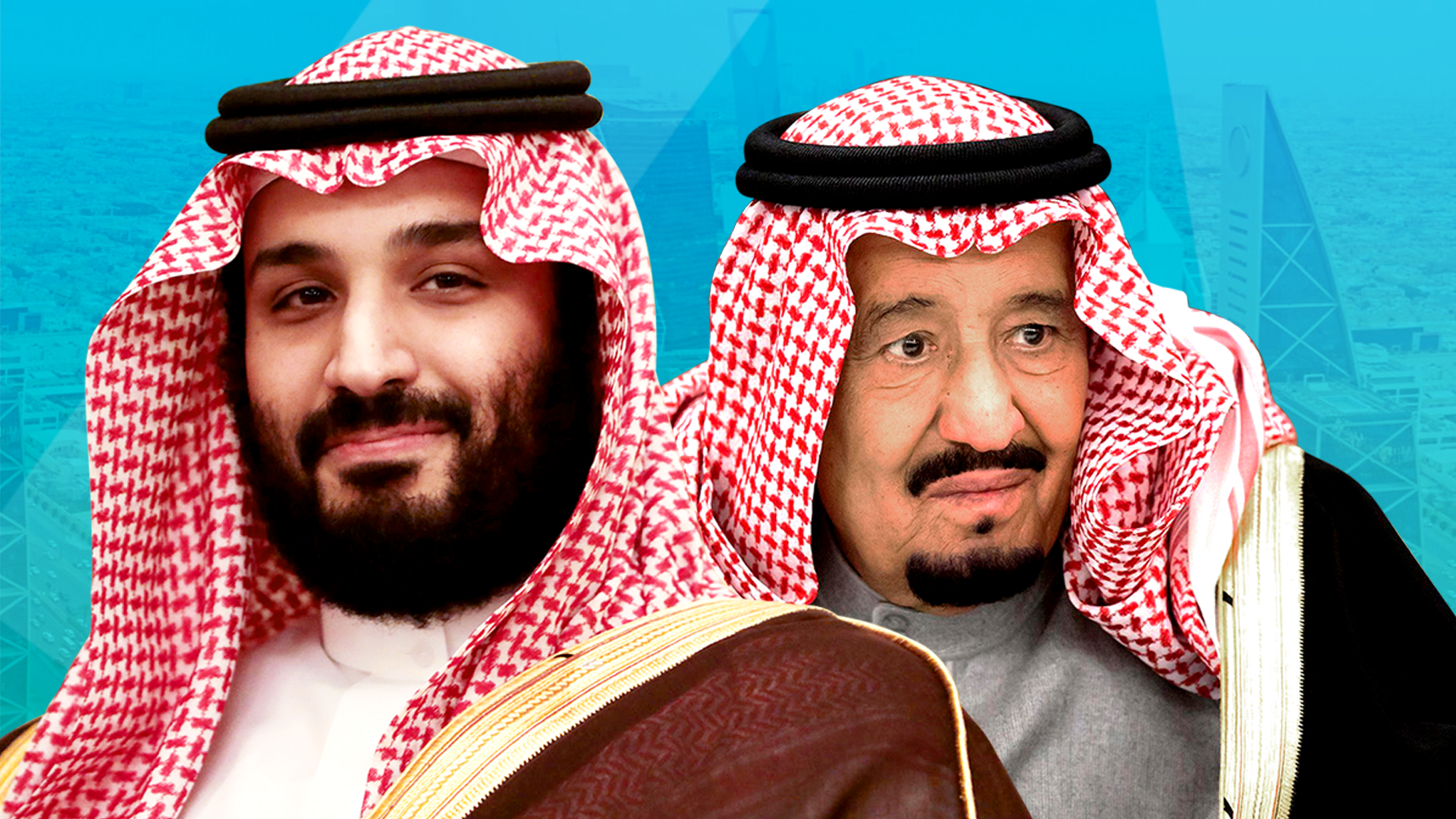
Finally, with a tribalistic power structure and large divided Royal family, Saudi’s leaders constantly face threats from their own blood.

Without the support for Saudi Arabia from an outside power like the US, Saudi would barely be able to survive.

Don’t forget to subscribe to our YouTube Channel

Support our content by donating to fundmypage.com/kjvids

Website – www.kjvids.co.uk
Facebook – www.facebook.com/KJVids
Twitter – www.twitter.com/kjvids2016
Instagram – www.instagram.com/kjvidsofficial

All Rights Reserved. Contact info@kjvids.co.uk if you are interested in licensing our content, advertising or working with us in other ways.
#geopolitics#saudi-arabia

Related Intelligence

More articles
The Hollow Pillar: Why Tehran’s Internal Decay Trumps Proxy Power
Middle East

The Hollow Pillar: Why Tehran’s Internal Decay Trumps Proxy Power

Iran’s sprawling ‘Axis of Resistance’ offers a façade of regional dominance. Yet, a widening rift between the clerical elite and a disillusioned populace transforms every foreign intervention into a domestic liability, eroding the Islamic Republic’s ultimate deterrent.

9 Jul 2026

The Escort Trap: Unifying the Mediterranean and Persian Gulf
Middle East

The Escort Trap: Unifying the Mediterranean and Persian Gulf

NATO’s permanent naval deployment in the Strait of Hormuz has effectively dissolved the geographic distinction between European and Middle Eastern security, creating a single, interlocking conflict theatre from Gibraltar to the Arabian Sea.

8 Jul 2026

The Swiss Conduit: Doha and Islamabad’s New Security Architecture
Middle East

The Swiss Conduit: Doha and Islamabad’s New Security Architecture

A quiet structural shift has transformed Qatar and Pakistan into the indispensable intermediaries of the Middle East. By leveraging geography and intelligence depth, this new axis is managing volatility that traditional Western diplomacy can no longer touch.

28 Jun 2026

The Anatolian Bridgehead: Why Türkiye is the Pivot of the 2026 Order
Middle East

The Anatolian Bridgehead: Why Türkiye is the Pivot of the 2026 Order

As the global architecture fractures into competing blocs, Ankara has transformed from an erratic NATO outlier into the indispensable arbiter of Eurasian logistics, energy security, and regional containment.

27 Jun 2026

The Gulf Restoration: Abu Dhabi’s Strategic Decoupling
Middle East

The Gulf Restoration: Abu Dhabi’s Strategic Decoupling

The UAE’s 14-Point Pact and aggressive production capacity expansion have fundamentally altered the relationship between oil and regional chaos. For the first time, Abu Dhabi has ensured its economic survival no longer depends on regional peace.

26 Jun 2026

The Iranian Chokepoint: Why $200 Oil is Tehran’s Strategic Veto
Middle East

The Iranian Chokepoint: Why $200 Oil is Tehran’s Strategic Veto

As regional tensions escalate, Iran’s ability to throttle the Strait of Hormuz has transformed from a military threat into a sophisticated macroeconomic weapon designed to neutralise Western sanctions and leverage global energy markets.

16 Jun 2026