The United States is entering a period of strategic insolvency. For eighty years, American power rested on a simple bargain: Washington provided global security and market access in exchange for diplomatic alignment and the dollar's reserve status. That bargain is breaking. The cause is not a lack of military hardware or technological ingenuity, but a fundamental misalignment between America’s global commitments and its domestic political reality.
The Core Incentive: Domestic Solvency Over Global Reach
Power is a function of surplus. When a state possesses more wealth and social cohesion than it needs to survive at home, it projects that surplus abroad. Today, the United States lacks both. Populism, on both the left and right of the American political spectrum, is essentially a demand to repatriate the dividends of empire. The American voter is no longer interested in the 'Forever Frontier'—the idea that US security depends on maintaining a presence in every corner of the globe.
This shift is driven by a basic set of incentives. In a high-inflation, high-debt environment, the cost of maintaining 750 overseas bases becomes a domestic political liability. When the bridge at home is crumbling, the aircraft carrier in the South China Sea looks less like a shield and more like a luxury the taxpayer can no longer afford. We are seeing the 'Bread and Circuses' transition, where internal stability requires the sacrifice of external influence.
The Fiscal Constraint
Money is the ultimate arbiter of geopolitics. US national debt interest payments now surpass the official defence budget. This creates a structural ceiling on projection. While Washington still possesses the world's most capable kinetic force, the utilisation of that force is being rationed. This is 'Liquid Hegemony'—the US will intervene only where the immediate economic return is clear, leaving 'grey zones' in Eastern Europe, the Middle East, and Central Asia to be contested by regional powers.
Historical Parallel: The British Retrenchment of 1947
The current American trajectory mirrors Great Britain in the immediate post-war period. In 1947, exhausted by debt and facing a domestic crisis of confidence, Britain informed the US that it could no longer support Greece and Turkey against communist insurgencies. This was not a moral Choice but a physical necessity. Britain remained a power, but it ceased to be the power.
Washington is currently at its '1947 moment'. It is signalling to its allies—specifically in Europe and East Asia—that the era of the 'security free-rider' is over. This is not isolationism in the 1930s sense; it is a forced audit of a bankrupt estate. The US is moving from a 'Forward Presence' model to an 'Offshore Balancer' model, preferring to provide weapons and intelligence rather than boots and blood.
What Most People Miss: The Technology Trap
Most analysts focus on the rise of China as the primary driver of US retreat. This misses the internal technological disruption of power. For decades, the US dominated because its high-end platforms (carriers, satellites, stealth jets) were unchallenged. Today, the Democratisation of Lethality—drones, cyber-warfare, and long-range precision missiles—has made projecting power excessively expensive.
It now costs billions to build a carrier and only millions to sink it. The return on investment for global policing has turned negative.
When the cost of being the 'World's Policeman' reaches a point where the policeman is more vulnerable than the perpetrator, the incentive to patrol disappears. The US is retreating because the 'Forever Frontier' has become a fiscal and tactical sinkhole.
Strategic Consequences: The Age of Regional Architects
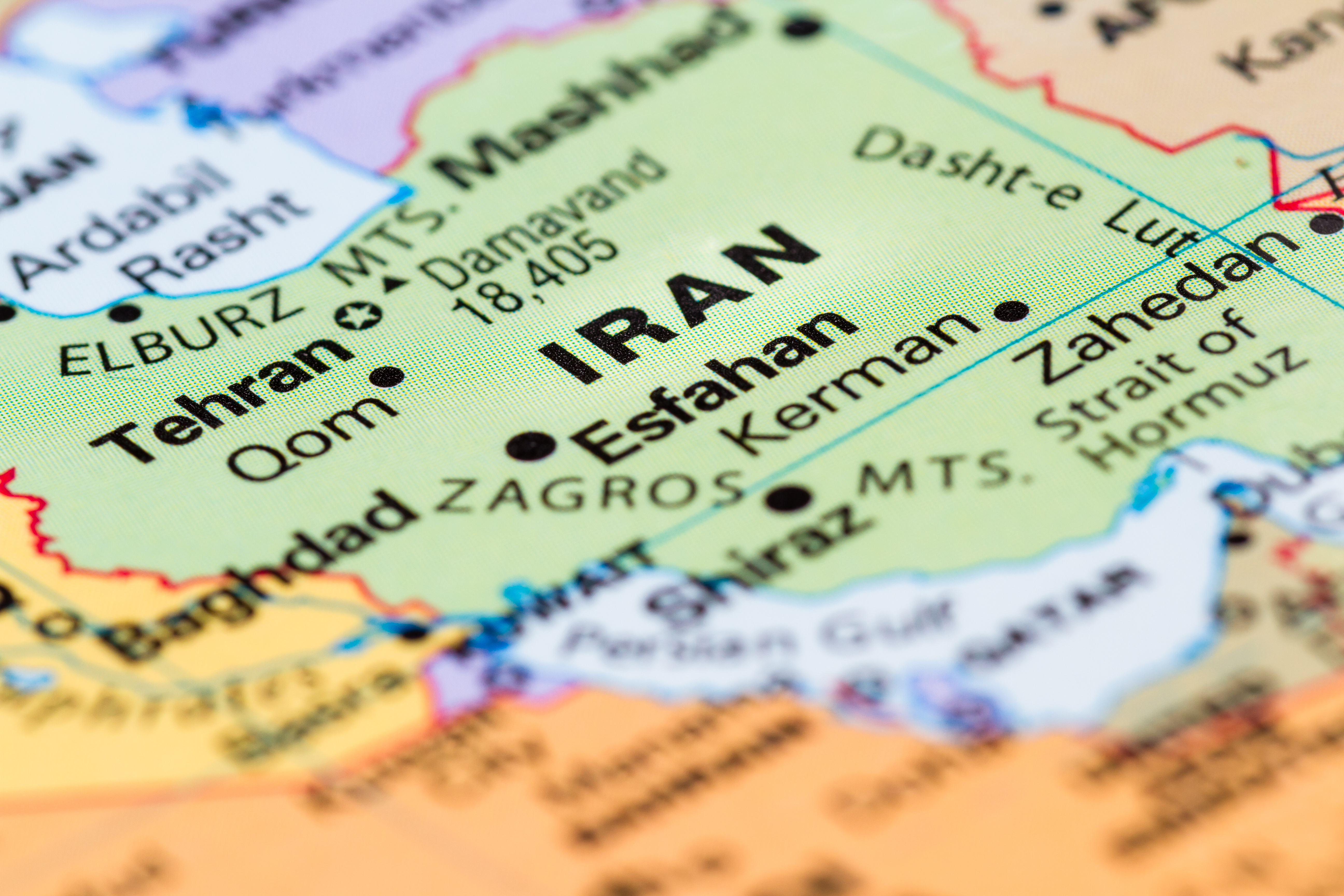
As the hegemon retracts, the world will not become 'multipolar' in a neat, balanced way. Instead, it will become fragmented. We are moving into an era of Regional Architects—states like Turkey, Iran, India, and Poland that will build their own security architectures without waiting for a green light from the State Department.
- The End of Global Commonality: Trade routes like the Red Sea or the South China Sea will no longer be 'guaranteed' by the US Navy, leading to a surge in private maritime security and regional naval blocs.
- Nuclear Proliferation: As the US nuclear umbrella becomes perceived as 'probabilistic' rather than 'certain', middle powers (South Korea, Japan, Saudi Arabia) will incentivise their own deterrent programmes.
- Dollar Decentralisation: The use of the dollar as a geopolitical weapon has accelerated the search for alternatives. While no single currency replaces it, the world is moving toward 'currency ghettos'.
What to Watch
- The US Defence Budget Composition: Watch for a shift from 'Projective' assets (more carriers, more bases) to 'Protective' assets (hypersonics, domestic missile defence, and cyber-hardening).
- Allied Sovereignty: Any move by Germany or Japan to significantly increase their offensive strike capabilities is a direct signal that they no longer trust the US guarantee.
- The Debt-to-Defence Ratio: Keep a close eye on the US Treasury’s borrowing costs. If interest rates remain 'higher for longer', the first thing to be cut will be the overseas footprint.
KJ Verdict
The 'American Century' is not ending because of a superior rival; it is ending because of internal exhaustion. The United States is choosing to prioritize its domestic survival over its global management. This is a rational, if painful, recalibration. The world must prepare for a United States that is more self-interested, less predictable, and increasingly reluctant to intervene in any crisis that does not directly threaten the American mainland. The frontier is closing, not by conquest, but by choice.