The modern Middle East is not a product of organic history, but of a specific European emergency. Between 1916 and 1920, the British and French empires did not merely divide territory; they dismantled a functioning multi-ethnic system and replaced it with a series of artificial state containers. This was not a mistake of cartography, but a deliberate strategy of containment designed to protect imperial trade routes and oil access. To understand why central authority is collapsing from Damascus to Baghdad today, one must understand that these states were never designed to be sovereign. They were designed to be managed.
The Incentive of Artificiality
In 1916, Mark Sykes and François Georges-Picot prioritised administrative convenience over human geography. By grouping disparate ethnic and religious clusters—Sunnis, Shias, Kurds, Alawites, and Maronites—into single jurisdictions, the colonial powers created a permanent security dilemma. If any one group gained power, the others faced an existential threat. This created a specific incentive: the need for a 'Strongman'.
Because these borders lack internal legitimacy, the states within them can only be held together by centralised, often brutal, security apparatuses. When the West laments the lack of democracy in the Levant, it ignores the structural reality that Western-drawn borders made pluralism a high-stakes gamble. In a Sykes-Picot state, the loss of central control does not lead to a democratic transition; it leads to sectarian liquidation. The state is not a social contract; it is a cage.
A Historical Parallel: The Balkan Precedent
The collapse of the Ottoman Empire in the Middle East mirrors the earlier disintegration of Ottoman rule in the Balkans. In both cases, external powers—Russia, Austria-Hungary, Britain—attempted to manage the 'Eastern Question' by creating buffer states. Just as the Treaty of Berlin in 1878 delayed but eventually birthed the ethnic cleansings of the 1990s, the mandates of 1916 set a timer on the Levant. History shows that when borders are imposed to serve a global balance of power rather than local aspirations, those borders eventually dissolve in blood when the external guarantors lose interest or strength.
What Most People Miss: The Kurdish Void
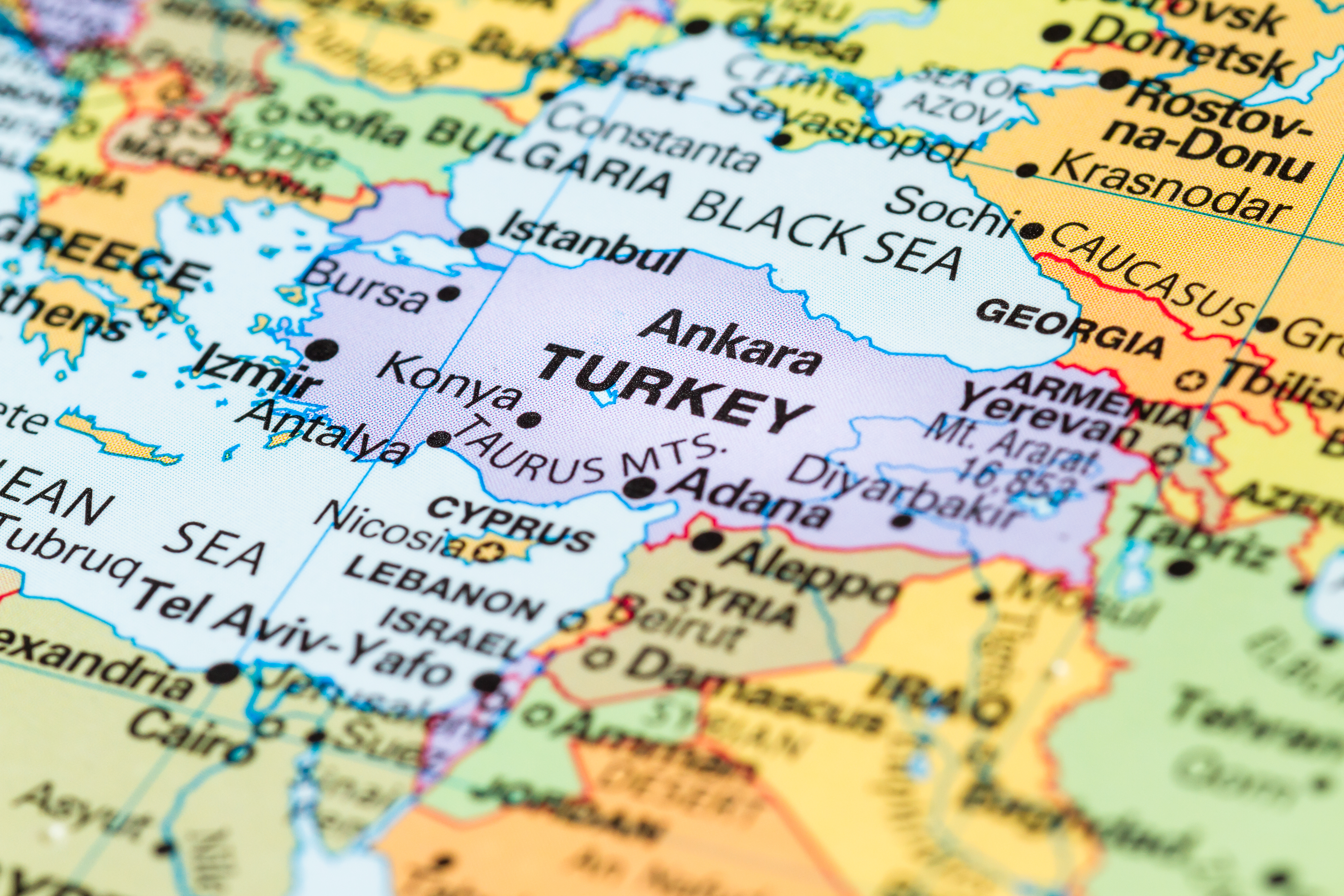
The most significant legacy of the Sykes-Picot era is not the presence of Iraq or Syria, but the absence of Kurdistan. By denying statehood to 30 million Kurds across four borders, the planners ensured a permanent 'internal' security threat for Turkey, Iran, Iraq, and Syria. This omission was intentional. It provided the regional states with a common enemy, forcing them to focus inward on insurgency rather than outward on regional hegemony. The 'Kurdish Question' remains the most potent tool for any power—regional or global—wishing to destabilise the status quo. If the map ever truly breaks, it will likely begin with the formalisation of a Kurdish state, which would act as the final nail in the coffin of the 1916 arrangement.
The Strategic Consequences
The second-order effect of this colonial legacy is the rise of non-state actors. Because the state is perceived as an alien imposition, loyalty frequently reverts to the tribe, the sect, or the militia. Groups like Hezbollah, the PMF in Iraq, and various Syrian factions are not 'terrorist' anomalies; they are the natural evolution of power where the state has failed to provide identity or security. We are witnessing the 'Lebanonisation' of the wider region.
Furthermore, the decline of US and European influence means there is no longer a 'janitor' to maintain the Sykes-Picot walls. Local powers—Iran, Turkey, and Saudi Arabia—are now engaged in a violent competition to fill the vacuum. They are not fighting for the borders on the map; they are fighting for the influence that exists beneath them. They benefit from the chaos because it allows them to project power via proxies, bypassing the formal diplomatic channels that the West spent a century building.
What to Watch
- The Erosion of the Levant: Observe how frequently the border between Iraq and Syria is ignored by Iranian convoys and Turkish air strikes. The border exists on paper, but physically, it has already ceased to function.
- Turkish Revanchism: Watch for Ankara’s increasing references to the 'Misak-ı Millî' (National Pact), which stakes a historical claim to areas in northern Iraq and Syria.
- The Financial Collapse: As the economies of Lebanon and Syria disintegrate, the last reason for these states to exist—the provision of basic services—vanishes, leaving only the militia as an employer.
The KJ Verdict
The 1916 map was a short-term solution to an imperial problem, but it has become a long-term engine of Middle Eastern instability. The current era of conflict is not a deviation from the norm; it is the inevitable correction of a century-old geographical error. As global powers pivot toward East Asia and Eastern Europe, the Levant is being left to resolve its own contradictions. The borders will not change overnight via a new treaty; they will continue to fade through attrition until the map finally reflects the reality of power on the ground. The West must prepare for a region defined not by sovereign states, but by spheres of influence and porous zones of control. The age of Sykes-Picot is over; we are simply living through the messy aftermath of its funeral.