KJ ReportsKJ Reports

The 1979 Iranian Revolution – Was Ruhollah Khomeini a U.S Agent?

22 September 20171,416

Listen to this article

KJ narrates this report in his own voice

The 1979 Iranian Revolution – Was Ruhollah Khomeini a U.S Agent?

The Iranian Revolution of 1979 was a popular uprising in Iran in 1979 that resulted in the toppling of the monarchy of Mohammad Reza Shah Pahlavi.

In 2016 it was revealed that the US had extensive contact with Ayatollah Khomeini before the Iranian revolution.

Documents seen by the BBC suggest that the Carter administration paved the way for Khomeini to return to Iran by holding the army back from launching a military coup.

A 1980 CIA study says “in November 1963 Ayatollah Khomeini sent a message to the United States Government through a Tehran University professor called Haj Mirza Khalil Kamarei, in which he explained “that he was not opposed to American interests in Iran” and that “on the contrary, he thought the American presence was necessary as a counterbalance to Soviet and possibly British influence”

In January 1979, in what was officially described as a “vacation,” the shah and his family fled Iran.

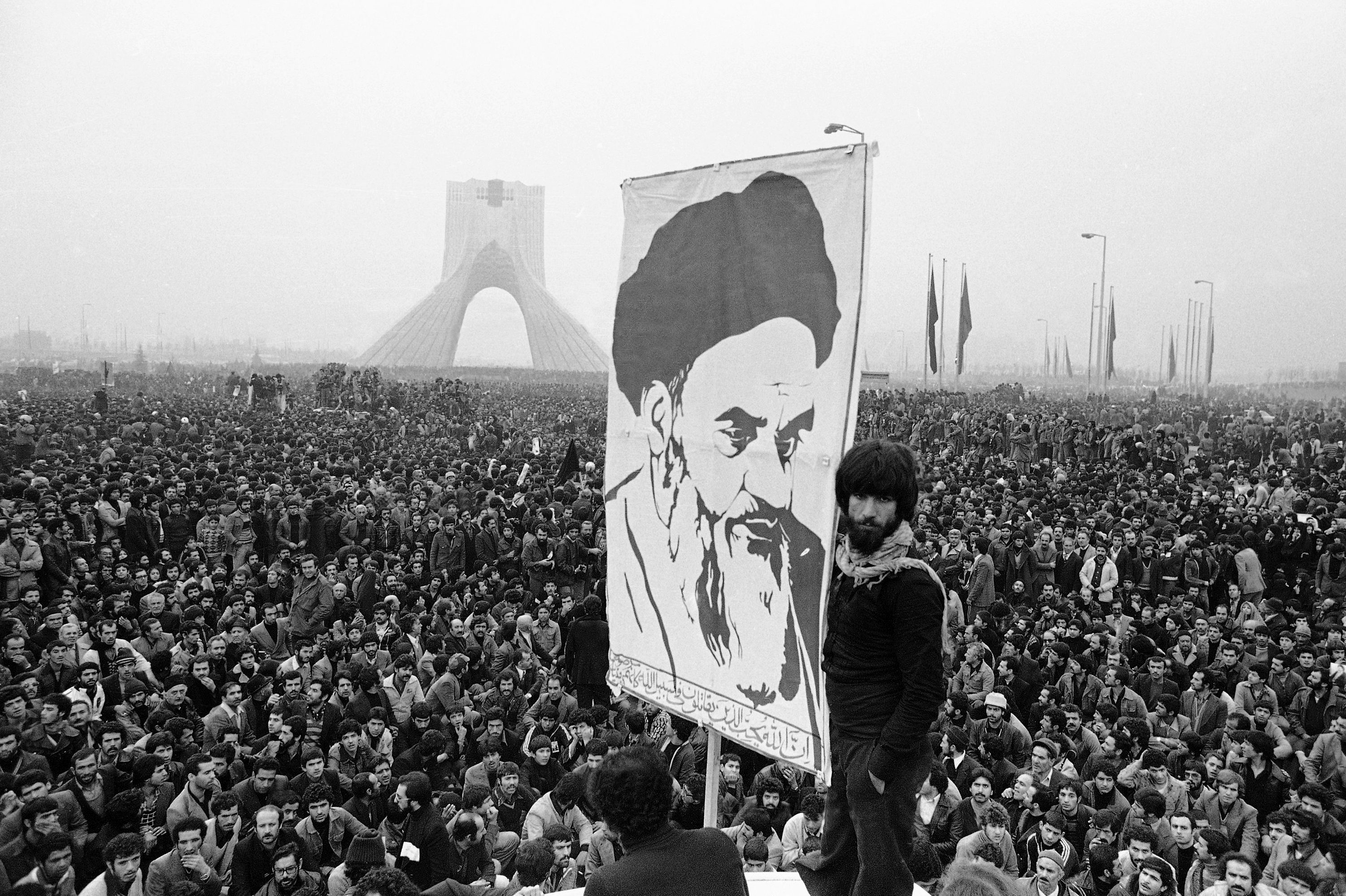
Crowds in excess of one million demonstrated in Tehrān, proving the wide appeal of Khomeini.

On April 1 1979, following overwhelming support in a national referendum, Khomeini declared Iran an Islamic republic.

Don’t forget to subscribe to our YouTube Channel

Sign up to our website and submit video suggestions:
www.kjvids.co.uk

Like our Facebook page for exclusive updates:
https://www.facebook.com/KJVids

Follow us on Instagram for our one minute vids:
https://www.instagram.com/kjvids2016

Follow us on Twitter to be informed when we post:
https://twitter.com/kjvids2016

Support our content by becoming a KJ Patreon
https://www.patreon.com/kjvids

All Rights Reserved. Contact info@kjvids.co.uk if you are interested in licensing our content, advertising or working with us in other ways.

#1979-iran-revolution#1979-ruhollah-khomeini#iran-1979#iran-america-relations#iran-revolution-1979#iranian-revolution#khomeini

Related Intelligence

More articles
Chokepoint Logic: Why Hormuz Remains the World’s Only True Thermostat
Middle East

Chokepoint Logic: Why Hormuz Remains the World’s Only True Thermostat

Despite the rise of American shale and the green energy transition, the Strait of Hormuz remains the single most critical vulnerability in the global economy. Power here is measured in barrels and leverage, not just navies.

15 May 2026

The Levantine Void: Lebanon’s Final Descent into State Dissolution
Middle East

The Levantine Void: Lebanon’s Final Descent into State Dissolution

Lebanon is no longer a state in crisis; it is a geographic theatre where the concept of the nation has been replaced by a fragmented security patchwork. Here is the structural reality of why the old Lebanon cannot return.

1 May 2026

The Yemen Mirror: Why Gulf Billions Failed to Buy Security
Middle East

The Yemen Mirror: Why Gulf Billions Failed to Buy Security

A decade of conflict has revealed a stark gap between military expenditure and strategic influence. As Riyadh pivots to diplomacy, the lessons of the Yemeni quagmire are reshaping the architecture of Middle Eastern power.

15 Apr 2026

Stateless Sovereignty: Why the Kurdish Dream is Now a Buffer Weapon
Middle East

Stateless Sovereignty: Why the Kurdish Dream is Now a Buffer Weapon

As regional powers in the Middle East fragment, the Kurdish 'non-state' has evolved from a historical tragedy into a permanent geopolitical buffer. While formal independence remains a mirage, the Kurds have become the indispensable veto players in the Levant.

1 Apr 2026

The Ghost of Radcliffe: Why 1947 Still Governs 21st-Century Asia
History

The Ghost of Radcliffe: Why 1947 Still Governs 21st-Century Asia

Geographic partitions are not historical events; they are active geopolitical engines. In South Asia, a hasty retirement from Empire created a structural instability that ensures permanent mobilisation and restricts the rise of two nuclear powers.

15 Mar 2026

The Pharaoh’s Gamble: Egypt’s Structural Trap and the New Nile Order
Middle East

The Pharaoh’s Gamble: Egypt’s Structural Trap and the New Nile Order

As Cairo’s debt-to-GDP ratio enters a terminal spiral, the Sisi administration faces a structural trilemma. Egypt must now navigate a thirsty domestic population, a belligerent upstream Ethiopia, and a regional credit market that is finally running dry.

1 Feb 2026