
KJ ReportsKJ Reports

Saudi Arabia’s King Salman suddenly ousts nephew and names son as next in line to throne

21 June 2017575

Listen to this article

KJ narrates this report in his own voice

Saudi Arabia’s King Salman suddenly ousts nephew and names son as next in line to throne

Read original article on Al Jazeera or read a quick summary below;

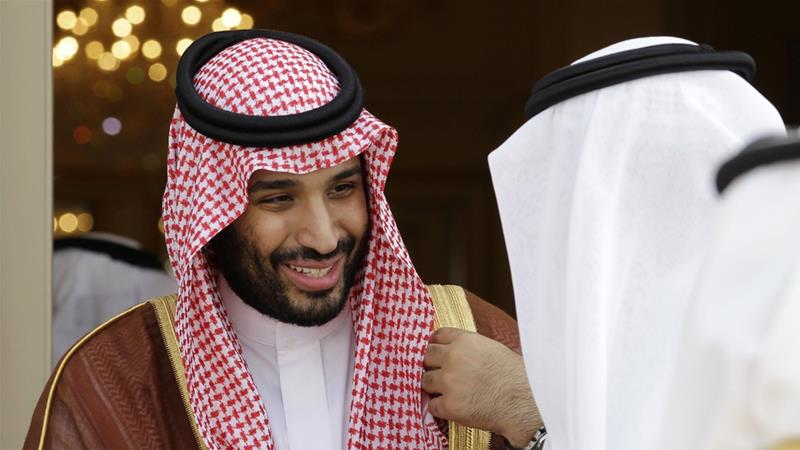
  1. Saudi Arabia’s King Salman has appointed his son, Mohammed bin Salman, as heir, in a major reshuffle announced early on Wednesday.
  2. A royal decree removed Crown Prince Mohammed bin Nayef, a 57-year-old nephew of the king, as next-in-line to the throne and replaced him with Mohammed bin Salman, 31, who was previously the deputy crown prince.
  3. According to the official Saudi Press Agency, the newly-announced crown prince was also named deputy prime minister and maintained his post as defence minister.
  4. The decision by King Salman to promote his son and consolidate his power was endorsed by 31 out of 34 members of the Allegiance Council, the decree said. The council is made up of senior members of the ruling Al Saud family.
  5. The Saudi king called for a public pledging of allegiance to the new crown prince early on Wednesday, the channel said. Mohammed bin Nayef promptly vowed loyalty to his successor after the decree.


 

#king-salman#mohammed-bin-salman#saudi-arabia

Related Intelligence

More articles
The Amman Alignment: Jordan’s Break from the Pan-Arabist Fiction
Middle East

The Amman Alignment: Jordan’s Break from the Pan-Arabist Fiction

Jordan’s recent kinetic intervention against Iranian ordnance signals a fundamental shift in Levantine architecture. Amman has traded the ghost of pan-Arab solidarity for a hard-nosed survivalist pact with Western and Israeli security frameworks.

29 Jul 2026

The Iraqi Re-Alignment: Sovereignty vs Security in a Bipolar Baghdad
Middle East

The Iraqi Re-Alignment: Sovereignty vs Security in a Bipolar Baghdad

Baghdad faces a terminal dilemma as the dual-track presence of Iranian influence and American financial-military support becomes unsustainable. The era of playing both sides has reached its structural limit.

29 Jul 2026

The Hormuz Leverage: Why Tehran Engineered an Oil Crisis
Middle East

The Hormuz Leverage: Why Tehran Engineered an Oil Crisis

Conventional analysis views Iran’s maritime aggression as a tactical reaction to sanctions. In reality, Tehran is pursuing a deliberate strategy to force global oil prices into a permanent risk premium to fund its internal survival.

26 Jul 2026

The Damascus Gambit: Syria as the Pivot for Iranian Retreat
Middle East

The Damascus Gambit: Syria as the Pivot for Iranian Retreat

While global attention focuses on proxy skirmishes, the real game is being played in the Syrian corridor. Controlling Damascus is the only way to sever Iran’s Mediterranean reach and unlock regional energy integration.

25 Jul 2026

The Desalination Doctrine: Weaponising the Region’s Last Lifecycle
Middle East

The Desalination Doctrine: Weaponising the Region’s Last Lifecycle

Middle Eastern warfare has shifted from controlling territory to dismantling the survival floor. As desalination plants become primary strategic targets, the era of managed proxy conflict is being replaced by a permanent, unrecoverable state of collapse.

22 Jul 2026

The Yemen Settlement: Evaluating the Death of the Petrodollar Pact
Middle East

The Yemen Settlement: Evaluating the Death of the Petrodollar Pact

Saudi Arabia’s pivot to a permanent diplomatic settlement in Yemen marks the structural end of the 1945 Quincy House agreement. Riyadh is now prioritising internal economic insulation over its legacy security architecture with Washington.

21 Jul 2026