
KJ ReportsKJ Reports

Qatar hosts largest US military base in the Middle East

5 June 20171,141

Listen to this article

KJ narrates this report in his own voice

Qatar hosts largest US military base in the Middle East

Read original article on CNN or read some of the key points below;

  1. The United States, happens to maintain its biggest concentration of military personnel in the Middle East at Qatar’s Al Udeid Air Base. The sprawling base 20 miles southwest of the Qatari capital of Doha is home to some 11,000 US military personnel.
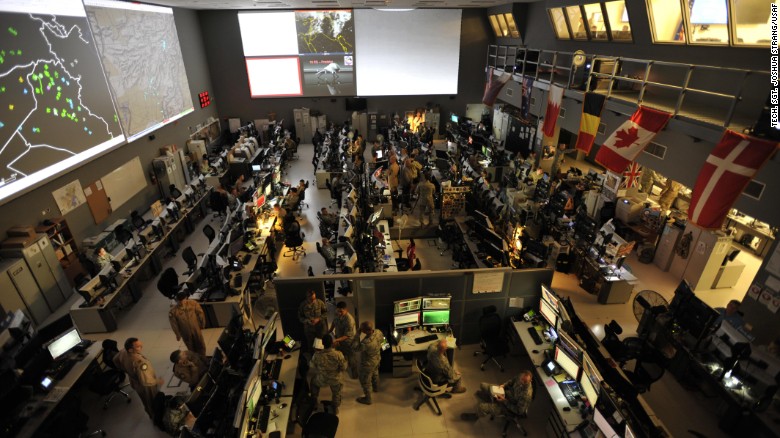
  2. The US Combined Air Operations Center (CAOC) at Al Udeid Air Base, Qatar, provides command and control of air power throughout Iraq, Syria, Afghanistan, and 17 other nations.
  3. The base, which boasts one of the longest runways in the Persian Gulf at 12,500 feet, is a strategically important facility that can accommodate up to 120 aircraft.
  4. Construction of the $60 million CAOC facility, which the Air Force says “resembles the set of a futuristic movie,” was completed in 2003. At that time the US moved the CAOC from Saudi Arabia’s Prince Sultan Air Base, where since 1997 it had overseen operations during the war in Iraq.
  5. The 379th Air Expedition Wing is “the largest, most diverse expeditionary wing” in the Air Force. It has more than 100 aircraft currently at the Qatar base, including combat planes like the B-1 bomber as well as planes for airlift, refueling and intelligence, the website says.

#military-base-qatar#qatar#qatar-military-base#saudi-arabia#united-states#us#us-military#us-military-base#us-qatar

Related Intelligence

More articles
The Tehran Maximum: Breaking the Resistance Axis Through Exhaustion
Middle East

The Tehran Maximum: Breaking the Resistance Axis Through Exhaustion

Washington is shifting from containment to a strategy of structural economic collapse. By targeting Iran’s internal solvency, the U.S. aims to force a regional retreat that military pressure alone could never achieve.

16 Aug 2026

The Durango Hedge: Mexico’s Role in the Great Tech Decoupling
United States

The Durango Hedge: Mexico’s Role in the Great Tech Decoupling

As Washington and Beijing sever semiconductor ties, Mexico is transforming from a low-cost assembly hub into the critical fail-safe for the AI era. Power, geography, and North American energy are rewriting the rules of silicon sovereignty.

16 Aug 2026

The Tripoli Paralysis: Why Libyan Fragmentation is a Feature, Not a Bug
Middle East

The Tripoli Paralysis: Why Libyan Fragmentation is a Feature, Not a Bug

Libya’s institutional deadlock is no longer a temporary crisis but a deliberate equilibrium. External powers now prefer a fractured buffer state over a unified nation that could disrupt Mediterranean energy and migration flows.

13 Aug 2026

The Makkah Defense Pact: Riyadh’s Strategic Pivot to the Periphery
Middle East

The Makkah Defense Pact: Riyadh’s Strategic Pivot to the Periphery

Saudi Arabia is systematically decoupling its security from traditional Arab alliances. By formalising a military axis with Pakistan, Turkey, and Indonesia, Riyadh is building a non-Arab shield to survive a post-American Middle East.

12 Aug 2026

The Neom Imperative: Riyadh’s Strategic Retreat to Save the Vision
Middle East

The Neom Imperative: Riyadh’s Strategic Retreat to Save the Vision

Saudi Arabia is trading its role as regional enforcer for that of a neutral safe haven. By de-escalating conflicts, Riyadh aims to secure the massive foreign capital inflows required to prevent the collapse of its domestic transformation.

10 Aug 2026

The Hegemon’s Disconnect: Why Israel Was Left Behind
United States

The Hegemon’s Disconnect: Why Israel Was Left Behind

Washington’s decision to finalise the 2026 Tehran Accord without Israeli consent marks a definitive shift. It signals the end of the US-led security umbrella in the Middle East and the birth of a cold, pragmatic multipolarity.

5 Aug 2026