KJ ReportsKJ Reports

Qatar crisis: Turkish parliament approves troop deployment

8 June 2017629

Listen to this article

KJ narrates this report in his own voice

Qatar crisis: Turkish parliament approves troop deployment

Home

Read original article on Middle East Eye or read some of the key points below;

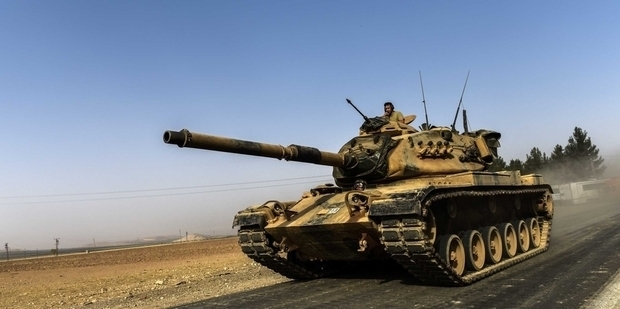
  1. Turkey‘s parliament on Wednesday approved a draft bill allowing its troops to be deployed to a Turkish military base in Qatar, an apparent move to support the Gulf Arab country when it faces diplomatic and trade isolation from some of the biggest Middle Eastern powers.
  2. Saudi Arabia, Egypt, the United Arab Emirates and Bahrain severed relations with Qatar and closed their airspace to commercial flights on Monday, charging it with financing militant groups.
  3. The Turkish bill, drafted before the rift, passed with 240 votes in favour, largely with support from the ruling Justice and Development Party (AKP) and nationalist opposition Nationalist Movement Party (MHP).
  4. Officials from the AKP and MHP said the legislation would allow troops to be deployed to a Turkish base in Qatar, amid reports Turkey is also set to offer food and emergency supplies to the country.
  5. Kamal Alam, a visiting fellow at diplomatic and defence think-tank RUSI said, “It won’t happen immediately, but the Saudi Islamic Arab coalition could fall apart and, maybe, if the situation continues we might see the first steps of replacing US protection in Qatar for Turkish protection.”

#ankara#mhp#qatar#qatar-turkey#saudi-arabia#turkey#turkey-military#uae#united-arab-emirates

Related Intelligence

More articles
The Shattered Shield: Why the Middle East Containment Era Is Over
Middle East

The Shattered Shield: Why the Middle East Containment Era Is Over

As direct hostilities between Iran and Israel bypass traditional Western red lines, the decades-long American strategy of regional containment has collapsed, leaving a vacuum where total war is now a structural probability.

14 Jun 2026

The Price of Restoration: Why Modern Warfare Prefers Stasis
Middle East

The Price of Restoration: Why Modern Warfare Prefers Stasis

While the Iran-US conflict cycles through fragile ceasefires and violent escalations, a deeper economic logic is emerging. Total victory is being sidelined by the lucrative prospects of managed reconstruction and regional integration.

13 Jun 2026

The Deadlock of Calm: Why Washington and Tehran Cannot Close the Deal
Middle East

The Deadlock of Calm: Why Washington and Tehran Cannot Close the Deal

A fragile ceasefire has frozen the Middle East, yet structural domestic survival and regional leverage prevent both the United States and Iran from moving beyond a tactical pause into a permanent settlement.

8 Jun 2026

The Ethiopia-Somaliland Axis: Redefining the Horn’s Power Map
Middle East

The Ethiopia-Somaliland Axis: Redefining the Horn’s Power Map

Ethiopia’s push for sea access via Somaliland is more than a trade deal. It is a structural shift forcing a realignment between Nile basin interests and Red Sea security architectures.

1 Jun 2026

Chokepoint Logic: Why Hormuz Remains the World’s Only True Thermostat
Middle East

Chokepoint Logic: Why Hormuz Remains the World’s Only True Thermostat

Despite the rise of American shale and the green energy transition, the Strait of Hormuz remains the single most critical vulnerability in the global economy. Power here is measured in barrels and leverage, not just navies.

15 May 2026

The Levantine Void: Lebanon’s Final Descent into State Dissolution
Middle East

The Levantine Void: Lebanon’s Final Descent into State Dissolution

Lebanon is no longer a state in crisis; it is a geographic theatre where the concept of the nation has been replaced by a fragmented security patchwork. Here is the structural reality of why the old Lebanon cannot return.

1 May 2026