KJ ReportsKJ Reports

Osman Gazi and the Birth of the Ottoman Empire

10 May 20182,299

Listen to this article

KJ narrates this report in his own voice

Osman Gazi and the Birth of the Ottoman Empire

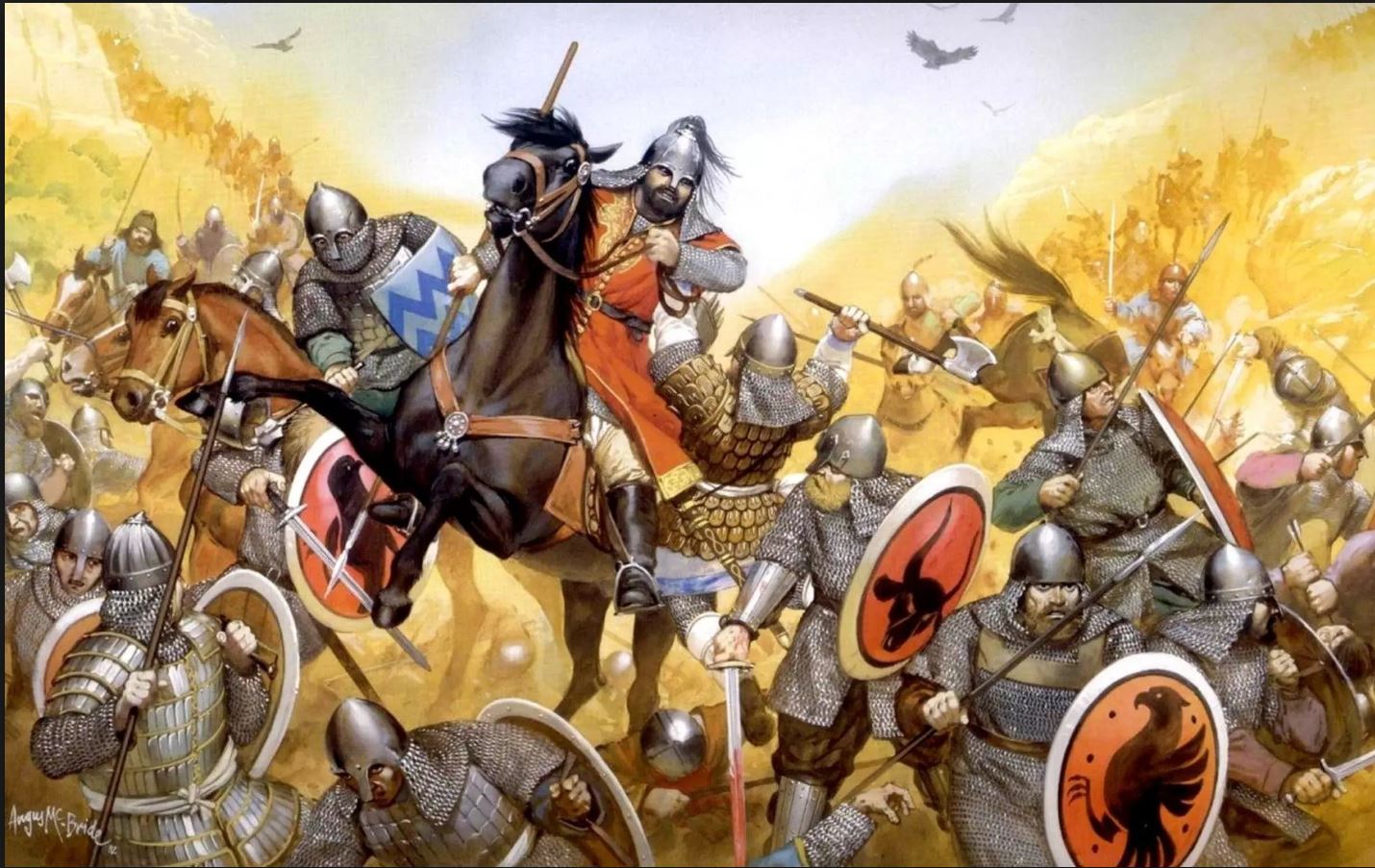
In the summer heat in the year 1071, a history-changing battle was raging in the eastern part of Anatolia.

The Seljuk Turks from Central Asia, had built a powerful empire that was clashing with the mighty Byzantines Empire.

The result of the Battle of Manzikert in 1071 was a decisive Seljuk victory with the Byzantine army in tatters.

Turkish settlers created their own towns and cities, while intermarrying with the local populations, who were converting to Islam.

These states were known as “beyliks.” Each State had a leader who directed the Ghazi’s. By the 1200s, there were numerous beyliks.

One of these beyliks was that of ghazi by the name of Osman. He was born in 1258, the same year Baghdad was destroyed by the Mongols.

Legend has it that Osman once had a dream in which a tree grew out of his chest. It’s roots and branches grew to cover Asia, Europe, and Africa.

Osman’s Shaykh interpreted the dream as a sign that Osman’s descendants would have an empire that controlled the three continents.

The borders of Osman’s beylik in the town of Söğüt in northwestern Anatolia pressed right up against the Byzantine Empire.

This made being a ghazi vital and central to Osman’s life. As a result, his stature grew and ghazis rushed to join his growing state.

In addition to this, the Mongol armies were still wreaking havoc on Southwest Asia, and fleeing refugees found a new home in Osman’s beylik.

With a huge influx of warriors, Osman continued to press against the Byzantines who were at this point were in full decline.

As a result, Osman greatly expanded his territory throughout the opening decades of the 1300s. His beylik became an empire.

The Ottomans themselves called their state Devlet-i Osmaniyye, Turkish for “The State of Osman”. Known in English as “The Ottomans.”

References 

http://lostislamichistory.com/the-birth-of-the-ottoman-empire/ 
Osman’s Dream – Book by Caroline Finkel
Hourani, Albert Habib. A History Of The Arab Peoples. New York: Mjf Books, 1997. Print.
Itzkowitz, Norman. Ottoman Empire And Islamic Tradition. Chicago: University Of Chicago Press, 1981. Print.

Don’t forget to subscribe to our YouTube Channel

Support our content by becoming a KJ Patreon
https://www.patreon.com/kjvids

Website – www.kjvids.co.uk
Facebook – www.facebook.com/KJVids
Twitter – www.twitter.com/kjvids2016
Instagram – www.instagram.com/kjvidsofficial

All Rights Reserved. Contact info@kjvids.co.uk if you are interested in licensing our content, advertising or working with us in other ways.


#osman-ghazi#ottoman-empire#ottoman-state#ottomans

Related Intelligence

More articles
The Iranian Chokepoint: Why $200 Oil is Tehran’s Strategic Veto
Middle East

The Iranian Chokepoint: Why $200 Oil is Tehran’s Strategic Veto

As regional tensions escalate, Iran’s ability to throttle the Strait of Hormuz has transformed from a military threat into a sophisticated macroeconomic weapon designed to neutralise Western sanctions and leverage global energy markets.

16 Jun 2026

The Atlantic Fracture: Madrid’s Defiance and the End of Iran Consensus
Middle East

The Atlantic Fracture: Madrid’s Defiance and the End of Iran Consensus

Spain’s strategic pivot away from the American-led containment of Tehran signals a profound breakdown in Western unity. As Madrid prioritises Mediterranean stability over Atlanticist aggression, the global mechanics of Iranian isolation are crumbling.

14 Jun 2026

The Shattered Shield: Why the Middle East Containment Era Is Over
Middle East

The Shattered Shield: Why the Middle East Containment Era Is Over

As direct hostilities between Iran and Israel bypass traditional Western red lines, the decades-long American strategy of regional containment has collapsed, leaving a vacuum where total war is now a structural probability.

14 Jun 2026

The Price of Restoration: Why Modern Warfare Prefers Stasis
Middle East

The Price of Restoration: Why Modern Warfare Prefers Stasis

While the Iran-US conflict cycles through fragile ceasefires and violent escalations, a deeper economic logic is emerging. Total victory is being sidelined by the lucrative prospects of managed reconstruction and regional integration.

13 Jun 2026

The Deadlock of Calm: Why Washington and Tehran Cannot Close the Deal
Middle East

The Deadlock of Calm: Why Washington and Tehran Cannot Close the Deal

A fragile ceasefire has frozen the Middle East, yet structural domestic survival and regional leverage prevent both the United States and Iran from moving beyond a tactical pause into a permanent settlement.

8 Jun 2026

The Ethiopia-Somaliland Axis: Redefining the Horn’s Power Map
Middle East

The Ethiopia-Somaliland Axis: Redefining the Horn’s Power Map

Ethiopia’s push for sea access via Somaliland is more than a trade deal. It is a structural shift forcing a realignment between Nile basin interests and Red Sea security architectures.

1 Jun 2026