Nazi Germany’s attempt to dominate Europe and establish a German-centred order resulted in the devastations of WWII and ultimately in the crushing defeat of Germany itself.
Its quest had been deeply influenced by the ideas of Friedrich Ratzel and Karl Haushofer, two prominent scholars of the German geopolitical school whose legacy still survives today in the grand strategy of another major power.
The Rise and Fall of Nazi Germany
After centuries of political fragmentation, Germany was finally unified as a single nation-state by the initiative of Prussia; who unified the country and established the German Empire in 1871 following a decisive victory over France.
Germany’s industrial and military strength soon made of it the main power in mainland Europe,
and Bismarck’s system of alliances was the basis of the international order in the continent during the late 19th century.
But Germany’s rise also raised concerns among other countries, especially France and Great Britain. The mounting international tensions ultimately erupted in WWI, which ended in a catastrophic defeat for Germany.
It lost its colonies and even many of its pre-war territories in Europe, it had to accept severe restrictions on its armed forces, and it was overloaded with debts to pay massive war reparations.
The social and political order of the newly-established Weimar Republic was shaky, as it was marked by unemployment, economic instability and popular strife. The economic conditions improved in the 20s; but the financial crisis of 1929 sparked another deep recession.
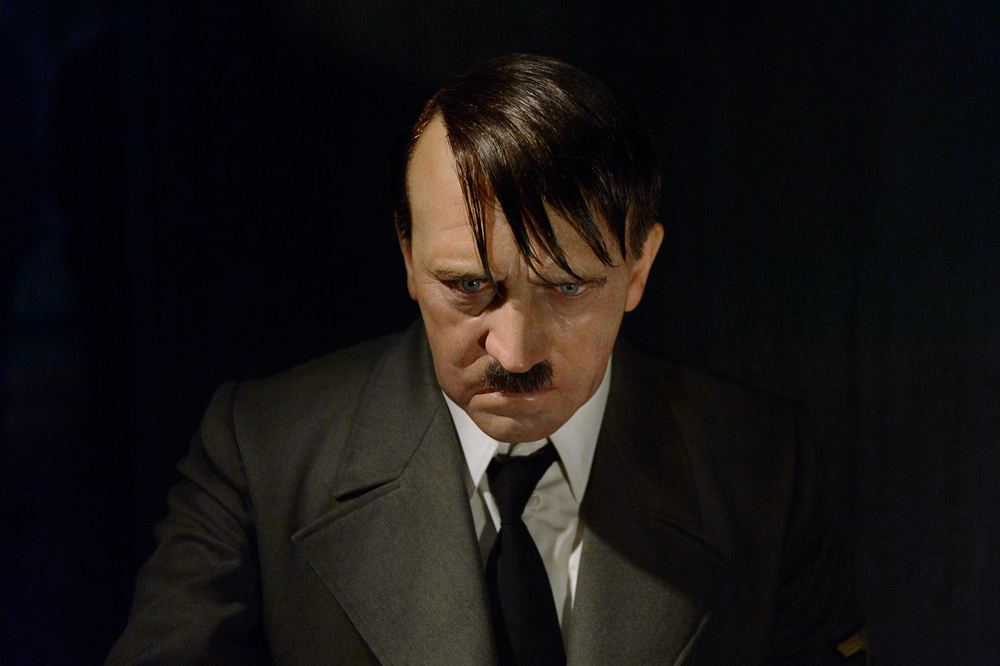
In this dramatic context, the National-Socialist Party headed by Hitler gradually gained strength, and in 1933 –using of violence and intimidation – it ultimately won the elections. In a short time, Hitler abolished all the democratic institutions and established a totalitarian dictatorship.
At the international level he rejected the WWI peace treaties of 1919, he started an ambitious rearm programme, he reoccupied the demilitarized areas of Germany and did not hide his ambitions to reunify all the German-populated territories under a single Reich.
Austria was annexed in 1938, followed by Sudentenland one year later, with the rest of Czechoslovakia becoming a German protectorate. But this was not enough: Hitler and the Nazi establishment wanted to expand Germany’s territory to the east, considered to be the ancestral homeland of the Germanic peoples and the vital space – or lebensraum – for the expansion of the German race.
After having obtained the neutrality and the complicity of the Soviet Union, Germany invaded Poland on September 1st 1939; thus prompting France and Great Britain to declare war and sparking WWII in Europe. Poland was rapidly occupied, followed by other countries in 1940; including France itself.
It seemed that the Germans had won the war, even though they received a first setback when they failed to obtain the air superiority in the Battle of England and had to abandon their plans for an invasion of the British Isles. But Britain was alone, while Germany ruled over Europe and was threatening Egypt after intervening in North Africa to assist its Italian ally.
However, Hitler’s plan to take the eastern lebensraum and destroy communism marked the first step to Germany’s downfall. The Germans attacked the USSR in June 1941, and in spite of the initial success they were ultimately stopped.
In December, following the attack by its Japanese ally on the US naval base at Pearl Harbor, Germany declared war on America.
In the 1942-1943 winter, the Red Army inflicted a crushing defeat on the German at Stalingrad and began its march westwards.
A few months later, after retaking North Africa, the Anglo-American allies landed in Italy and opened a second front for the Germans.
They finally opened a third front on June 6th, 1944, when they landed in Normandy. The advancing allied armies soon entered in Germany itself, who capitulated in May 1945. The country was divided in two throughout all of the Cold War, and was only reunified in 1990.
RATZEL AND HAUSHOFER
The geopolitical plans of Nazi Germany were not conceived by Hitler, and actually pre-date the Third Reich itself. In fact, the Nazis took inspiration from the German geopolitical school of the late 19th century, whose main representative was Friedrich Ratzel.
The first important concept in his thinking is that he regarded the state as a living being that throughout its lifetime needs to grow and expand; and whose population is tied to its territory by a cultural bond.
Along this logic, Ratzel applied the theories of Social Darwinism to states. According to his views, states – as all living beings – are in a constant struggle for survival and therefore compete one against the other. This dynamic is analogous to natural selection, meaning that only the most adaptable ultimately endure. In this context, a state must exploit any occasion to expand and become stronger and increase its likelihood to survive.
Ratzel was also the first to formulate the concept of lebensraum in the sense that the Nazis would later use, considering it as a vital space that a state – and its population – must control to survive and prosper. And as states try to expand, wars break out as a result of this process.
Ratzel summarizes his theory in seven “laws”, which in short say that a state must expand its territory because this leads to economic prosperity, cultural progress and greater influence; that it must seek to take control over economically-important regions such as river basins, coasts and plains; and that expansion must be performed by absorbing other lesser polities – which are also the expression of inferior civilizations – as the latter “attract” a more powerful state, meaning that the expansion dynamic aliments itself as the state grows.
After Germany’s defeat in WWI, Ratzel theories were revived and readapted by Karl Haushofer, who was a friend of Rudolf Hess and who had a major influence on the geopolitical views and strategies of the Nazis.
According to Haushofer, Germany had to restore its power by retaking its lebensraum and by rebuilding its sphere of influence, considering borders – as Ratzel had done before – as the expression of the dynamic of expansion of states motivated by the needs of their people.
Taking inspiration from the Monroe Doctrine, which to simplify stated that European powers had not the right to meddle in the affairs of South America thus putting it under America’s influence,
Haushofer advocated for a pan-Germanist policy and divided the world into four zones: a Pan-American area under US influence; a Eurafrican one dominated by Germany; a Pan-Russian zone that also included Iran and India that was obviously to be ruled by Russia; and finally an Asian Co-prosperity sphere where Japan would dominate over the Asia-Pacific and Eastern Siberia.
Haushofer also developed a strategy to counter the maritime powers, and notably Great Britain, as he was aware that Germany could not realistically compete with them in the naval domain. He believed that Germany had to form a Eurasian bloc along with Russia and Japan in order to counter the British strategy inspired by Mackinder of containing the continental powers by controlling the so-called Inner Crescent of Eurasia.
The impact of Haushofer’s theories on the foreign policy of Nazi Germany is evident. The expansion in Europe – and notably in the Eastern part of the continent – was meant to take control of the lebensraum and to establish Germany as the leading power in the region.
Following Haushofer advise, Germany established closer relations with Japan, which culminated in 1940 with an alliance treaty after a process that had begun in 1936.
The non-aggression pact with the USSR in 1939, with whom the two powers established their respective spheres of influence in Eastern Europe, also followed the logic of aligning with Russia advocated by Haushofer.
Yet, this aspect was a point of major contrast with Hitler, who viewed communism as an existential threat and the Slavs as an inferior race. The Führer ultimately abandoned it in 1941 by attacking the Soviets; a move that, in retrospect, brought Germany to defeat.
The Legacy of the German School
The theories of Ratzel and Haushofer had an evident influence on the grand strategy of the Third Reich. Central concepts like the lebensraum, the struggle for supremacy among competing peoples, the need to take over new spaces for the population and to make the state stronger all derived from their works and inspired the nationalist and expansionist policies of Nazi Germany.
Yet, Germany ultimately suffered a ruinous defeat due to a complex series of factors; including the fact that it did not follow Haushofer’s policy of alignment with Russia and instead attacked it, thus opening a huge front that drained a large portion of its manpower and material resources.
Yet, the German geopolitical school did not completely fade with Nazi Germany.
Somehow ironically, during the 90s it was revived by Aleksandr Dugin, a Russian thinker whose theories we have already examined in a previous video. Many of the key concepts that appear in Dugin’s work derive from the German school: the central importance of the nation and its territory; the division of the world into four zones; or the strategic objective of controlling Eurasia by establishing strategic partnerships with key regional players – notably Germany and Japan, later substituted by China – in order to counter the influence of maritime powers.
Dugin basically reinterpreted the ideas of the German school in a Russian-centric way and transformed them into a geopolitical theory called Eurasianism, which has a real impact on Russia’s grand strategy under President Vladimir Putin.