KJ ReportsKJ Reports

How the Muslims lost Spain – The Rise of Muslims Episode 3

24 December 20181,769

Listen to this article

KJ narrates this report in his own voice

How the Muslims lost Spain – The Rise of Muslims Episode 3

Based entirely on the book by Ali Mahmood titled “Muslims” – Purchase using this link – https://www.kjreports.com/product/muslims/

Welcome to Episode 3 of our Rise of Muslims Documentary based on a book called Muslims by Ali Mahmood.

In the first episode Ali talked about how the Prophet Muhammed led the Muslims to the conquest of Makkah and the reigns of the first four caliphs. In the second episode, Ali discussed the rise and fall of the Umayyad dynasty and the Abbasid dynasty. In this episode Ali discusses the rise and fall of Islamic Spain and Egypt.

At the start of the 8th century Roderick, the Visigoth king ruled Spain. His able general, Count Julian protected the kingdom, keeping the Muslims of North Africa at bay. When Julian left for Africa, he left his beautiful daughter, Florinda, under the protection of the king. Roderick was fired when he saw Florinda. He raped her, and she became pregnant. She confessed to her father who resolved to take revenge.

In Africa Julian met Tarik bin Ziyad and offered to take the Muslim troops into Spain. Tarik crossed over from Africa to Spain with an exploratory force of 7000 men, stopping midway at a rock which was named after him – the Rock of Tarik, Jebel Tarik (Gibraltar).
Having crossed, Tarik burned his boats to show his men that there was no going back, it was victory or death. The small Muslim army won complete and total victory over the much larger Spanish force, Spain was conquered and remained under Muslim rule for almost eight centuries.

Musa, the Umayyad governor of North Africa was green with envy when he heard of Tarik’s astounding victories. He rushed to Spain to share in the glory and the booty. He also struck Tarik and for a while had him arrested.

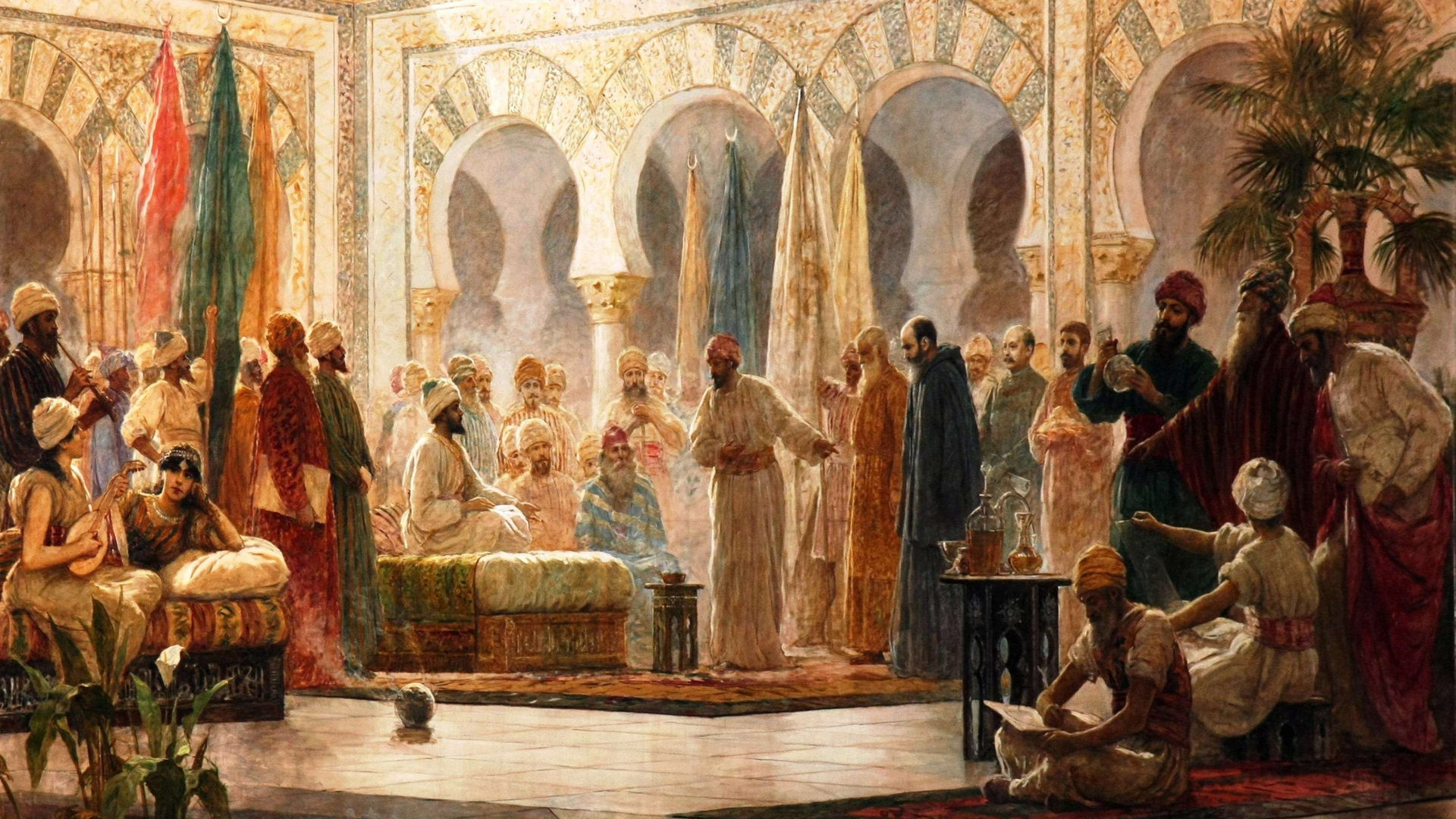
The Muslims spread over the fertile south and named their land Al-Andalus. Andalusia was a land of rivers and valleys, perfect for cultivation, to which the Arabs applied their techniques of agriculture and irrigation. These farms laid the foundation for the wealth of Andalusia. The Muslims governed mildly, justly and wisely. Low taxes and a high level of religious freedom kept the people content. It was a happy time.


#10th-century#16th-century#al-andalus#andalusia#caliphs#egypt#european-history#gibralter#governors#history#islam#islam-in-europe#islamic-golden-age#islamic-history#islamic-spain#islamic-spain-al-andalus#islamic-spain-crash-course#islamic-spain-documentary#islamic-spain-when-the-moors-ruled-in-europe-alhambra-granada#jebel-tarik#kj#kj-videos#kjvids#muslim-history#muslims#muslims-in-spain#roderick#spain#tariq-bin-ziyad#umayyad#visigoth-king

Related Intelligence

More articles
The Iranian Chokepoint: Why $200 Oil is Tehran’s Strategic Veto
Middle East

The Iranian Chokepoint: Why $200 Oil is Tehran’s Strategic Veto

As regional tensions escalate, Iran’s ability to throttle the Strait of Hormuz has transformed from a military threat into a sophisticated macroeconomic weapon designed to neutralise Western sanctions and leverage global energy markets.

16 Jun 2026

The Atlantic Fracture: Madrid’s Defiance and the End of Iran Consensus
Middle East

The Atlantic Fracture: Madrid’s Defiance and the End of Iran Consensus

Spain’s strategic pivot away from the American-led containment of Tehran signals a profound breakdown in Western unity. As Madrid prioritises Mediterranean stability over Atlanticist aggression, the global mechanics of Iranian isolation are crumbling.

14 Jun 2026

The Shattered Shield: Why the Middle East Containment Era Is Over
Middle East

The Shattered Shield: Why the Middle East Containment Era Is Over

As direct hostilities between Iran and Israel bypass traditional Western red lines, the decades-long American strategy of regional containment has collapsed, leaving a vacuum where total war is now a structural probability.

14 Jun 2026

The Price of Restoration: Why Modern Warfare Prefers Stasis
Middle East

The Price of Restoration: Why Modern Warfare Prefers Stasis

While the Iran-US conflict cycles through fragile ceasefires and violent escalations, a deeper economic logic is emerging. Total victory is being sidelined by the lucrative prospects of managed reconstruction and regional integration.

13 Jun 2026

The Deadlock of Calm: Why Washington and Tehran Cannot Close the Deal
Middle East

The Deadlock of Calm: Why Washington and Tehran Cannot Close the Deal

A fragile ceasefire has frozen the Middle East, yet structural domestic survival and regional leverage prevent both the United States and Iran from moving beyond a tactical pause into a permanent settlement.

8 Jun 2026

The Ethiopia-Somaliland Axis: Redefining the Horn’s Power Map
Middle East

The Ethiopia-Somaliland Axis: Redefining the Horn’s Power Map

Ethiopia’s push for sea access via Somaliland is more than a trade deal. It is a structural shift forcing a realignment between Nile basin interests and Red Sea security architectures.

1 Jun 2026