KJ ReportsKJ Reports

KJ Poll Result – 83% of Muslims believe Erdogan should cut political, economic and military ties with Israel and America

12 December 20171,140

Listen to this article

KJ narrates this report in his own voice

KJ Poll Result – 83% of Muslims believe Erdogan should cut political, economic and military ties with Israel and America

On December 5th 2017, KJ Vids ran a poll amongst it’s 270,000 Facebook fans and asked the question “Should Erdogan cut political, economic and military ties with Israel and America for crossing a “Red Line.”

We received a total of 7,000 votes and the results were a landslide victory for “YES” with 83% of people voting “Yes” to the question and only 17% voting no.

https://www.facebook.com/KJVids/posts/1524744110913205

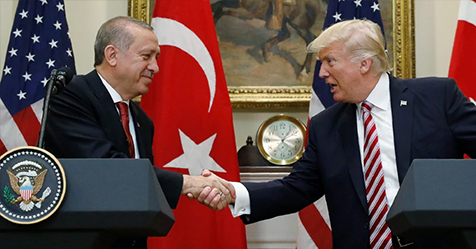
We decided to run this poll following the recognition of Jerusalem as Israel’s capital by Donald Trump. Following the announcement, the Turkish leader called Trump’s recognition of the holy city as a ‘red line’ for Muslims.

With Trump disregarding such warnings, the Turkish president used his position as the current chairman of the Organisation of Islamic Cooperation (OIC) to call a summit of the group.


President Recep Tayyip Erdogan, who has accused the United States of ignoring Palestinian claims to Israeli-occupied East Jerusalem and “trampling on international law”, has invited leaders from more than 50 Muslim countries to agree on a response.

Albeit years of rhetoric, Turkey in 2016 agreed to resume full diplomatic relations with Israel after the crisis triggered by the deadly storming by Israel of a Turkish ship seeking to break the Gaza blockade in 2010.

Trade and energy deals have prospered increasing year to year. Cooperation has resumed, most significantly in energy.

We wanted to see if our fans believed that Erdogan should follow through on his critical words with political action. The result was a resounding “Yes”

#america#israel#jerusalem#poll#turkey

Related Intelligence

More articles
The Iranian Chokepoint: Why $200 Oil is Tehran’s Strategic Veto
Middle East

The Iranian Chokepoint: Why $200 Oil is Tehran’s Strategic Veto

As regional tensions escalate, Iran’s ability to throttle the Strait of Hormuz has transformed from a military threat into a sophisticated macroeconomic weapon designed to neutralise Western sanctions and leverage global energy markets.

16 Jun 2026

The Atlantic Fracture: Madrid’s Defiance and the End of Iran Consensus
Middle East

The Atlantic Fracture: Madrid’s Defiance and the End of Iran Consensus

Spain’s strategic pivot away from the American-led containment of Tehran signals a profound breakdown in Western unity. As Madrid prioritises Mediterranean stability over Atlanticist aggression, the global mechanics of Iranian isolation are crumbling.

14 Jun 2026

The Shattered Shield: Why the Middle East Containment Era Is Over
Middle East

The Shattered Shield: Why the Middle East Containment Era Is Over

As direct hostilities between Iran and Israel bypass traditional Western red lines, the decades-long American strategy of regional containment has collapsed, leaving a vacuum where total war is now a structural probability.

14 Jun 2026

The Price of Restoration: Why Modern Warfare Prefers Stasis
Middle East

The Price of Restoration: Why Modern Warfare Prefers Stasis

While the Iran-US conflict cycles through fragile ceasefires and violent escalations, a deeper economic logic is emerging. Total victory is being sidelined by the lucrative prospects of managed reconstruction and regional integration.

13 Jun 2026

The Deadlock of Calm: Why Washington and Tehran Cannot Close the Deal
Middle East

The Deadlock of Calm: Why Washington and Tehran Cannot Close the Deal

A fragile ceasefire has frozen the Middle East, yet structural domestic survival and regional leverage prevent both the United States and Iran from moving beyond a tactical pause into a permanent settlement.

8 Jun 2026

The Ethiopia-Somaliland Axis: Redefining the Horn’s Power Map
Middle East

The Ethiopia-Somaliland Axis: Redefining the Horn’s Power Map

Ethiopia’s push for sea access via Somaliland is more than a trade deal. It is a structural shift forcing a realignment between Nile basin interests and Red Sea security architectures.

1 Jun 2026