China’s Economic Miracle | The Rise of China Mini-Documentary | Episode 1

11 September 20173,137

Listen to this article

KJ narrates this report in his own voice

China’s Economic Miracle | The Rise of China Mini-Documentary | Episode 1

Please contribute towards KJ Vids research and editing costs at www.fundmypage.com/kjvids.

The Rise of China Mini-Documentary | Episode 1 | China’s Economic Miracle

Two centuries ago, Napoleon warned, “Let China sleep: when she wakes, she will shake the world.”

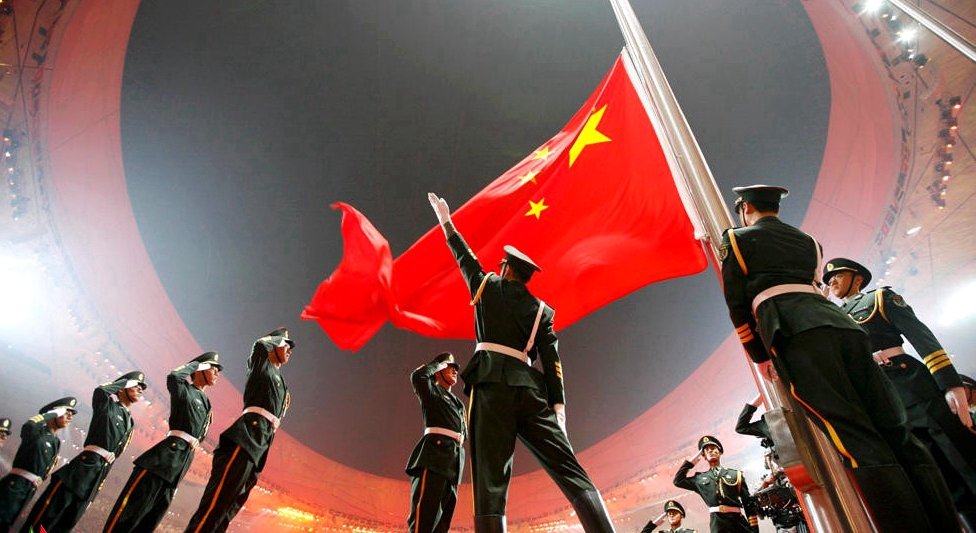
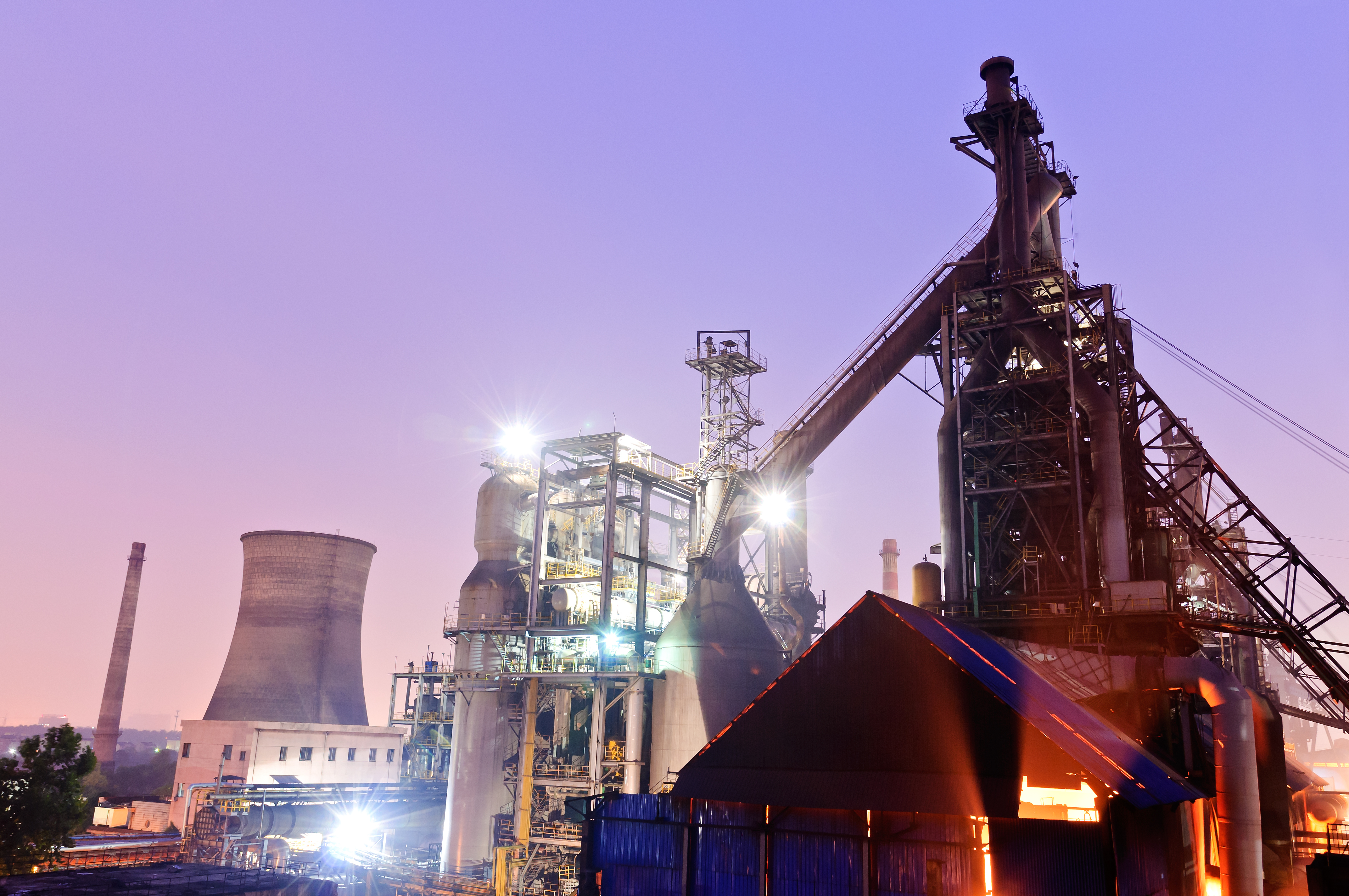
The rise of China will undoubtedly be one of the great dramas of the twenty-first century. China’s extraordinary economic growth and active diplomacy are already transforming East Asia, and future decades will see even greater increases in Chinese power and influence.

In this episode we will look only at the sheer size of China today. We will then look at it’s threats, challenges and confrontations with America in future episodes.

In 1980, China’s gross domestic product (GDP) was less than 300 billion dollars; by 2015, it was 11 trillion dollars—making it the world’s second-largest economy by market exchange rates. China’s trade with the outside world in 1980 amounted to less than 40 billion dollars; by 2015, it had increased one hundredfold, to a whopping 4 trillion dollars.

Even at its lower growth rate in 2015, China’s economy created a Greece every sixteen weeks and an Israel every twenty-five weeks.

Measured by purchasing power parity, which measures how many aircraft, missiles, ships, sailors, pilots, drones, bases, and other military- related items a state can buy and the prices it has to pay in its own national currency, China has not only surpassed the US, but also now accounts for roughly 18 percent of world GDP, compared to just 2 percent in 1980.

By 2005, the country was building the square-foot equivalent of today’s Rome every two weeks.

Between 2011 and 2013, China both produced and used more cement than US did in the entire twentieth century.

On its current path, China will surpass the US to become the world leader in research-and-development spending by 2019.

Since June 2013, the world’s fastest supercomputer has been located not in Silicon Valley but in China. Indeed, in the rankings of the world’s 500 fastest supercomputers—a list from which China was absent in 2001—today it has 167, two more than the United States. Moreover, China’s top supercomputer is five times faster than the closest American competitor. And while China’s supercomputers previously relied heavily on American processors, its top computer in 2016 was built entirely with domestic processors.

As China’s economy has gotten bigger, its guns and tanks—and their twenty-first-century equivalents—have gotten better, and allowed for a new level of competition with other great powers, especially the United States. Just as technology start-ups like Facebook and Uber have used the concept of disruptive innovation to upend previously dominant firms, the Chinese military is developing new technologies that can counter ships, planes, and satellites that the US has developed over decades—and for a fraction of the cost.

China has increased its defense spending nearly fivefold over the last decade. China currently spends more on defense than Japan, South Korea, the Philippines, and Vietnam combined, and China’s military spending is second only to the United States.

China is now building a Blue Water navy. A Blue Water navy patrols the oceans. It will take another thirty years (assuming economic progression) for China to build naval capacity to seriously challenge the most powerful seaborne force the world has ever seen – the US navy. But in the medium to short term, as it builds, and trains, and learns, the Chinese navy will bump up against its rivals in the seas; and how those bumps are managed will define great power politics in this century.

China intends to become a two-ocean power (Pacific and Indian). To achieve this China is investing in deep-water ports in Burma, Bangladesh, Pakistan and Sri Lanka – an investment which buys it good relations, the potential for its future navy to have friendly bases to visit or reside in, and trade links back home.

In 2014, China inaugurated a major international economic development program by financing infrastructure projects in the historical silk route countries. It is engaged in financing economic infrastructure projects in the silk route countries with positive ROI for China and the recipient countries.

The Chinese are also building ports in Kenya, railway lines in Angola, and a hydroelectric dam in Ethiopia. They are scouring the length and breadth of the whole of Africa for minerals and precious metals.

Don’t forget to subscribe to our YouTube Channel

Sign up to our website and submit video suggestions:
www.kjvids.co.uk

Like our Facebook page for exclusive updates:
https://www.facebook.com/KJVids

Support our content by becoming a KJ Patreon
https://www.patreon.com/kjvids

All Rights Reserved. Contact info@kjvids.co.uk if you are interested in licensing our content, advertising or working with us in other ways.
#china#china-economic-growth#china-economy#china-economy-2017#china-economy-documentary#china-education#china-fastest-computer#china-military#china-military-2017#china-military-parade#china-navy#china-power-america#china-projects-2017#china-rise#china-robots#china-silk-road#china-superpower-documentary#china-technology#china-troops#china-v-america#china-world-power#chinese-economic-growth#chinese-military#kj-vids#kj-vids-documentary#military#rise-of-china#rise-of-china-2017#rise-of-china-as-a-superpower#rise-of-china-documentary#rise-of-china-youtube#rise-of-chinese-economy#rise-of-chinese-nationalism#the-rise-of-china

Related Intelligence

More articles
Will France succeed in replacing the US as the Gulf’s primary partner?
France

Will France succeed in replacing the US as the Gulf’s primary partner?

7 Dec 2021

Is Egypt strengthening its air force to prepare for war with Ethiopia?
Egypt

Is Egypt strengthening its air force to prepare for war with Ethiopia?

4 May 2021

Can the rapidly deteriorating Turkey-France relations be saved?
France

Can the rapidly deteriorating Turkey-France relations be saved?

France and Turkey trading blows Ever since the beginning of Turkey’s Military operation in Syria last month, relationship with France has deteriorated, as France reacted negatively and fiercely to the operation, while Turkey responded with insistence and jabs of equal magnitude. Most recently, French President Macron said in an interview three weeks ago there was a lack of strategic coordination between European allies on the one hand and the United States and Turkey, on the other. He has also decried NATO’s inability to react to what he called Turkey’s “crazy” offensive into northern Syria. The comments drew a stinging rebuke from Erdogan during a televised speech on Friday. “Have your own brain death checked. These statements are suitable only to people like you who are in a state of brain death,” Erdogan said. “You know how to show off but you cannot even properly pay for NATO. You are a novice,” he added. On Friday, French officials said they expected substantial clarifications from Erdogan rather than a war of words. “Let’s be clear, these are not statements, they are insults,” a presidential adviser said. “The president says things clearly. It’s up to Turkey to provide the answers that we and many allies expect.” Macron’s adviser said that beyond the issue of Turkey’s offensive in Syria, its refusal to back a NATO defence plan for the Baltic republics and Poland was unacceptable. “Turkey can’t take the defence plans of Poland and the Baltic countries hostage,” the adviser said. It seems relations have only gotten worse in recent weeks, which is a major problem for NATO, as it disrupts its unity and functionality as a whole. Subscribe to read the full article We wish we didn't have to do this, but only paid subscribers can read the full article, Unlike other publishers, we are not the beneficiaries of State funds and are entirely dependent on our supporters to keep KJ Vids functioning. Please subscribe to read the rest of the article. The First 1,000 subscribers will receive a 50% lifetime discount to our content. - Access over 500 videos explaining global politics - Full access to all articles - Vote on future video topics - Secure Questions for Video Q&As Sign Up - https://www.kjreports.com/product/lifetimediscount/

1 Dec 2019

Is power and resource competition a threat to Antarctica?
Australia

Is power and resource competition a threat to Antarctica?

14 Nov 2019

Demystifying Russia’s Hybrid Warfare in Europe
Eastern Europe

Demystifying Russia’s Hybrid Warfare in Europe

27 Aug 2019

Russia and the G8: 5 Geopolitical Effects You Need to Know 
Eastern Europe

Russia and the G8: 5 Geopolitical Effects You Need to Know 

1. Russian Concessions to the West The US President Donald Trump expressed his support for reinstating Russia into the G8. The Kremlin would certainly have to make some serious concessions in order to renew its membership in this inter-governmental political forum. French President Emmanuel Macron already said that Russia can't return to the G8 format before the Ukrainian crisis is resolved. In other words, Moscow will, most likely, have to end its support to the self-proclaimed Donetsk People's Republic and Lugansk People's Republic. Such move will be seen as an open betrayal of the pro-Russian forces in the Donbass. However, the Kremlin political technologists will undoubtedly try to portray it as another geopolitical victory. 2. Return of Crimea as a Condition Ukrainian President Volodymyr Zelensky, on the other hand, wrote on Facebook that Russia can return to the G8 if it returns Crimea to Ukraine, ends the conflict in the Donbass and releases 24 Ukrainian sailors who were captured at the end of the last year during the Kerch Strait accident. During the Macron-Putin meeting on Monday, French leader said a resolution of Russia's annexation of Crimea would be the "magic wand" to bring Russia back into the G7. Even though Russia was expelled from the old G8 format after it incorporated Crimea into the Russian Federation in March 2014, at this point it's unlikely that Moscow will be willing to discuss the future of the peninsula. Subscribe to unlock the other 3 Points We wish we didn't have to do this, but only paid subscribers can read the full article, Unlike other publishers, we are not the beneficiaries of State funds and are entirely dependent on our supporters to keep KJ Vids functioning. Please subscribe to read the rest of the article. The First 1,000 subscribers will receive a 50% lifetime discount to our content. - Access over 500 videos explaining global politics - Full access to all articles - Vote on future video topics - Secure Questions for Video Q&As Sign Up - https://www.kjreports.com/product/lifetimediscount/

22 Aug 2019