
KJ ReportsKJ Reports

300 civilians killed in U.S.-led air strikes in Raqqa since March says the UN

14 June 2017731

Listen to this article

KJ narrates this report in his own voice

300 civilians killed in U.S.-led air strikes in Raqqa since March says the UN

Read orignal article by Stephanie Nebehay on the Reuters or read some of the key stats below;

  1. Intensified coalition air strikes have killed at least 300 civilians in the Syrian northern city of Raqqa since March, as U.S.-backed forces close in on the stronghold of Islamic State forces, U.N. war crimes investigators said on Wednesday.
  2. Karen Abuzayd, an American commissioner on the independent panel, said: “We have documented the deaths caused by the coalition air strikes only and we have about 300 deaths, 200 in one place, in al-Mansoura, one village.”
  3. Pinheiro, speaking earlier to the U.N. Human Rights Council, said that there had been a “staggering loss of civilian life” due to coalition air strikes that had forced 160,000 civilians to flee their homes.
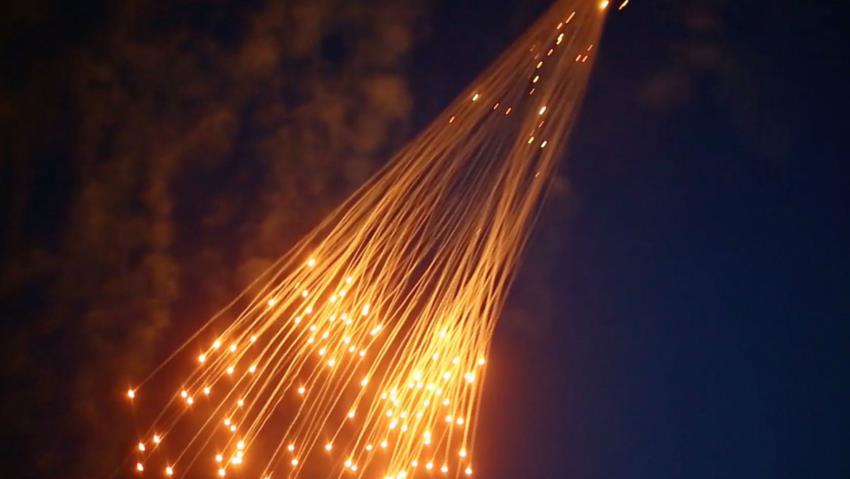
  4. Separately, Human Rights Watch expressed concern in a statement about the use of incendiary white phosphorous weapons by the U.S.-led coalition fighting Islamic State in Iraq and Syria, saying it endangered civilians when used in populated areas.
  5. Syria’s ambassador to the U.N. in Geneva, Hussam Edin Aaala, denounced violations “committed by the unlawful U.S.-led coalition which targets infrastructure, killing hundreds of civilians including the deaths of 30 civilians in Deir al-Zor.

#raqqa#syria-airstrikes#us-airstrikes-syria

Related Intelligence

More articles
The Tehran Maximum: Breaking the Resistance Axis Through Exhaustion
Middle East

The Tehran Maximum: Breaking the Resistance Axis Through Exhaustion

Washington is shifting from containment to a strategy of structural economic collapse. By targeting Iran’s internal solvency, the U.S. aims to force a regional retreat that military pressure alone could never achieve.

16 Aug 2026

The Tripoli Paralysis: Why Libyan Fragmentation is a Feature, Not a Bug
Middle East

The Tripoli Paralysis: Why Libyan Fragmentation is a Feature, Not a Bug

Libya’s institutional deadlock is no longer a temporary crisis but a deliberate equilibrium. External powers now prefer a fractured buffer state over a unified nation that could disrupt Mediterranean energy and migration flows.

13 Aug 2026

The Makkah Defense Pact: Riyadh’s Strategic Pivot to the Periphery
Middle East

The Makkah Defense Pact: Riyadh’s Strategic Pivot to the Periphery

Saudi Arabia is systematically decoupling its security from traditional Arab alliances. By formalising a military axis with Pakistan, Turkey, and Indonesia, Riyadh is building a non-Arab shield to survive a post-American Middle East.

12 Aug 2026

The Neom Imperative: Riyadh’s Strategic Retreat to Save the Vision
Middle East

The Neom Imperative: Riyadh’s Strategic Retreat to Save the Vision

Saudi Arabia is trading its role as regional enforcer for that of a neutral safe haven. By de-escalating conflicts, Riyadh aims to secure the massive foreign capital inflows required to prevent the collapse of its domestic transformation.

10 Aug 2026

The Riyal Mediation: Saudi Arabia’s New Role as Regional Arbiter
Middle East

The Riyal Mediation: Saudi Arabia’s New Role as Regional Arbiter

As Washington’s influence becomes increasingly transactional and distracted, Riyadh has leveraged its financial gravity and neutralist pivot to become the Middle East’s primary de-escalation hub, fundamentally altering the region's security architecture.

3 Aug 2026

The Amman Alignment: Jordan’s Break from the Pan-Arabist Fiction
Middle East

The Amman Alignment: Jordan’s Break from the Pan-Arabist Fiction

Jordan’s recent kinetic intervention against Iranian ordnance signals a fundamental shift in Levantine architecture. Amman has traded the ghost of pan-Arab solidarity for a hard-nosed survivalist pact with Western and Israeli security frameworks.

29 Jul 2026