KJ ReportsKJ Reports

Why Pakistan allow U.S Drone Strikes

9 July 2017885

Listen to this article

KJ narrates this report in his own voice

Why Pakistan allow U.S Drone Strikes

It is estimated that there have been 423 drone strikes in Pakistan since 2004.

Mixed sources say that there have been anywhere from 100 Civilian deaths to 3000 including up to 207 children.

Year       Attacks Casualties

Militants              Civilians                Other    Total

2004      1             3             2             2             7

2005      3             5             6             4             15

2006      2             1             93           0             94

2007      4             51           0             12           63

2008      36           223        28           47           298

2009      54           387        70           92           549

2010      122        788        16           45           849

2011      73           420        62           35           517

2012      48           268        5             33           306

2013      26           145        4             4             153

2014      22           145        0             0             145

2015      10           57           0             0             57

2016      2             8             0             0             8

Total      403        2,498     286        274        3,058

Pakistan’s government publicly condemns these attacks. However, it also allegedly allowed the drones to operate from Shamsi Airfield in Pakistan until 21 April 2011.

According to secret diplomatic cables leaked by Wikileaks, Pakistan’s Army Chief Ashfaq Parvez Kayani not only tacitly agreed to the drone flights, but in 2008 requested that Americans increase them.

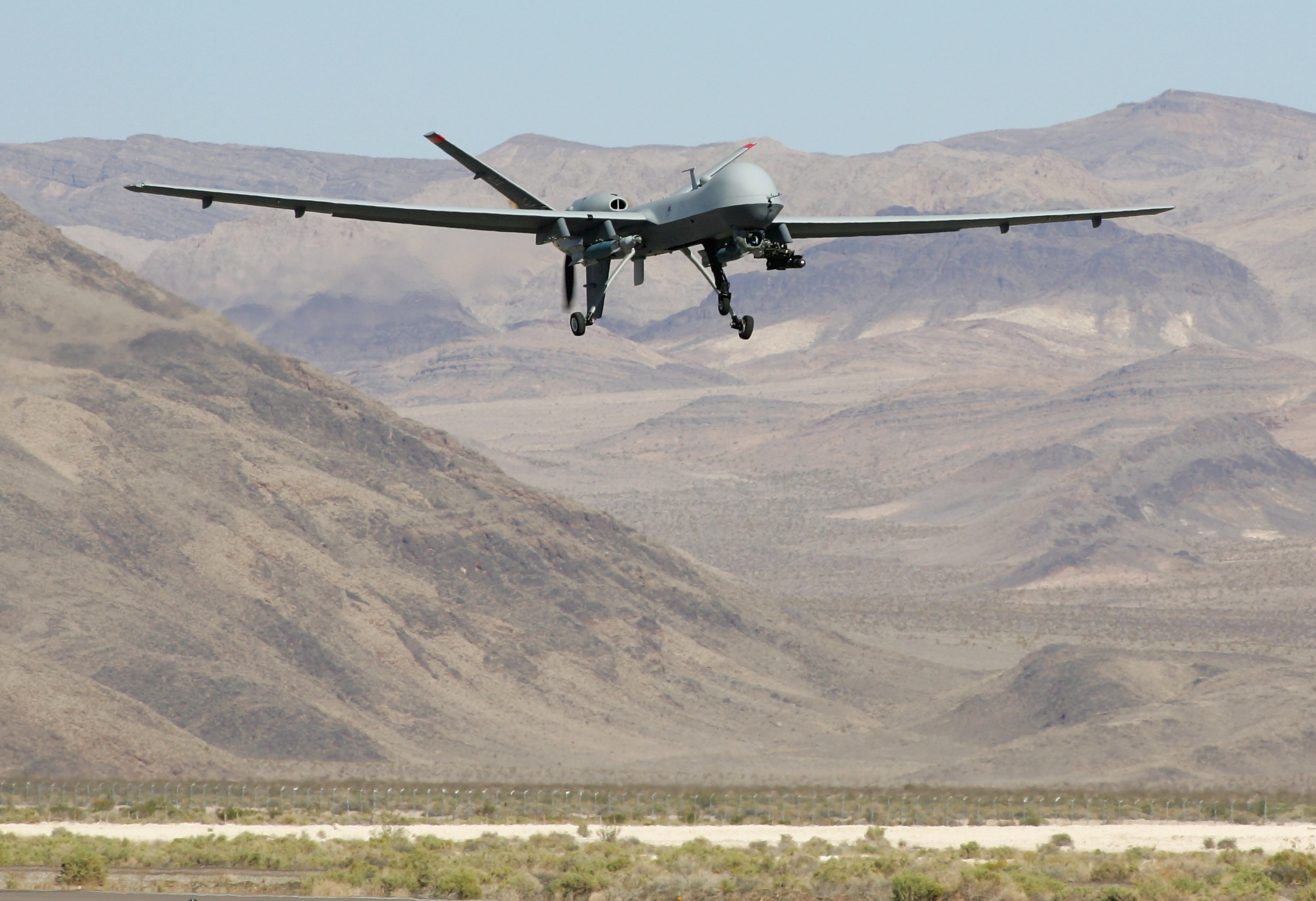
the propeller-driven drones most commonly used to kill terrorists in Pakistan, would be child’s play for a Pakistani Air Force pilot to take down

They’re easy to detect on radar, and they fly around 100 mph (MQ-1 Predator or an MQ-9 Reaper)

The RQ-170 Sentinel, for example, is much more difficult to detect on radar, and its jet engines enable it to fly at just below the speed of sound.

In the months before Osama Bin Laden’s killing, Sentinel drones flew between the seams of Pakistan’s radar systems to spy on his Abbottabad compound.

Military experts still argue over whether the Sentinel that went down in Iran in 2011 was shot or simply malfunctioned.


Pakistan refuses to shoot down US Drones not because it doesn’t have the capability, but due to it’s political subservience to America.

https://en.wikipedia.org/wiki/Drone_strikes_in_Pakistan

http://www.telegraph.co.uk/news/2016/05/19/why-many-people-in-pakistan-support-american-drone-strikes/

https://docs.google.com/spreadsheets/d/1NAfjFonM-Tn7fziqiv33HlGt09wgLZDSCP-BQaux51w/edit#gid=1000652376

https://www.quora.com/Is-it-difficult-to-shoot-down-a-military-grade-drone



#america-drones-pakistan#drone-strikes-pakistan#pakistan-drones#us-drones

Related Intelligence

More articles
The Bismarckian Pivot: India’s German Deep-Tech Realignment
South Asia

The Bismarckian Pivot: India’s German Deep-Tech Realignment

As New Delhi systematically decouples from its legacy Russian military dependency, a new strategic architecture is emerging. Berlin is no longer just a trading partner; it is becoming India’s primary engine for industrial sovereignty.

17 Jun 2026

The Islamabad Pivot: Trading Strategic Depth for Economic Survival
South Asia

The Islamabad Pivot: Trading Strategic Depth for Economic Survival

Pakistan is discarding decades of military doctrine to position itself as the vital gateway for Central Asian trade. As domestic pressures mount, Islamabad is prioritising economic rent and connectivity over traditional territorial security.

15 Jun 2026

The Liquid Front: Why South Asian Security Rests on Melting Ice
South Asia

The Liquid Front: Why South Asian Security Rests on Melting Ice

As domestic pressures and climate shifts accelerate, the Indus and Brahmaputra river basins are no longer mere sources of life, but strategic assets being weaponised in a zero-sum game between nuclear powers.

1 Oct 2025

The New Delhi Pivot: Why Strategic Autonomy Survives the Great Split
South Asia

The New Delhi Pivot: Why Strategic Autonomy Survives the Great Split

India is defying the binary logic of the new Cold War. By leveraging Russian energy and American technology, New Delhi is transforming its non-alignment legacy into a sophisticated multi-aligned leverage play that few in the West fully comprehend.

1 Jun 2025

The Garrison State: Pakistan’s Invisible Constitution
South Asia

The Garrison State: Pakistan’s Invisible Constitution

As Islamabad faces a debt ceiling and internal unrest, the facade of civilian governance is thinning. Real power in Pakistan does not reside in Parliament, but in the institutional incentives of the General Headquarters in Rawalpindi.

1 Feb 2025

The Tiger’s Cage: The Structural Fragility of the Bangladesh Model
South Asia

The Tiger’s Cage: The Structural Fragility of the Bangladesh Model

Bangladesh transformed from a basket case into an export powerhouse through an unspoken social contract. As that contract dissolves, the state faces a reckoning between its industrial success and its institutional decay.

1 Oct 2024